Late last year, U.S. President Donald Trump gave Nvidia the green light to sell one of its most advanced chips to China. The decision appeared to be a win-win deal: a major boost for China’s AI ambitions and a commercial victory for the world’s leading chipmaker.
But six months later, Beijing has not allowed a single Chinese company to purchase the H200 chip, despite the U.S. decision easing restrictions that had blocked advanced chip exports to China for years.
Details
- Nvidia chips are widely regarded as the global gold standard for running AI systems, while Chinese companies still lag behind the company’s top products.
- Former officials from both the Biden and Trump administrations warned that allowing sales of the chip could help China narrow the gap with American AI firms until domestic manufacturers catch up.
- The current standoff reflects the growing tension between the world’s two largest technology powers, as technology has shifted from an area of economic cooperation into a strategic battleground.
- Nvidia has found itself caught between Washington and Beijing, especially as advanced chips are increasingly viewed as national security assets because of their military and geopolitical applications.
- Instead of relying on Nvidia, the Chinese government has encouraged local firms to adopt domestic alternatives from Huawei and Cambricon.
- Trump said after meeting Xi Jinping in Beijing that China had chosen to develop its own technologies rather than buy the American-made chip.
- Even so, Chinese AI companies remain desperate for more computing power, according to investors and industry observers.
- Chinese firms have increasingly adapted to existing restrictions by building AI systems within current hardware limitations instead of waiting for U.S. export controls to ease.
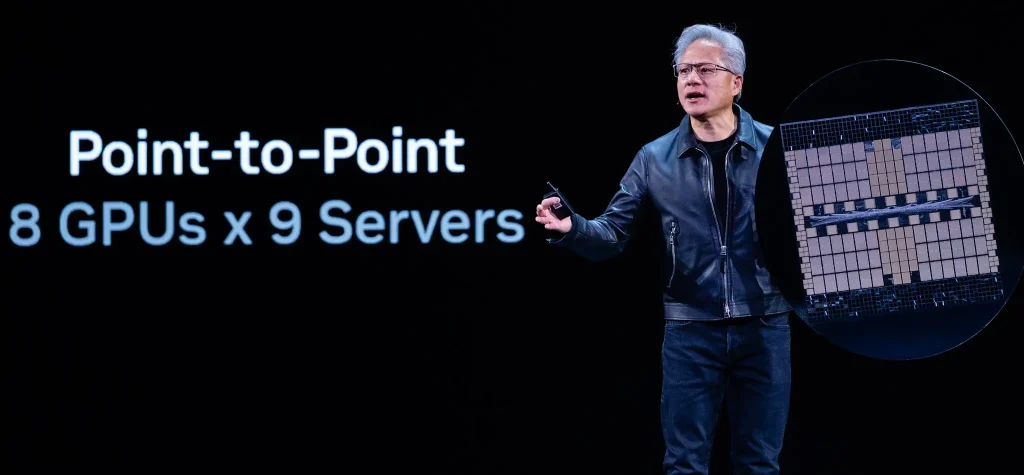
- Jensen Huang, Nvidia’s CEO, said he did not discuss the H200 chip during his recent visit to Beijing, though he remains optimistic that the Chinese market could eventually reopen.
- In March, Xi Jinping unveiled a new five-year push for technological self-sufficiency, focusing on AI, quantum computing, and fusion energy.
- Domestic alternatives are becoming more viable as Chinese chipmakers rapidly improve, with chips from Huawei and Cambricon now approaching H200-level performance.
- DeepSeek has become a symbol of this transition after announcing that its latest AI models were optimized for Huawei chips instead of relying entirely on Nvidia hardware.
- Despite the restrictions, Nvidia’s business has remained strong. The company recently reported quarterly profits of $58.3 billion while stating that it does not expect advanced chip sales to China to resume anytime soon.
- Chinese companies still depend heavily on Nvidia chips for training large AI models because domestic manufacturers struggle to produce advanced chips at sufficient scale.
- Some Chinese firms have turned to remote cloud access as a workaround, renting access to Nvidia chips housed in overseas data centers.
- Public filings from MiniMax and Zhipu AI in Hong Kong revealed massive spending on cloud computing services used to train AI models.
- However, this workaround increases the risks of data leaks and leaves Chinese firms dependent on foreign infrastructure providers that could cut off access at any moment.
- Chinese companies also face the possibility that Washington could impose future restrictions on remote cloud access to Nvidia chips, an idea supported by some U.S. officials.
- Chinese companies are expected to spend around $123 billion on AI chips and data centers this year, compared with roughly $1 trillion projected for American tech firms.
- Some analysts believe Beijing may be refusing to purchase the H200 as leverage to gain future access to more powerful chips, especially while Nvidia’s latest Blackwell chips remain banned from the Chinese market.
What’s Next?
China appears committed to a long-term strategy of building technological independence, even if it means slower progress and higher short-term costs. Meanwhile, Nvidia is trying to preserve its position in the world’s largest chip market while waiting for political tensions between Washington and Beijing to ease. Until then, advanced AI chips are likely to remain geopolitical tools as much as commercial products.