Washington’s problem with Iran may not be that Tehran does not know who makes the decisions, but that Washington itself does not fully understand how decision-making works inside the Iranian regime.
In an article published by The Atlantic, writer Arash Azizi says the Trump administration’s narrative that talks are stalled because of a split in Tehran between military hard-liners and civilian diplomats contains only part of the truth, but fails to capture the real map of power inside Iran.
Details
• Azizi argues that conflict inside the Iranian regime does exist, but it is not simply divided between the IRGC on one side and the Foreign Ministry on the other.
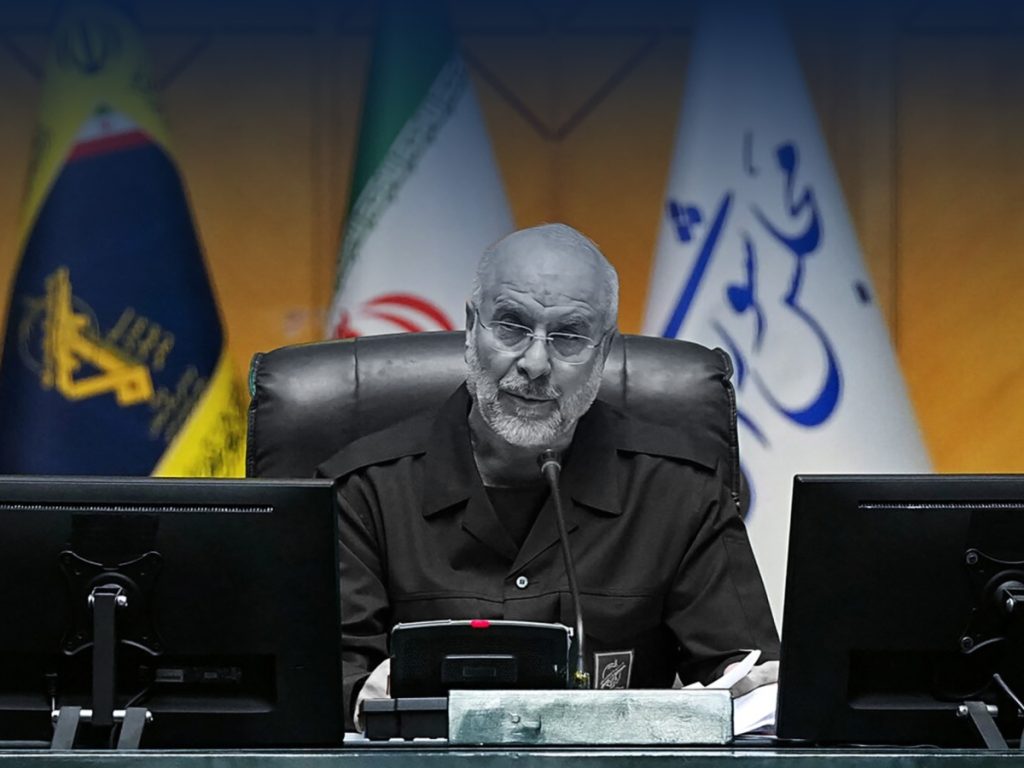
• The clearest example is Mohammad Baqer Qalibaf, Iran’s parliament speaker, who led the Islamabad talks with U.S. Vice President JD Vance.
• Qalibaf combines influence across parliament, the Supreme National Security Council, the Defense Council, and old power networks inside the IRGC.
• According to the article, Qalibaf has effectively become the first among equals inside the Defense Council, making him one of the key managers of Iran’s war effort.
• Qalibaf’s power comes from his history inside the IRGC: he was a regional commander during the Iran-Iraq war, then held roles in the IRGC’s construction wing, air force, and missile program.
• At the same time, Qalibaf presents himself as a strong and effective technocrat, despite his harsh reputation and corruption allegations from his time as Tehran mayor.
• The article notes that the new supreme leader, Mojtaba Khamenei, remains outside public view because of his delicate health condition, creating more room for figures such as Qalibaf to operate inside security and decision-making circles.
• In this sense, Qalibaf shows that power in Iran cannot be read through a simple military-versus-civilian lens, but through overlapping networks of the IRGC, parliament, security, economy, and loyalty to the leadership.
• Azizi argues that the IRGC, given its current size and spread across the economy, politics, and security, no longer represents a single bloc with one unified position on negotiations.
• Notably, according to the article, no senior IRGC commander has publicly opposed Qalibaf’s handling of the talks. In fact, Tasnim, which is close to the IRGC, criticized hard-liners who tried to undermine diplomacy.
• The clearest opposition to negotiations comes from political hard-liners such as Saeed Jalili, a member of the Supreme National Security Council who previously opposed the path that led to the 2015 nuclear deal.
• Jalili is backed by lawmakers such as Ali Khezrian and Mahmoud Nabavian. Khezrian called for an end to all forms of message exchanges with the United States, while Nabavian described the Islamabad talks as unsuccessful and undesirable.
• But this faction’s influence appears relatively limited, as 261 out of 290 lawmakers signed a statement supporting Qalibaf and the negotiating team.
• One point of confusion, Azizi says, came after Foreign Minister Abbas Araghchi said the Strait of Hormuz would remain open during the ceasefire, before IRGC media clarified that this did not mean a full opening of the strait.
• Washington interpreted this discrepancy as evidence of internal division, but the writer argues that the Iranian statements were not really contradictory. Rather, they were an attempt to prevent Trump from portraying the issue as a major Iranian concession.
• Since then, the Iranian regime has tried to intensify the image of unity through Qalibaf’s remarks and joint messages insisting that Iranians, in the regime’s rhetoric, are not moderates and extremists, but revolutionaries behind one leader and one path.
• Still, institutional support for negotiations does not mean the road is fully open. Hard-liners can still mobilize their grassroots base, especially since Saeed Jalili won 13.5 million votes in the 2024 election.
• On the other hand, negotiations also have a broad base of support: the Reformist Front, former President Hassan Rouhani, Sunni cleric Molavi Abdulhamid, and even some opponents of the Islamic Republic support a fair agreement with Washington.
What’s Next?
The bottom line is that Washington may be making a mistake if it bets that internal division will paralyze Tehran. Yes, there are power struggles inside the Iranian regime, but they are not necessarily struggles that prevent a deal. The more serious issue for the United States is that those leading the negotiations are not weak diplomats trapped by the IRGC, but figures who hold keys inside security, the IRGC, and parliament at the same time.
In other words: Iran does not appear unable to make a decision. It is trying to raise the price of that decision.