News:
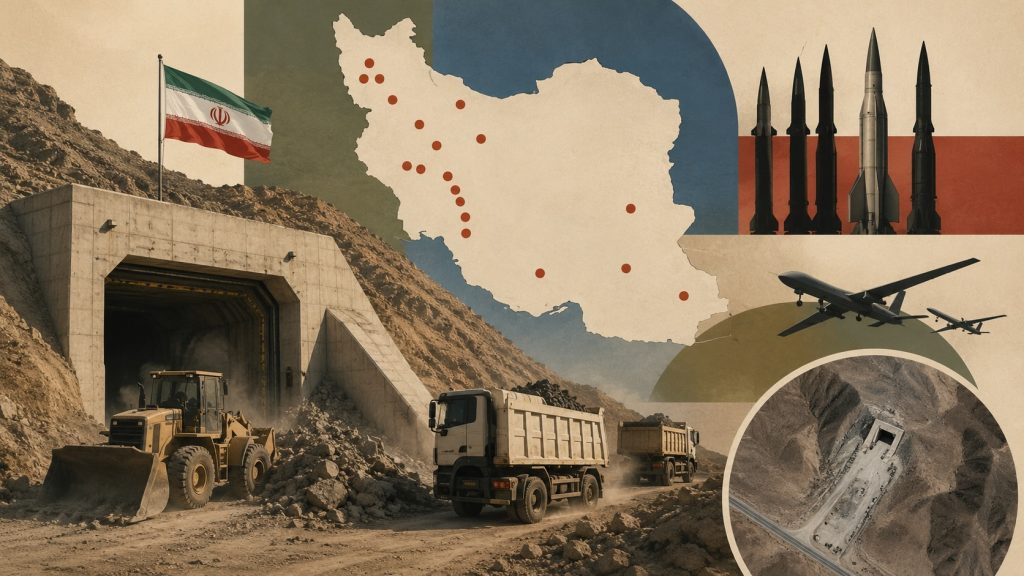
A CNN analysis, based on satellite images from Airbus Defence and Space, revealed that Iran is moving quickly to reopen underground missile facilities damaged during the recent war with the United States and Israel.
According to the analysis, since the fragile ceasefire began, Tehran has managed to remove or clear at least 50 blocked access points across 18 different missile sites, using bulldozers and debris-removal trucks.
Details:
• The analysis showed that the Israeli-American strikes disabled what are known as missile cities by closing their entrances.
• This contradicts earlier remarks by Trump, who said Iran’s missile arsenal had been almost completely destroyed.
• Images from April 10 documented intensive debris-clearing work at the entrance of a tunnel at a major missile base south of Tabriz.
• Other images from a missile base in Khomein showed a truck removing rubble from the entrance of a bombed tunnel, with additional trucks waiting to continue the work.
• CNN quoted a U.S. official as saying that the Iranians had beaten every timetable set by the intelligence community for assessing the pace of their recovery.
• U.S. assessments indicate that Tehran could fully restore its offensive drone capabilities within about six months.
• The report links the speed of recovery to technological and logistical support from Russia and China, and to the fact that the actual damage caused by the strikes was less than Washington and Tel Aviv had hoped.
• Israeli security officials fear that, in the event of renewed escalation, Iran could compensate for losses in its missile array with large-scale attacks using explosive drones against Israel and Gulf states within range of these systems.
What’s Next?
These images put additional pressure on the ceasefire, because they suggest time is working in Iran’s favor as it repairs its capabilities. Any new round of talks or military escalation now hinges on a key question: will Washington and Tel Aviv move before Iran’s recovery is complete, or will they enter a new round of deterrence with an Iranian arsenal that has been partially reopened?