
Story
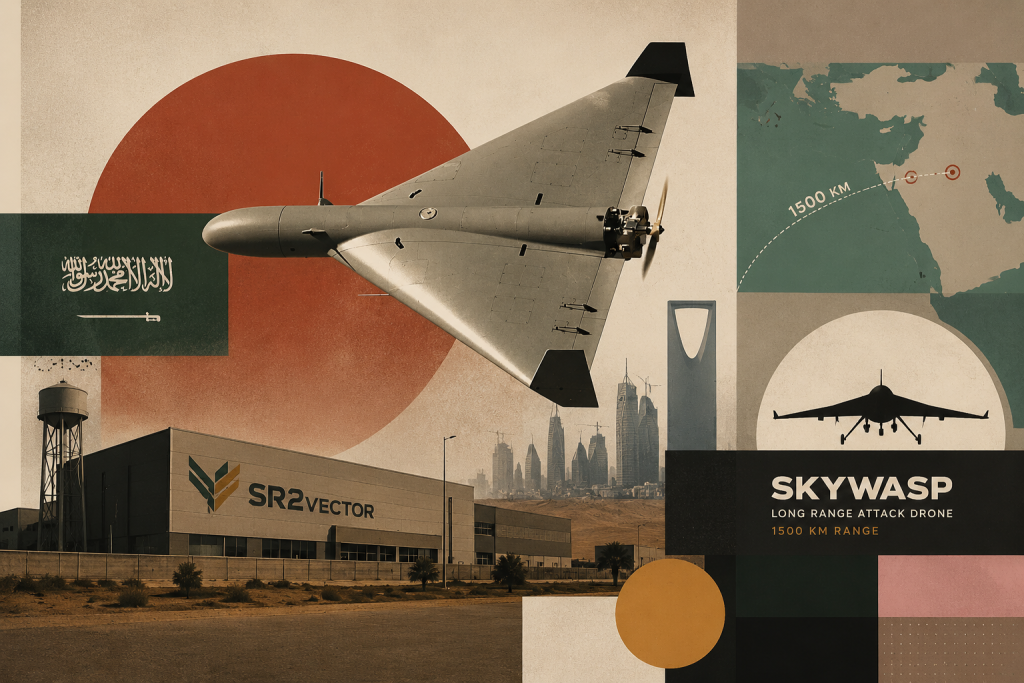
Saudi Arabia is moving toward manufacturing a new generation of long-range attack drones through a joint venture between US defense startup “Vector Defense” and Saudi-based “SR2 Defense Systems,” which are building a factory near Riyadh to produce drones modeled on Iran’s Shahed system.
The new venture, called “SR2Vector,” will manufacture a one-way attack drone named “SKYWASP,” capable of striking targets up to 1,500 kilometers away — roughly the distance between northeastern Saudi Arabia and Tehran.
Lucien Zeigler, co-founder and chief strategy officer at “SR2,” said the project aims to “strengthen Saudi deterrence capabilities and rebalance the low-cost warfare landscape.”
Details:
• The factory will produce drones for both the Saudi domestic market and export to allied countries.
• The company did not disclose the size of the investment or when production will begin, but said output levels would match the kingdom’s “strategic deterrence requirements.”
• The move comes after months of intensive Iranian missile and drone attacks against Gulf states, targeting energy facilities, hotels, and data centers.
• Iran’s Shahed drones have become one of the defining weapons of low-cost warfare, with production costs estimated at around $35,000 per unit — far cheaper than the interception systems used to shoot them down.
• That cost imbalance has pushed Gulf governments to seek new deterrence models based on local manufacturing and large-scale production capacity.
• The new venture will receive backing from “MASNA Ventures,” a defense-tech investment fund focused on expanding military and technological cooperation between Washington and Riyadh.
• The project also aligns with Saudi Arabia’s accelerating push to localize military industries under its official goal of domesticating half of its defense spending by 2030.
What’s Next?
Saudi Arabia’s entry into domestic attack-drone production could mark the beginning of a new phase in Gulf deterrence dynamics, especially as regional powers increasingly believe future wars will be decided by cost efficiency and mass production capabilities more than by expensive traditional systems.