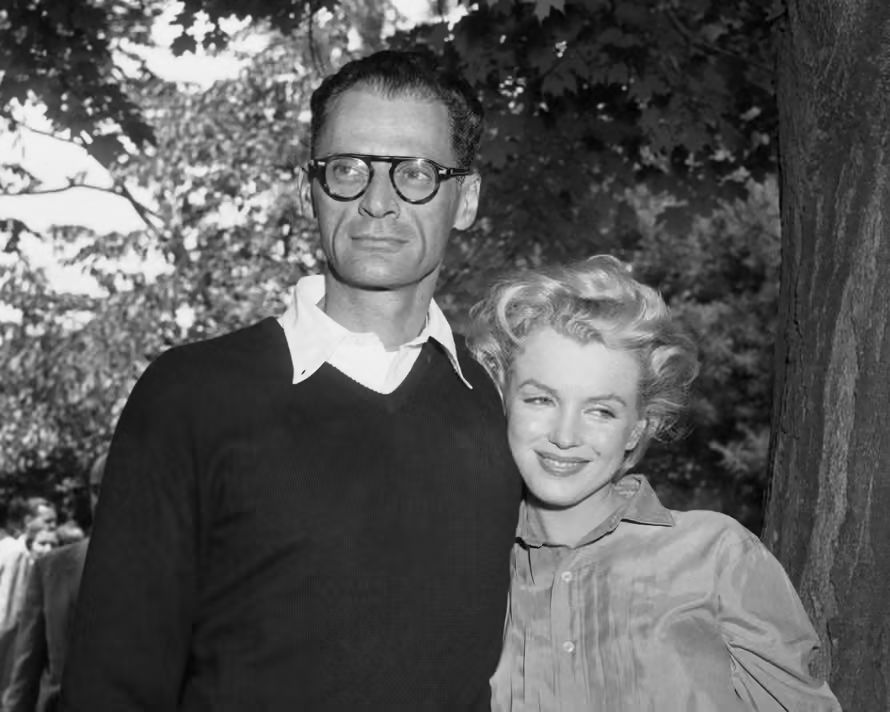
The Guardian has revealed rare recordings of Arthur Miller in which the American playwright discusses his marriage to Marilyn Monroe, as well as his relationship with fame, writing, self-doubt, communism, and McCarthyism.
Details
• The conversations were recorded over nearly 30 years with his friend and biographer, Professor Christopher Bigsby, before appearing in a new book titled The Arthur Miller Tapes: A Life in His Own Words.
• Miller said Monroe was in a deeply fragile psychological state, and that he felt death was always close to her, adding that he believed failing to take care of her could lead to a catastrophic end.
• Miller spoke about their marriage, which began in 1956 after a romantic relationship in 1955, saying he realized within months that he was not prepared for what he faced, because she was looking for a husband who could be a father, lover, friend, and agent all at once.
• Miller noted that Monroe suffered a miscarriage and an ectopic pregnancy, and that the couple sought medical help without success. He said, however, that having a child could have become an additional problem amid the enormous pressures she was facing in Hollywood.
• He described Monroe as intelligent, delightful, humorous, ironic, and generous, but said a kind of paranoia began to take over, and that she started suspecting everyone of exploiting or harming her.
• Miller said their relationship effectively collapsed during the filming of The Misfits in 1960, the film he wrote for her, adding that their disputes had begun earlier during the filming of The Prince and the Showgirl.
• In another part of the recordings, Miller discussed the impact of the massive success of Death of a Salesman in 1949, and how fame contributed to the breakdown of his first marriage to Mary Slattery.
• Miller admitted that he lived with a constant struggle over doubt in his ability to write, saying that only a small portion of what he wrote ever saw the light of day.
• The recordings also addressed his position on McCarthyism, his refusal to name communist writers before the House Un-American Activities Committee in 1956, and how that pushed him to write The Crucible as an indirect way to confront the climate of political fear.
What’s next?
The recordings open a new window into Miller’s personal and intellectual life, but they remain a one-sided personal account of his marriage to Monroe. Their real importance is not only in the details of the relationship, but in how they connect it to the broader portrait of a writer caught between the pressures of fame, political fear, and self-doubt.