Iran is acting according to an old rule in its political behavior: when options narrow, do not announce retreat; rename it. A nuclear concession becomes a technical arrangement. Reopening the strait becomes a maritime-security mechanism. Halting escalation becomes a triumph of wisdom. Accepting mediation becomes recognition of Iran’s regional weight. Even military loss can be marketed as legendary endurance against the greatest power on earth.
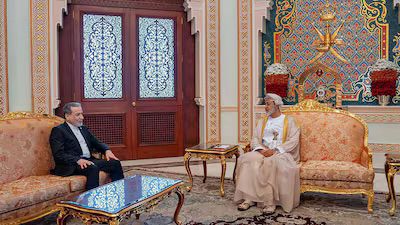
On the surface, the region is witnessing a flurry of mediation. Pakistan is leading an indirect channel between Washington and Tehran. Oman is working the file of Hormuz and Gulf security. Egypt, Turkey, Saudi Arabia, Qatar and Russia are reportedly involved in efforts to reduce tensions or shape a wider negotiating framework. Araghchi has returned to Pakistan, visited Oman, spoken with counterparts in Saudi Arabia, Qatar and France, while Moscow has emerged as a station for the nuclear file.
But the deeper meaning is not explained by the number of mediators alone. It is that Tehran can no longer swallow Trump’s deal in one piece. So it is cutting it into smaller political fragments.
This is the strategy of deal fragmentation.
Iran knows that a direct agreement with the United States, especially under the pressure of war, blockade and threat, would open a lethal domestic front: the Revolutionary Guards, the conservatives, Parliament, a public fed for years on the language of resistance, and the entire legitimacy machine built on the idea that retreat before Washington is betrayal.
So the solution is to distribute the concession geographically. What is said in Moscow is not said in Muscat. What is discussed in Islamabad does not appear as a direct American-Iranian agreement. What is negotiated with Saudi Arabia and Turkey looks like a regional arrangement, not an American diktat.
In this way, the regime does not appear before its public as one that went to Washington submissive and defeated. It appears instead as one managing a network of capitals, forcing the world to negotiate with it through several doors.
That is the great trick.
Iranian diplomacy is not merely seeking an end to the war. It is seeking a stage on which the ending can be performed. If a final agreement matures, Tehran wants it to emerge not as a central concession, but as the result of international recognition that Iran is a regional actor that cannot be bypassed.
Form, therefore, becomes part of substance. The location matters. The sequence of capitals matters. The names and diversity of mediators matter. Even the absence of a direct meeting becomes a narrative: We did not go to the Americans; the world came to us.
At this moment, Iran is recovering an old imperial instinct: when victory is no longer possible, manufacture the image of victory.
This is where the analogy with Salamis becomes useful. Xerxes was able to burn Athens, but he lost at sea the battle that broke the momentum of his empire. The image he wanted to sell was simple: We punished the Greeks and burned their city. The strategic reality was harsher: the Persian fleet had suffered a blow that shifted the balance of initiative. He needed the fire of Athens to obscure the waters of Salamis.
Iran may now attempt something similar.
It may tell its people: We endured. We imposed mediators. We put Hormuz on the world’s table. We forced Washington to recognize our weight. We protected the nuclear program from total destruction. We prevented the fall of the regime. These are symbolic fires, useful for television screens and street chants.
But the sea — the true balance of power — says something else. When you are forced to circulate your files among Moscow, Muscat, Islamabad, Riyadh and Beijing, you are no longer commanding the scene alone. You are looking for a safe corridor out.
The problem is that Iran cannot concede without cover, and it cannot continue escalating without cost. The Strait of Hormuz is a dangerous card, but not a free one. Closing it, or imposing tolls on it, would alarm the entire world, including China, not just the United States. The nuclear file remains a sovereign symbol in Tehran’s rhetoric, but it becomes a liability if it serves as a pretext for stripping Iran of its military and economic infrastructure. A long war, meanwhile, is more dangerous to the regime than any incomplete agreement.
That is why the grand bargain, if it is born, will not be a peace deal in the romantic sense. It will be a mechanism for managing the rhythm of losses.
This also gives political meaning to Mohammad Bagher Ghalibaf’s reported stay in Tehran, if that assessment is correct. The domestic front needs a guardian of the narrative as much as the external front needs a negotiator. Araghchi tours capitals to shape the framework. Ghalibaf remains inside to keep contradictions from exploding before the stage is fully built.
For the most dangerous moment for the regime is not the signing ceremony. It is the moment before the signature, when factions begin to smell concession before it has been perfumed as victory.
Iran’s moves, then, should not be read as pure confusion. They are confusion being organized. Tehran knows it is trapped between the cost of war and the cost of a deal. Its familiar answer is the third path: no full war, no naked bargain, but a multi-capital framework that allows every party to sell its audience a different version of the truth.
That is the old Persian lesson, from Salamis to Tehran: when you lose the sea, set fire to something else — then tell the people they are looking at victory.