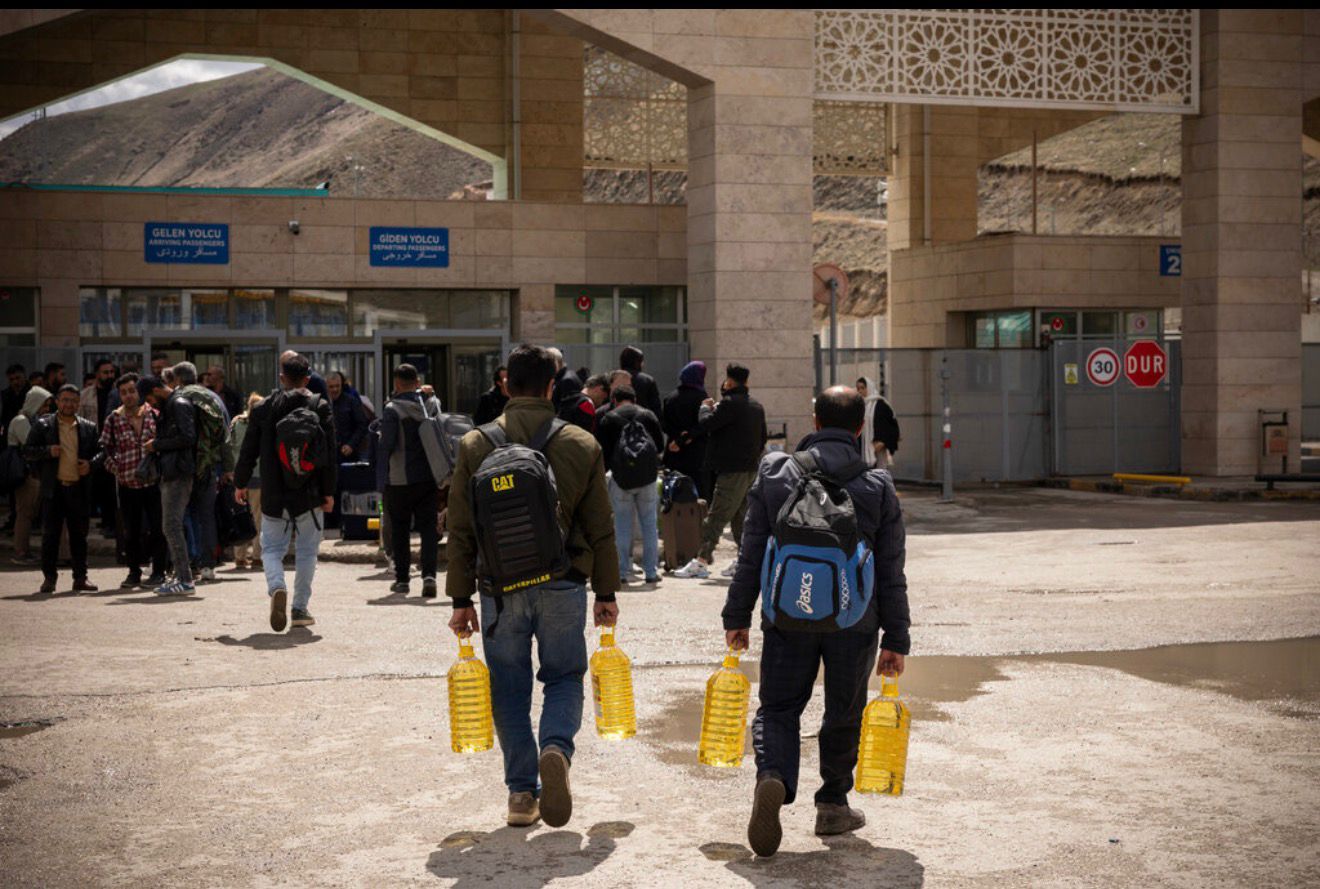
The New York Times highlights one side of Iran’s worsening cost-of-living crisis through the cooking oil trade on the Turkish border, where Iranians cross into Kapikoy to buy bottles of oil and bring them back home.
The scene shows how basic goods have become a daily indicator of the pressure that war, sanctions, and inflation are placing on Iranian households.
Details
- The newspaper says the war has made Iran’s economy more fragile, pushing many people to look for basic goods outside the country, especially after food prices rose inside Iran.
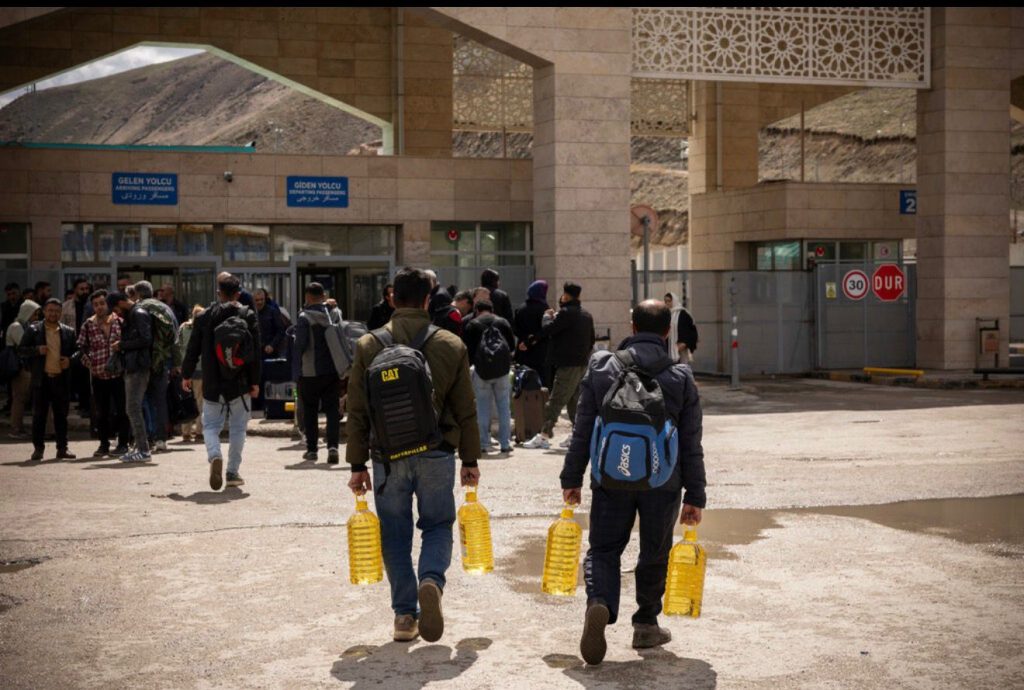
- At the Kapikoy crossing near the Turkish city of Van, the newspaper saw dozens of Iranians carrying 4- and 5-liter bottles of oil back into Iran in a single day.
- Traders in the area say demand for cooking oil has risen in recent days as the crisis inside Iran worsens and some goods become harder to obtain at affordable prices.
- The newspaper quotes an Iranian woman saying she buys a bottle of oil in Turkey for a little over $10, then sells it inside Iran for less than the local market price, making a small profit of about $2.
- The trade is not only about resale. Some people crossing the border use the oil at home, making the crossing a limited lifeline for families looking for cheaper alternatives.
- Cooking oil in the report serves as a small sample of a wider inflation crisis that has pressured Iranians for years and has grown harsher with the war, the internet shutdown, and business disruptions.
- IMF estimates expect inflation in Iran this year to approach 70%, a level not seen in the fund’s estimates for the country since at least 1980.
- The newspaper notes that Iran’s minimum wage is equivalent to around $108 per month, making higher food prices a direct burden on low-income families.
- Iran is also facing a wave of layoffs because of war disruptions and the internet shutdown, deepening the crisis for workers in sectors that rely on movement and communication.
- The cooking oil crisis began worsening after the government decided in January to remove subsidies on imports of some basic goods, in an attempt to cut public spending amid sanctions on oil sales.
- Iranian President Masoud Pezeshkian defended the subsidy reform, saying the previous program had been exploited by some sectors and had not actually lowered prices.
- But after the decision, Iranians complained about difficulty finding cooking oil in stores and about prices rising beyond what many families could afford.
- The government tried to ease the pressure through a direct monthly cash payment of around 10 million rials, equivalent to about $7, but experts say that is not enough to offset the wave of price increases.
- The newspaper quotes a woman from Tehran saying she bought three small chickens for about $14, after previously being able to buy five or six chickens for far less.
- Some Iranians warn that if incomes and job opportunities continue to decline, more people may be pushed into desperate behavior, such as stealing food to feed their families.
What’s Next?
The cooking oil trade on the border shows that Iran’s crisis is no longer limited to sanctions or inflation figures. It has reached the daily details of the kitchen. If the war continues, the economy remains disrupted, and prices keep rising, the cost-of-living pressure could become a serious political risk for a government already facing past protests and accumulated social anger.
The scene at the Kapikoy crossing is small, but it says a lot: Iranians are looking for the most basic goods outside their borders because the domestic market can no longer protect them.