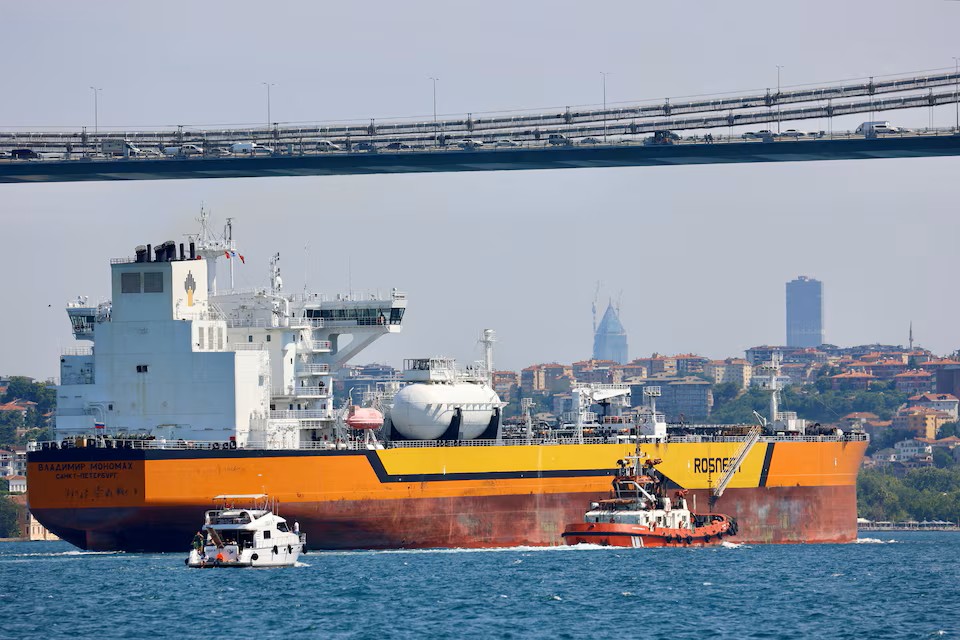
Russia’s revenues surged to around $9 billion in April, supported by higher oil prices following U.S. and Israeli military escalation against Iran and disruptions to global energy flows. Estimates indicate the crisis has given Moscow a significant financial boost at a time when its economy faces mounting challenges.
Details
Revenues from oil extraction tax rose to about 700 billion rubles in April, compared to 327 billion rubles in March, based on calculations using production and price data.
The increase coincided with Russia’s Urals crude climbing to $77 per barrel in March, up 73% from February and above the budget benchmark of $59.
The closure of the Strait of Hormuz after U.S. and Israeli strikes pushed Brent prices above $100, boosting demand for Russian energy.
Despite the rebound, Russia recorded a budget deficit of 4.58 trillion rubles in the first quarter of 2026, with warnings of a difficult economic year ahead.
Ukrainian attacks on Russian energy facilities are also weighing on output, limiting the benefits of higher prices.
What’s next?
Russia’s gains depend on how long the Iran crisis persists, as markets watch the balance between elevated prices and rising financial and military pressures.