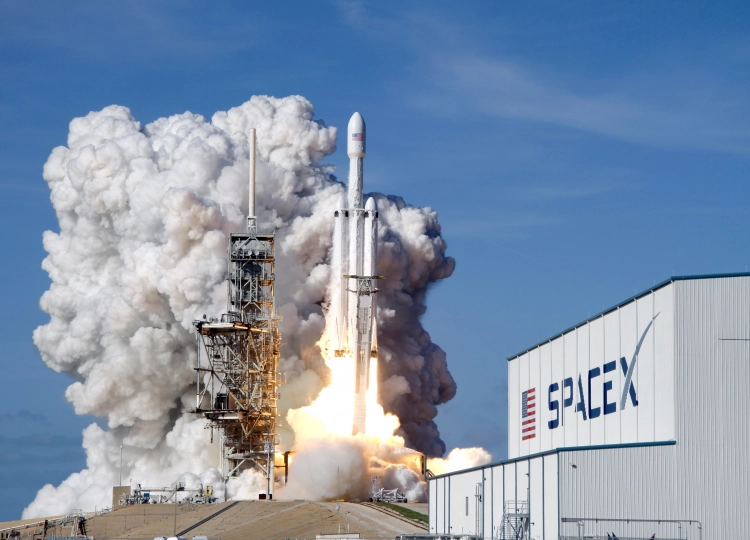
SpaceX’s Starship, developed under Elon Musk, reflects a fundamental shift in the nature of warfare. Its role may go beyond reaching Mars to reshaping military geography on Earth. The concept centers on drastically reducing the cost of access to space, enabling the use of Earth’s orbit as a platform to launch fast, precise strikes anywhere in the world.
Details
Current military operations rely on methods that are relatively costly and slow. For example, striking nuclear facilities can take hours and cost millions of dollars per aircraft. In contrast, Starship opens the door to a different model based on speed and low cost.
At present, launching payloads via Falcon Heavy costs about $1,500 per kilogram, while Starship aims to reduce that to roughly $10. This sharp drop could make it feasible to send large volumes of military equipment into orbit at limited cost.
Under this model, it would be possible to:
• Store thousands of munitions in low Earth orbit
• Direct them to strike targets on Earth within minutes
• Carry out synchronized, precise attacks without aircraft or nearby bases.
These munitions could include:
• Bunker-buster bombs
• High-precision kinetic weapons
• Anti-personnel, anti-armor, or anti-ship munitions
• Advanced guidance systems to ensure accuracy
The model also enables large-scale strikes, such as targeting critical infrastructure simultaneously, without risking pilots or requiring traditional air superiority.
Additionally, drones could be deployed from space for reconnaissance or even supply missions, significantly enhancing intelligence and logistics capabilities.
Beyond destructive power, the shift extends to psychological deterrence. A ready space-based arsenal could function as a latent fleet capable of striking without warning, increasing pressure on adversaries.
What’s Next?
The next challenge may be an international race to control such capabilities, as the United States moves to secure an edge before competitors like China and Russia enter the field.