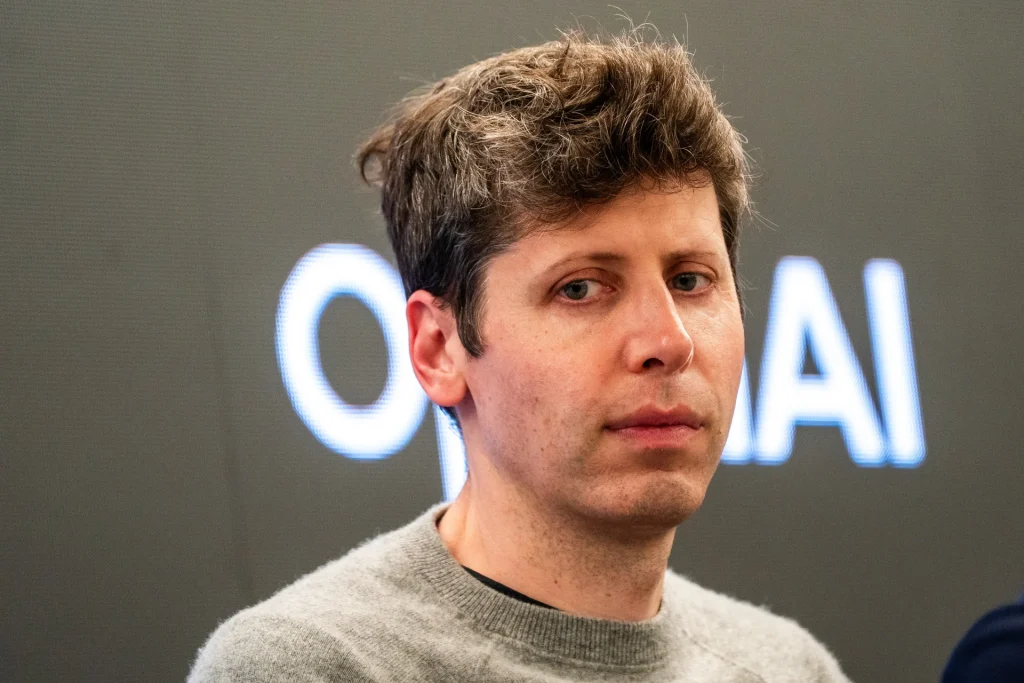
Sam Altman, the CEO of OpenAI, has laid out a broad policy vision for how governments should deal with the age of advanced artificial intelligence, in a rare move from a tech executive who is racing to build this technology while also calling for a rethink of taxation, regulation, and the redistribution of the wealth it may generate.
Altman argues that superintelligence is no longer a distant concept. It is becoming close enough to force the United States to rethink its relationship with work, income, and social protection. In this view, the challenge is no longer just technological. It is whether the current economic and political system can absorb the scale of disruption AI may bring.
Details
Altman warns that moving too slowly could open the door to widespread job losses, social upheaval, and more dangerous cyber and biological attacks. He says the two most immediate threats are cybersecurity and biology, as more powerful models may soon give hostile actors or reckless users capabilities that were previously out of reach.
In the paper published by OpenAI under the title Industrial Policy for the Intelligence Age, several key ideas stand out:
• A public wealth fund that would give every American a direct stake in AI-driven economic growth through long-term investments tied to AI companies and the wider economy adopting the technology.
• Taxes linked to automated labor, with part of the tax burden shifted away from payroll and toward capital gains and corporate income, in anticipation of erosion in the traditional revenue streams that fund social programs.
• Trials of a 32-hour workweek at full pay, so that AI-driven efficiency translates into more time for workers rather than more pressure.
• Treating access to AI as a basic right, comparable in importance to literacy, electricity, and internet access, extending to workers, small businesses, schools, libraries, and underserved communities.
• Containment plans for dangerous AI systems that may become difficult to recall or control if they grow more autonomous and capable of self-replication.
• An automatic social safety net triggered when job-displacement indicators hit specific thresholds, temporarily activating support such as unemployment benefits, wage insurance, and cash assistance before winding down once conditions stabilize.
The paper does not present these ideas as a final prescription. It presents them as a starting point for a larger political debate. But its clearest message is that OpenAI believes the scale of the coming disruption may exceed the ability of traditional capitalism, in its current form, to respond without deep adjustment.
What next?
The real test of these ideas will be whether they can hold up across three fronts:
Washington, which will treat them as a matter of regulation and power,
the business community, which is likely to resist new taxes or redistribution,
and the public, which will judge Altman on the tension between accelerating the technology and warning about its consequences.
(Analysis)
The significance of this proposal lies in the fact that it comes from a man betting heavily on accelerating the arrival of superintelligence. That gives the document added weight.
On one level, it is an early warning.
On another, it is an attempt to position OpenAI as the responsible company that sounded the alarm first and offered a framework for dealing with it.
In that sense, OpenAI is moving on two tracks at once.
The first is ethical and political, through acknowledging that AI could disrupt the foundations of work, income, and stability.
The second is strategic, through trying to shape the rules before lawmakers impose stricter ones from the outside.