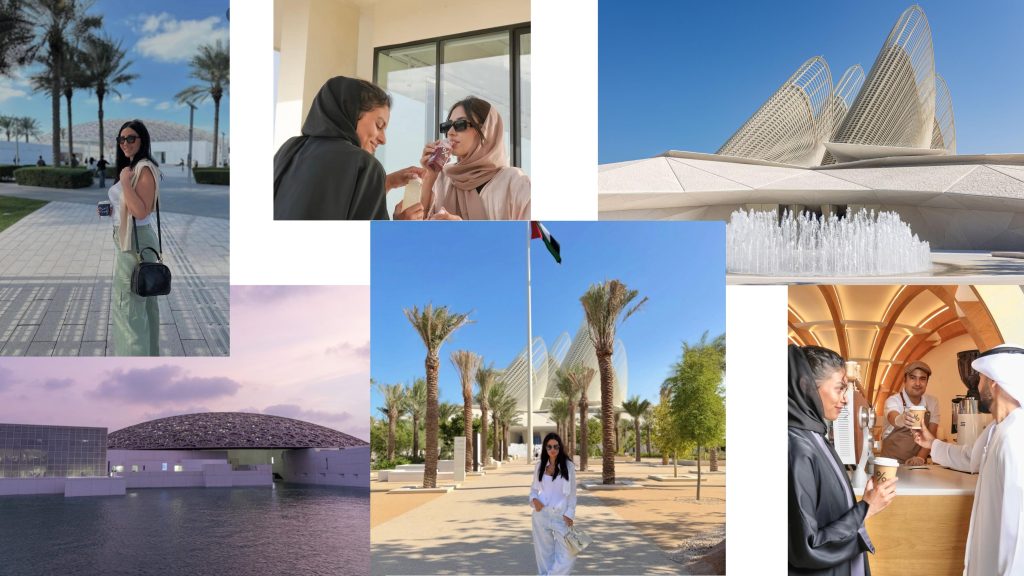
At a time when tensions are rising across the region and the wider world, Abu Dhabi is steadily reinforcing its image as a cultural capital confident in its path, without allowing either its major projects or its daily life to be defined by that atmosphere. At the heart of this picture, Saadiyat Island continues to consolidate its place as a global cultural hub, led by Zayed National Museum as one of the flagship projects that captures the UAE’s vision of preserving identity, safeguarding history, and presenting it to future generations within a modern national narrative.
Detail
Far beyond the distinctiveness of its falcon-wing-inspired design, the museum, designed by Norman Foster, represents a broader project through which Abu Dhabi aims to entrench its cultural presence for the long term. The design sits within an integrated cultural ecosystem on Saadiyat, alongside Louvre Abu Dhabi, which has already become a major destination for the arts, and the upcoming Guggenheim Abu Dhabi, expected to add a new dimension to the region’s artistic landscape.
In this context, Louvre Abu Dhabi stands out as a practical indicator of the continuity of cultural life in the emirate. Visitor traffic remains steady, while programmes and exhibitions continue without interruption, reflecting a direct message: culture in Abu Dhabi is not a marginal activity that retreats in times of crisis, but part of the city’s identity and the way it functions even in moments of tension.
At the social level, the picture appears equally cohesive. Families continue to frequent malls and parks as usual, while the broader public mood reflects a high degree of reassurance. During field interviews with a number of residents, confidence in the leadership emerged as one of the main sources of this sense of stability, especially with Emirati officials appearing naturally among الناس in public spaces, something many see as a direct sign of a calm environment and a steady state.
Arts coordinator Maya George says she is working to bring her dream project to life by establishing a gallery for Arab art in a district that brings together some of the world’s finest and most important museums.
For her part, Noor Al Falasi, an Emirati citizen studying conceptual art, says she visits Louvre Abu Dhabi تقريباً twice a month, adding that the place continues to impress her with both its design and its collections.
Hamsa Al Ani, an Iraqi resident in the UAE, shares the same sentiment. She says the cultural district on Saadiyat is one of those places that offers calm and beauty, adding that she has visited Zayed National Museum three times since its opening.
Edward J. Morrison, who has worked as a finance director in Abu Dhabi for more than five years, says the UAE is no longer simply a place to live and work. It is a place that draws people in and keeps them there, made even more remarkable by bringing the world’s leading museums within walking distance.
That, then, is how culture shapes the public mood and helps ease the pressures of daily life in a region some believe may have lost part of its sense of reassurance. The answer from Saadiyat’s cultural district is different.
What next?
The message coming out of Abu Dhabi is clear: stability is not measured only by direct security, but also by a city’s ability to keep advancing its cultural and social project without disruption. That is what gives the emirate the image of a city that continues to build calmly while much around it shifts.