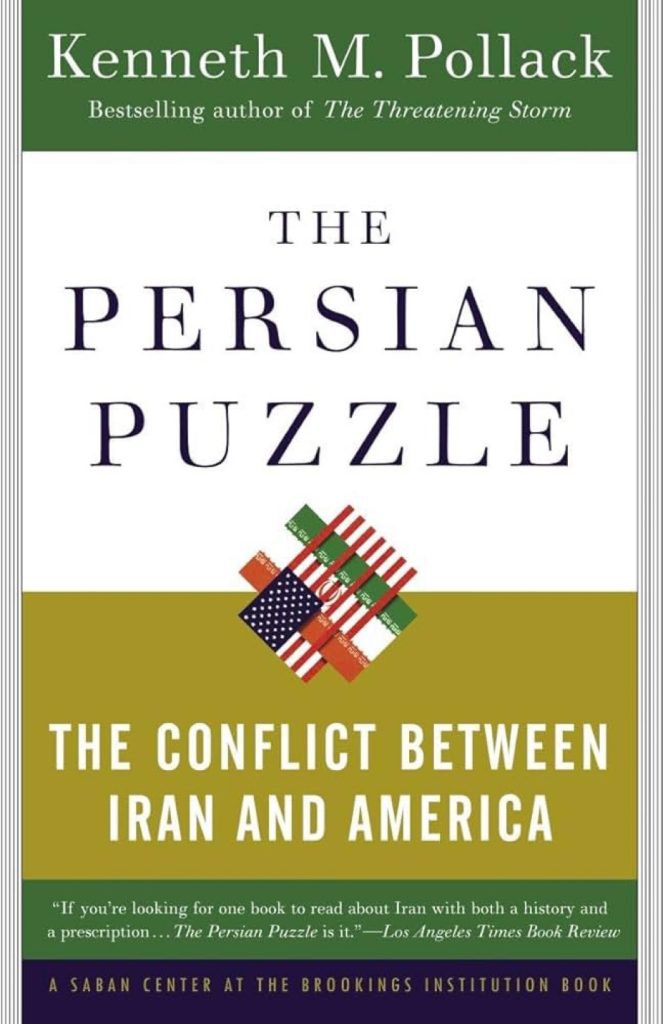
• The Persian Puzzle: The Conflict Between Iran and America was published in 2004 by Random House and was presented at the time as an attempt to understand the troubled relationship between Washington and Tehran through its long historical arc, not through a fleeting security moment.
• The book’s importance lies in the fact that it does not reduce Iran to a purely ideological discourse, nor America to an immediate reaction. Instead, it places both sides inside a memory burdened by the coup against Mossadegh, the revolution, the hostage crisis, the Iran-Iraq war, clashes in the Gulf, and then Afghanistan and Iraq. Pollack was also clear that regime change was not what he was offering readers, and that an effective approach required a mix of diplomacy and pressure.
• That is where the book’s value lies today. Its strength is in constructing a layered picture of a state that sees itself as the heir to a great imperial history, while at the same time carrying a constant sense of penetration, encirclement, and humiliation.
• From this dual knot, pride on one side and fragility on the other, Pollack explains why Tehran reads outside pressure as a test of sovereignty, dignity, and survival. That is precisely what makes every crisis larger than its immediate military scale.
Detail
Here, the Strait of Hormuz appears as a narrow maritime corridor, but it also represents the great compensating point in the strategy of a state traditionally weaker than its American rival in the overall balance of power.
When Iran cannot prevail in a conventional open war, it tries to raise the cost of war on both its adversary and the world:
• through maritime threats,
• indirect attrition,
• and by exploiting the sensitivity of energy and markets.
That is why threatening Hormuz reflects a logic of asymmetric deterrence: if the war cannot be won, it can at least be made costly enough to prevent the adversary from easily translating its superiority into outcome.
But what looks like a deterrent tool on the map can, in wartime, become an enormous strategic burden.
According to the International Energy Agency, around 20 million barrels per day of oil and petroleum products passed through Hormuz in 2025, roughly a quarter of the world’s seaborne oil trade, with limited alternatives for bypassing it. The U.S. Energy Information Administration says that about one-fifth of global liquefied natural gas trade passed through the strait in 2024. These figures mean that any broad disruption does not pressure Washington alone, which is somewhat insulated from it, but rather pressures the entire global energy structure.
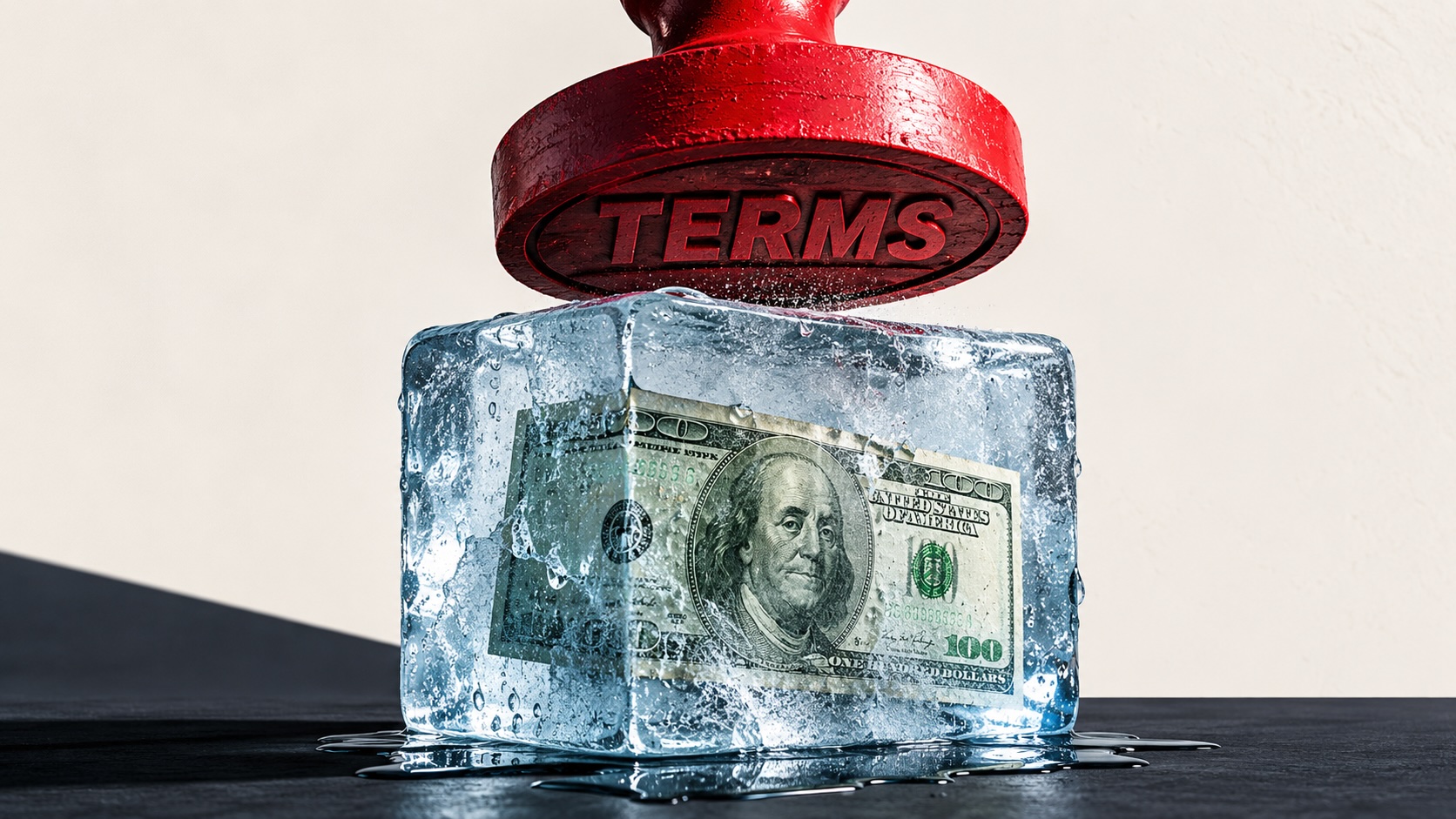
This is where the decisive shift begins. As long as closure remains a theoretical threat, it stays part of the deterrence game. But once it turns into actual disruption, it changes Iran’s image from a state resisting pressure into one that appears to be gripping the artery of the global economy and threatening to choke it.
That is what made the scene in March 2026 different from traditional threat logic: Tehran informed the United Nations and the International Maritime Organization that only non-hostile ships could pass if they coordinated with Iranian authorities, at a time when shipping and energy flows through the strait were already under severe disruption, while Gulf states increased use of alternative routes such as Yanbu and Fujairah. At that moment, the conflict was no longer simply bilateral between Iran and the United States. It had evolved into a confrontation with the global maritime order itself.
This is the core paradox that Pollack helps us understand. The Iranian system tends toward its most dangerous cards when it feels the political space is narrowing and its adversaries are leaving it no safe exit.
From that perspective, the Hormuz card looks like a final instrument:
• extremely sensitive,
• highly costly,
• and tempting in a moment of suffocation.
But at the same time, it is a card that broadens the battlefield beyond the immediate adversary. The more valuable the strait becomes in the global market, the less containable its full use becomes and the more likely it is to trigger a wider response.
What next?
The most important shift in the current situation is strategic. Iran historically used Hormuz as a threat that could deter. Today, however, every move toward broad, real disruption turns it into a weapon that also rebounds on Iran itself.
A state that tries to impose costs on the world through the strait may find itself facing a broader coalition, more hostile markets, and weaker legitimacy for its defensive argument. Put differently: the more this card moves from the level of threat to the level of use, the more it loses value as a bargaining tool and gains value as an instrument of mutual burn.
(Analysis)
In Pollack’s reading, Iran is a complex system, governed by calculations of security, identity, history, and competing institutions.
That is why a decision involving the Strait of Hormuz cannot be understood through the language of navies and missiles alone. It also requires the language of strategic psychology:
How does a wounded state respond to pressure it sees as existential?
The answer may be escalation that, from within, looks like a defense of dignity and sovereignty, but from the outside looks like a direct threat to the international system of energy and trade. It is precisely here that the weapon shifts from a deterrent tool to a suicidal option in the strategic sense: because its effects are larger than its owner’s ability to contain them.