News
Informed sources told +ontime that Iranian Foreign Minister Abbas Araghchi has been in Oman since last week, where he is leading a negotiating track with the U.S. side through Omani mediation, on behalf of the Iranian parliament speaker. According to the information, Araghchi is at the same time maintaining contacts with Qatar’s foreign ministry after Doha expressed readiness to play a mediating role with the U.S. administration, on condition that Iran stop its missile and drone attacks on Qatari territory.
This coincides with a notable field indicator: the daily bombardment that had been targeting Qatar has stopped completely over the past few days. Doha is also preparing to resume in-person schooling after receiving direct assurances from Tehran, in what appears to be part of a calibrated de-escalation atmosphere ahead of a test of the mediation track.
Detail
These moves come within the context of Muscat’s and Doha’s prior experience in managing sensitive channels between Tehran and Washington. Oman has hosted previous rounds of negotiations and consolidated its position as a trusted mediator for the Iranian side. Tehran also preferred Muscat over Istanbul at earlier stages for holding negotiating rounds. Muscat likewise played a central role in hosting tracks linked to the talks held in Geneva.
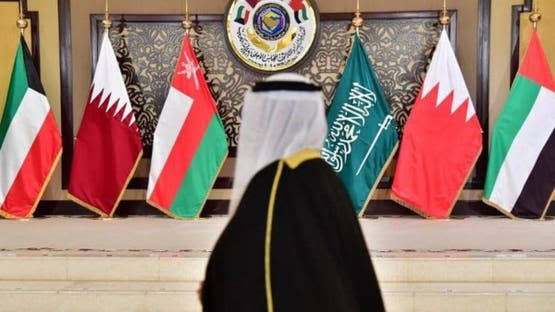
Qatar, for its part, was among the Gulf capitals that pressed the U.S. administration most heavily after fighting resumed on February 28, and sought to contain the deterioration despite coming under direct attack. Available figures indicate that both Oman and Qatar have been hit by missile and drone strikes since the start of the war, with Oman targeted by 17 missiles and Doha by 271.
Over the same period, the UAE was hit by 2,156 missiles, Saudi Arabia by 770, Bahrain by 429, and Kuwait by 240, while Israel was hit by 920. These figures show that the UAE has been the country most heavily exposed to Iranian attacks during the current war.
What next?
The real test now is whether the halt in attacks on Qatar is the opening step toward a broader de-escalation that could allow for a more serious negotiating channel, or merely a temporary redistribution of military pressure ahead of another round of escalation.
(Analysis)
The numbers raise a question that goes beyond mediation itself: how does Iran rank its target bank, and how does it classify its adversaries in this war? While Israel came under major strikes and continued to hit Iranian territory and kill successive layers of leaders, the largest share of Iranian missiles fell on the UAE by a wide margin over all other states. That opens a much broader question over whom Tehran truly sees as its most dangerous adversary, and where deterrence and aggression sit in its wartime strategy.
Source: