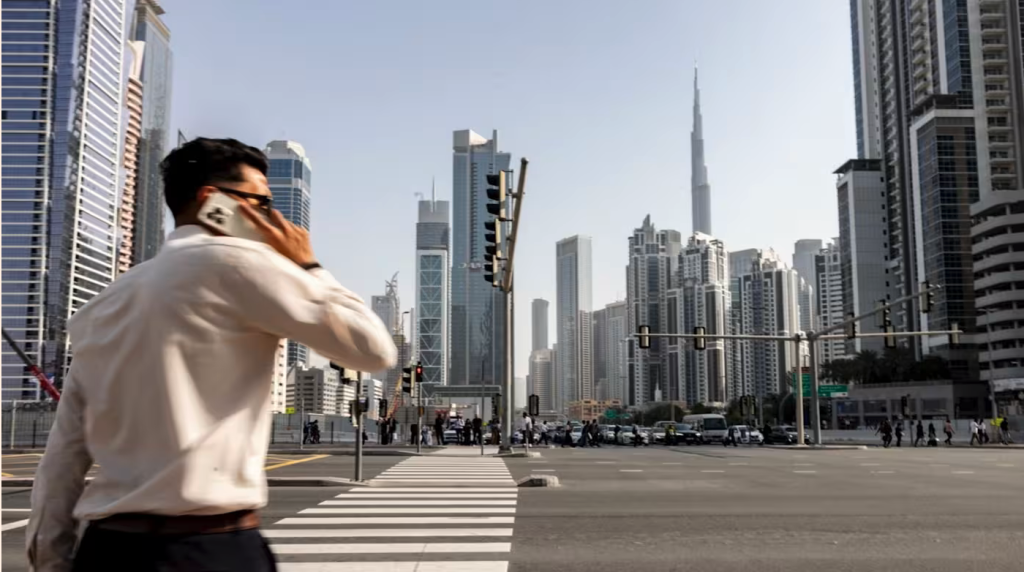
The war with Iran has placed Dubai under unprecedented pressure, transforming the city—which for years marketed itself as a secure sanctuary for global wealth—into an arena where risk is being recalibrated. According to a report published by Axios on March 9, Dubai’s role as a global financial hub and a preferred destination for the international elite faces its first significant trial since its ascent as a regional capital for finance and business.
The Details
• Strategic Diversification: Axios explained that the UAE, alongside Saudi Arabia and Qatar, has spent years diversifying its economy away from oil, utilizing sovereign wealth to bolster its presence in global finance. Dubai has been the most successful in rebranding itself as a destination for the wealthy and fund managers, thanks to tax exemptions and high levels of safety.
• A New Kind of Threat: Axios noted that the novelty today is Dubai’s entry into the circle of direct targeting. The danger no longer pertains only to low crime rates or street-level security, but to threats from the skies in a time of war.
• By the Numbers: According to figures cited by Axios from Henley & Partners, nearly 10,000 millionaires moved to Dubai last year, bringing a wealth of approximately $63 billion. Furthermore, the Dubai International Financial Centre (DIFC) hosts 120 family offices managing assets worth roughly $1.2 trillion.
• A Hub for Deals: Axios added that Dubai has become a primary execution point for Gulf sovereign wealth fund deals, with the number of hedge funds opening offices in the city doubling last year.
• A Conflicting Scene: In a picture reflecting the turbulence of the current situation, Axios stated that some wealthy individuals are trying to leave Dubai for fear of Iranian strikes. Conversely, as reported by the Financial Times and cited by Axios, others are seeking a quick return to ensure they do not lose their tax residency benefits.
What’s Next?
The true test now is not merely whether Dubai can endure through a security lens, but whether it can maintain its “equation of attraction” if the risk of war becomes a permanent factor in residency and investment decisions. The conclusion from Axios is that rising oil prices are no longer a net gain as they once were; any disruption to supplies or a closure of the Strait of Hormuz could strike the broader economic model built on finance, services, and trust.
Source: Axios