What happened
In the context of the military escalation that began on February 28, 2026, the Iranian missile fitted with a cluster warhead has emerged as a notable feature in the latest waves of attacks on Israel.
The basic concept of this weapon is that the warhead does not explode directly on impact. Instead, it opens in the air and releases dozens of small munitions over a broad area. This means that a single missile does not strike just one point. It turns an entire zone into an area of falling fragments, scattered explosives and secondary blasts.
According to the information in the text, this weapon is not entirely new on the battlefield. Iran used it before, but it has returned forcefully in the current war, especially in strikes targeting densely populated areas in central Israel.
Detail: how does this missile work?
1.Operating mechanism
The missile carries a large warhead weighing roughly 1,500 to 2,000 kilograms. When it reaches high altitude, the warhead opens in the air and releases between 20 and 80 small munitions.
2.Wide-area spread
The small munitions fall across a broad circle with a radius that may reach around 8 kilometres, making the impact area far larger than that of a conventional missile designed for a single-point strike.
3.Military purpose
This type is designed to enlarge the destruction footprint, hit dispersed targets and complicate air defence efforts by turning one missile into a large number of falling objects.
4.Defensive challenge
Even if defences succeed in intercepting the main body, the dispersed smaller munitions remain a problem because they descend along multiple trajectories and are far harder to control.
Which missile types are associated with it?
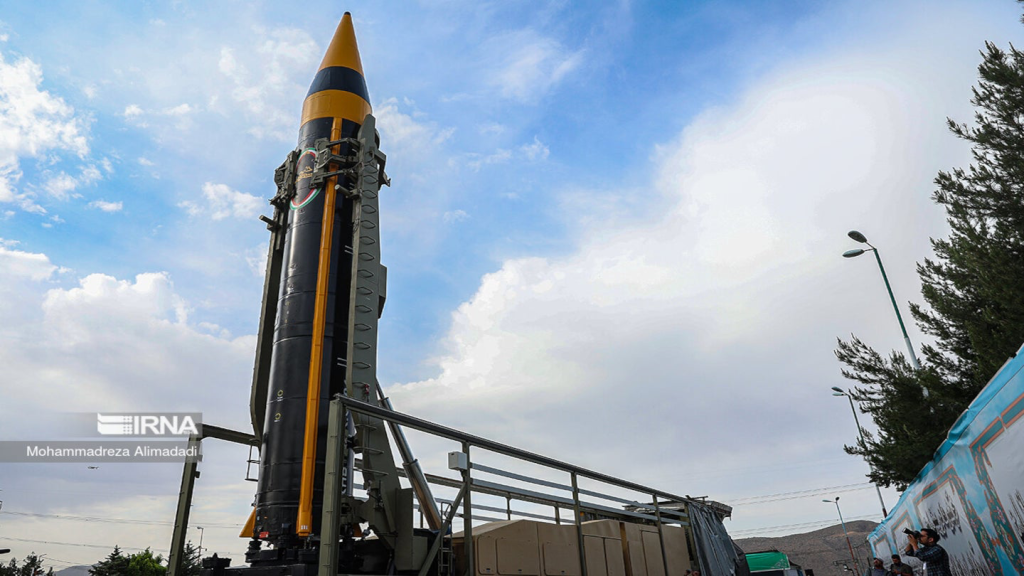
1.Khorramshahr 4
It is believed to be one of the main missiles capable of carrying this type of warhead. It is a heavy, long-range missile with a large payload.
2.Zolfaghar
It is cited among the missiles capable of carrying cluster warheads in some uses or modified configurations.
3.Qadr
It also appears among the category of missiles that can be equipped with this type of warhead.
4.Sejjil
Its name is also raised in assessments as one of the missiles that may fall within this weapons pattern.
5.Modifications to other missiles
Some estimates suggest that missiles such as Qiam or Fateh could be modified to perform a similar function.
What do the field indicators say?
1.The Israeli military has spoken of at least 5 to 6 cluster-warhead missiles launched since the start of the current war up to March 7, 2026.
2.Most of these missiles were directed at densely populated areas in central Israel, especially Tel Aviv and its surroundings.
3.Attacks carried out between March 1 and March 3 caused casualties and material damage.
4.Circulating footage showed multiple fiery trails in the sky, in a scene consistent with aerial fragmentation and the dispersal of small munitions.
The legal and humanitarian controversy
1.Why does this weapon provoke so much controversy?
Because its effect does not remain confined to a narrow military target. It extends across a wider area, increasing the danger to civilians and civilian facilities.
2.The problem of unexploded munitions
One of the most dangerous aspects of this weapon is that some of the small munitions may fail to detonate immediately and remain on the ground afterwards, turning into a delayed threat to civilians.
3.The Israeli and American position
Israel and the United States argue that the use of these munitions in populated environments reaches a highly serious legal and humanitarian threshold, and they link that to allegations of war crimes.
4.The Iranian position
According to the text, Iran has not issued a direct official comment on the specific type of warheads used, but it continues to present its attacks as defensive retaliation against targets linked to the United States and Israel.
The weapon in Iran’s internal power map
1.The Revolutionary Guard
It remains the institution most closely tied to the ballistic missile programme and holds the strongest hand in the military decision to use this type of weapon.
2.The presidency and the temporary council
At the same time, another line inside the system appears to be trying to reduce the political and regional cost, especially as tensions with neighbouring states rise.
3.The symbolism of the cluster warhead missile
This weapon now reflects more than a military function. It has also become a symbol of the dominance of the hard-response logic inside the system over the logic of diplomatic de-escalation.
The direct impact on the battlefield
1.It increases pressure on Israeli air defences, because dealing with one main body is very different from dealing with dozens of smaller munitions.
2.It expands the zone of danger inside cities and populated areas.
3.It raises the political cost for Iran because of the nature of the weapon and its legal sensitivity.
4.It pushes Israel to intensify strikes on launch platforms and missile stockpiles deep inside Iran.
(Analysis)
The importance of the cluster-warhead missile in this war does not lie only in the number of strikes carried out with it, but in the message it carries. Iran appears to be seeking a way to increase the effect of a single missile and strain interception systems, without always having to multiply the number of missiles launched.
But this relative military gain comes with a high political and humanitarian price. The wider the dispersal area, the harder it becomes to defend the use of the weapon as a precise or confined strike. For that reason, this weapon adds not only destructive capability, but also a new layer of controversy over the nature of the war and its limits.
What next?
1.Watch whether the use of this type of weapon expands in the next rounds of attacks.
2.Follow how Israeli defences adapt to this pattern of threat.
3.Track whether political and diplomatic pressure pushes Iran to reduce its use or to broaden its denial of the weapon’s nature.
4.Pay close attention to any new reports of unexploded munitions on the ground, because that would increase the humanitarian and legal pressure.