The event
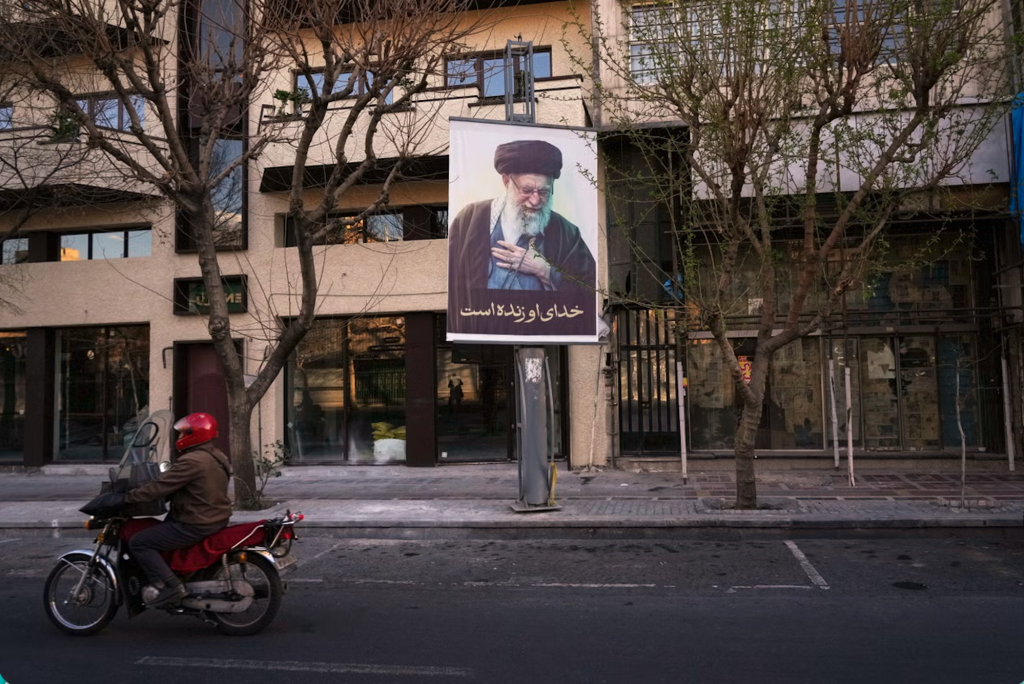
After Ali Khamenei’s killing, the war is moving into a phase defined by one central question: who can sustain the fight. Inside Iran, decision-making is consolidating rapidly in the hands of the Islamic Revolutionary Guard Corps (IRGC), while externally Iran projects conflicting political and media lines — denying hostility toward Gulf states on one hand, while continuing cross-border strikes that pressure regional capitals and disrupt trade and energy flows on the other.
In parallel, the pathways to ending the war now hinge on three measurable variables: how much of Iran’s launch infrastructure and missile storage has been destroyed; how intact Iran’s command-and-control remains after the strikes; and how far the external coalition expands — and whether it shifts from defense to offense if attacks on civilian areas and critical infrastructure persist.
Facts changing the calculus now
1) The centre of gravity shifts inside Iran to the IRGC
Reports say Iran appointed Ahmad Vahidi as IRGC commander on March 1, after senior figures were killed in the strikes.
Vahidi is internationally known and has been historically linked to leadership of the Quds Force for years in the 1990s in published profiles — a background that typically corresponds to a harder-line security approach.
2) Diplomacy becomes hostage to a battle of messages inside the system
While Foreign Minister Abbas Araghchi has said Iran is not in a state of hostility toward Gulf countries, other Iranian positions have appeared more rigid about returning to talks with Washington.
This contradiction increases the likelihood that the foreign ministry has less influence over escalation and de-escalation decisions — weakening the prospects of a rapid negotiated track unless the balance inside the real decision circle shifts.
3) Indicators of the scale of strikes inside Iran
Open-source research assessments have spoken of more than 2,000 targets struck and of air superiority over Tehran, alongside ongoing strikes on missile systems, command centres, and air defenses.
These figures matter because they shift the war from a question of political intent to one of remaining capability: how many launchers are still functioning, and how many command-and-control rooms can still manage repeated waves of launches?
4) A widening regional theatre creates counter-pressure on Tehran
Strikes hitting several Gulf states — as reported in media coverage — raise the political and economic cost of prolonging the war and increase the likelihood of a broader international reaction if attacks on infrastructure and civilians continue.
(Analysis) Three practical end-state scenarios
Scenario 1: Attrition of missile capability and command-and-control
This is the pathway most tightly linked to the balance of force. As Iran’s ability to conduct organised launches shrinks — through destruction of launch platforms, missile stockpiles, and command-and-control networks — its capacity to impose sustained costs on opponents declines, opening a window for a ceasefire on tougher terms.
Daily indicator to watch: a drop in launch tempo and in accuracy/co-ordination, alongside rising talk of repositioning and shifting from broad salvos to sporadic attacks.
Scenario 2: A conditional political deal via mediation — after a new deterrence balance is set
This assumes diplomacy does not proceed from a weakened foreign ministry, but after lines of control inside Tehran become clearer. Vahidi’s appointment signals a security ascendancy that makes a deal harder — not impossible — if military pressure is paired with wide economic and diplomatic pressure, plus guarantees tied to sanctions relief and the nuclear track.
Scenario 3: Coalition expansion driven by attacks on civilians and critical infrastructure
The more regional strikes intensify, the more likely the global response shifts from containment to broader participation in striking Iran’s missile and drone capabilities — potentially accelerating the end of the war, but also risking escalation without a clear ceiling.
At the same time, an expanded coalition can also serve an Iranian objective in the short term: Tehran may calculate that widening the war produces a more “dignified” defeat, or internationalises the conflict to create an exit ramp to accept side mediations.
(Analysis) Why a popular uprising — or an ethnic minority revolt — is unlikely now
Mass protest requires two conditions that are rare in wartime: a safe organising space and a visible split inside coercive institutions. Ethnic minority revolt, meanwhile, typically depends on weakening security and military pillars and on permissive border environments. At this moment, available indicators do not support this as the fastest path to ending the war, compared with the attrition of missile and command-and-control capability.
What to watch in the coming days
1.Daily indicators: number of launch waves, their directions, and their ability to penetrate defenses — a proxy for stockpiles and command-and-control.
2.Any credible announcement of command nodes or strategic communications centres destroyed, because this shortens the war more than scattered target hits.
3.Iran’s official language: do foreign-ministry messages converge with security-institution messaging, or remain contradictory?
4.Signals of widening international participation if attacks on the Gulf, infrastructure, and energy persist.