Iran fired missiles at several Gulf Arab states in response to U.S. and Israeli strikes, Reuters reported. Kuwait, Qatar, the UAE, and Bahrain said they were in the line of fire and that most missiles were intercepted, while the UAE reported one fatality in Abu Dhabi.
The attacks pulled the confrontation directly into Gulf cities that are typically associated with high security and stability, prompting heightened air-defense alerts and renewed disruptions to civilian aviation across parts of the region.
Detail
•Reuters: Several Gulf states said they intercepted incoming missiles; Reuters also reported debris falling near a U.S. naval support facility in Bahrain.
•Associated Press: The U.S.-Israeli strikes were described as a coordinated operation, with Iran responding via missiles and drones aimed at U.S. and Israeli-linked targets, alongside emergency international diplomacy to contain the escalation.
(Analysis) Why this target set?
This is a multi-angle reading of what can be inferred from the pattern of strikes, without claiming certainty about Tehran’s internal deliberations.
1.Geography and speed
Gulf cities sit within relatively short missile ranges from Iran’s coastline, enabling a rapid response with tighter control over timing and intensity than more distant theaters.
2.A message to Washington through the nearest arena
Reuters noted the targeted states host U.S. military presences. Striking in or near these operational environments can raise the perceived cost of U.S. action without immediately opening additional fronts against non-Arab neighbors.
3.Energy risk as leverage
Hitting Gulf states — or even forcing repeated air-defense alerts and airspace disruptions — signals to markets that supply, shipping, and insurance risk can rise quickly. That pressure can be applied without necessarily committing to a broader regional war.
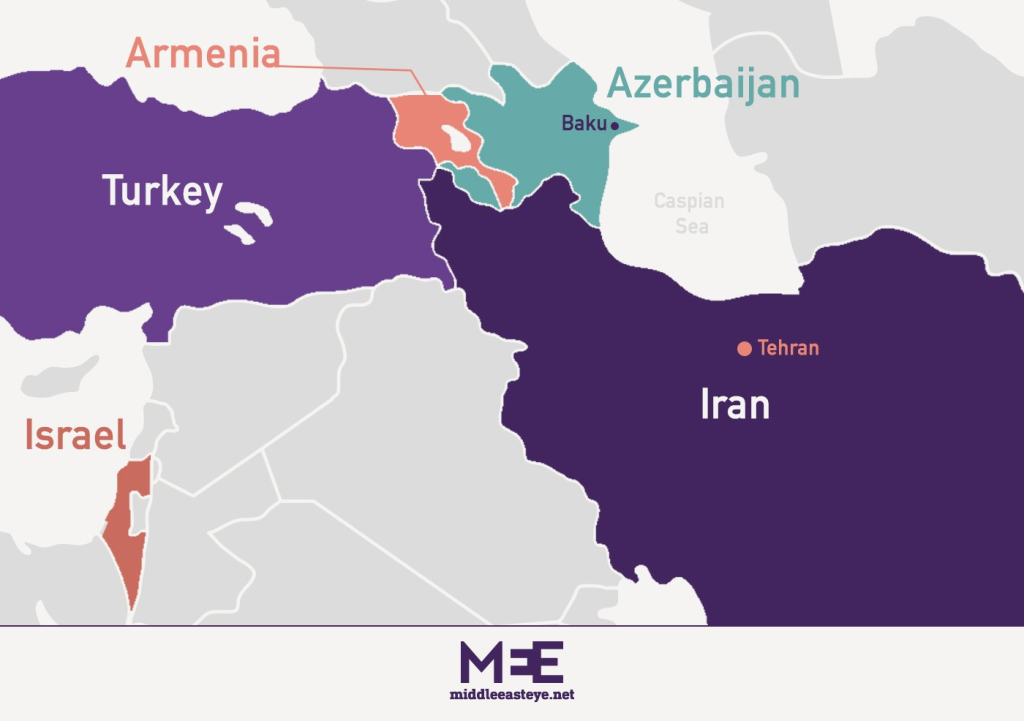
4.Avoiding a wider map
Even where non-Arab neighbors host U.S. facilities or maintain ties with Israel, expanding the fight to new borders would multiply diplomatic and military variables. Turkey’s long-standing framework governing U.S. presence at Incirlik illustrates how some theaters carry alliance and treaty sensitivities that can complicate escalation.
5.Domestic narrative and deterrence optics
Strikes on Gulf Arab states can carry disproportionate symbolic impact in Iranian messaging — projecting that Iran can impose costs on what it portrays as an adjacent U.S. security architecture — while keeping other doors open for de-escalation.
What next?
•Two tracks to watch: Iran either caps its response at this level to avoid a broader counter-strike, or gradually shifts toward more direct U.S. assets if attacks on Iran continue.
•Practically, civil aviation advisories, airspace closures, and shipping/insurance movements in the Gulf will be among the fastest indicators of escalation or stabilization.