Over the past 48 hours, the public mood in Tel Aviv has shifted noticeably. Television news broadcasts have led with the prospect of an imminent American strike on Iran. Quietly, reservists are being called up, and travel plans are being reconsidered in anticipation of potential airspace closures if war erupts.
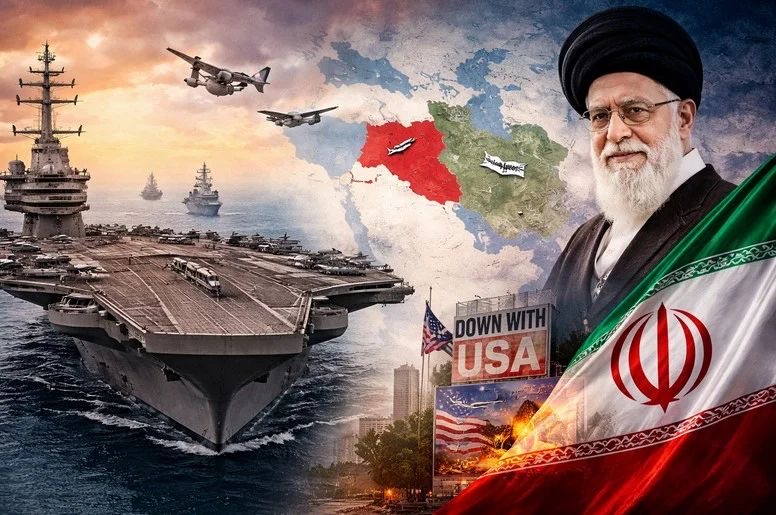
Israel’s political and military leadership assesses that negotiations with Tehran are unlikely to produce meaningful results and that the probability of escalation is high. At the same time, American media reports indicate that U.S. forces in the Middle East have reached a level of deployment not seen in roughly a decade. The aircraft carrier USS Gerald R. Ford is moving eastward in the Mediterranean to join the USS Abraham Lincoln, while dozens of strike and intelligence aircraft have been transferred to the region. Reports suggest U.S. forces could be ready to act within days, although no final decision has been announced.
The Nature of a Potential Strike
Regional sources estimate that if Washington acts, it would likely do so on a broad scale, aiming in the opening hours to significantly degrade Iran’s retaliatory capacity, particularly its ballistic missile program. However, reports indicate that President Trump is also weighing the option of a limited strike designed to pressure Tehran into showing flexibility in negotiations.
Several regional assessments question the effectiveness of a limited strike, arguing that Tehran would not interpret any attack as limited and would likely respond regardless of scope. There is also concern that a symbolic or calibrated blow could be perceived in Tehran as a temporary show of force, reducing incentives to compromise.
Iran has warned, including in a letter to the UN Security Council, that it would target U.S. bases in the region if attacked. Iranian officials have publicly threatened broad escalation. As a result, many regional observers believe that if a strike occurs, it would seek to inflict substantial damage on Iran’s military infrastructure within the first 36 hours.
Israel has previously targeted elements of Iran’s air defense systems and exposed vulnerabilities in aspects of its command and control structure. Reports suggest that among the options under consideration is targeting senior political and military leadership. Recent visits by Israeli security officials to Washington point to close coordination.
Domestically, Israel is preparing for the possibility of a prolonged confrontation, potentially involving weeks of missile and drone fire and the accompanying economic and civilian strain.
Objectives of the Confrontation
In an optimistic Israeli scenario, a large-scale strike could severely damage Iran’s nuclear program, dismantle significant parts of its missile infrastructure, and weaken key power centers, particularly within the Revolutionary Guards. Such a blow, according to this view, could open the door to internal change, especially given Iran’s ongoing economic crisis and political pressures.
Even in a less decisive scenario, a broad American strike would likely weaken Iran’s regional standing. Some assessments argue that Tehran’s rational choice might be to accept complex U.S. demands and seek to manage implementation over time. However, many experts contend that Iran’s leadership views both its nuclear and ballistic missile programs as essential to national security, making major concessions unlikely.
Potential Surprises!
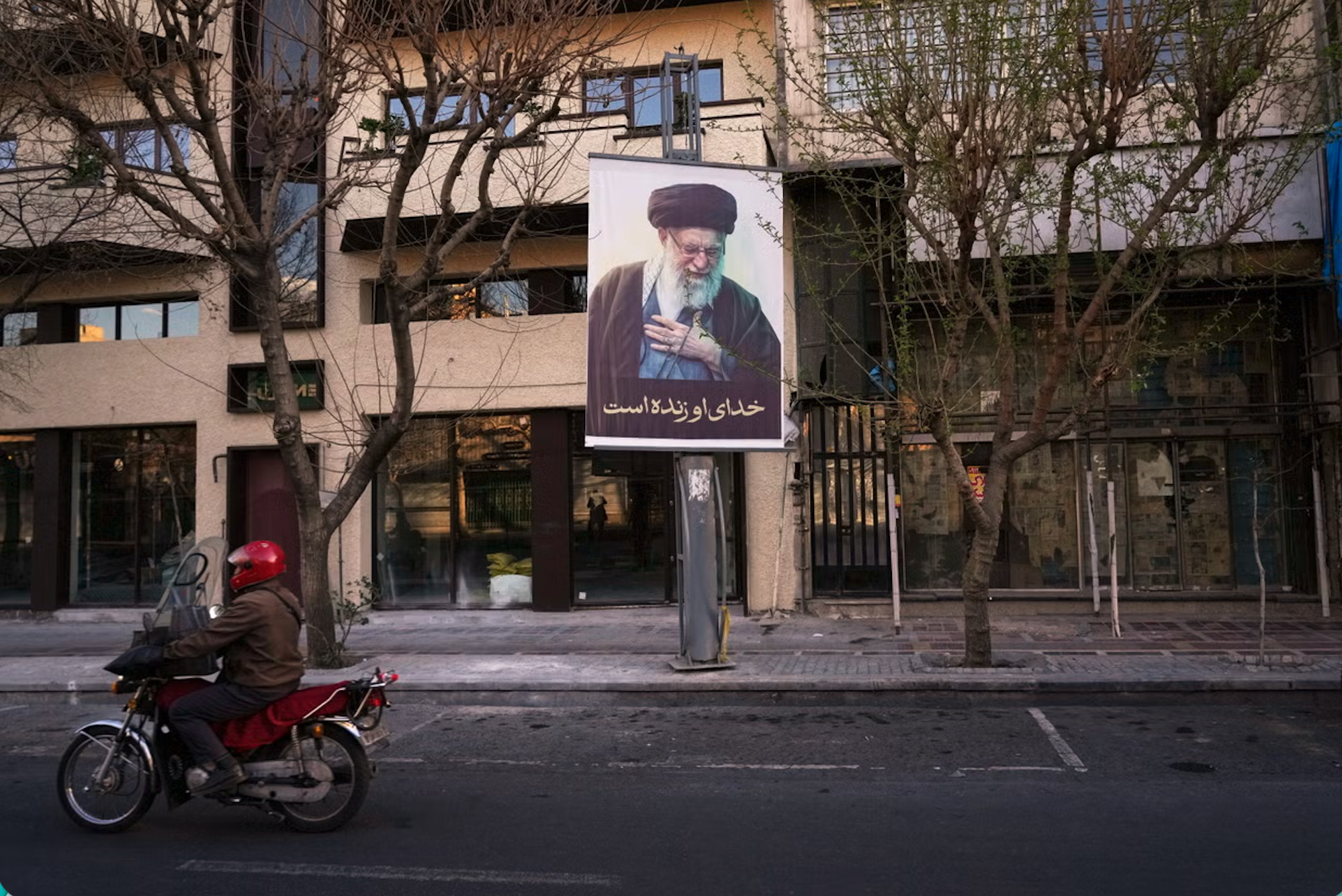
There is concern in Israel that Iran could attempt a preemptive strike if it concludes that a U.S. attack is inevitable. According to assessments, Tehran has sought to improve its command and control systems, with priority given to protecting the political leadership, particularly the Supreme Leader.
Iran is expected to target population centers, military bases, and critical infrastructure in Israel. Ballistic missiles are considered Tehran’s primary deterrent tool, despite Israel’s multilayered missile defense systems. However, the volume of potential incoming fire and the high cost of interception mean that complete protection cannot be guaranteed.
Israeli and Gulf assessments suggest that Iranian retaliation could also extend to energy infrastructure in the Gulf, including countries such as the United Arab Emirates and Bahrain. Scenarios under discussion include attempts to disrupt shipping through the Strait of Hormuz or target oil facilities, raising the economic cost for Washington and its partners.
For Tehran, success may ultimately be defined by regime survival. Even a limited but sustained response could be presented domestically as a victory if the leadership remains intact and in control.
Analysis
Expanding the scope of conflict could serve as an Iranian strategy to deter a decisive blow by increasing the economic and political costs for the United States. Conversely, some argue that refraining from action or conducting only a symbolic strike could embolden Tehran and reinforce its perception of resilience.
The Exit Strategy Question!
A central issue remains the question of an exit strategy. Are there coordinated channels with elements inside the regime or with opposition groups capable of capitalizing on any shift? Some assessments warn that without a clear vision for the aftermath, a strike could produce unintended consequences.
On the international level, Moscow and Beijing are closely watching developments. Iran and Russia have recently conducted joint naval drills, though there is no indication of a formal alliance. China relies on Iran for approximately 10 percent of its oil imports, and any large-scale escalation could affect global energy security and the broader strategic rivalry between Washington and Beijing.
In sum, the region stands at a critical juncture. While no final decision has been publicly announced, the elevated state of readiness suggests that the coming days could prove decisive.