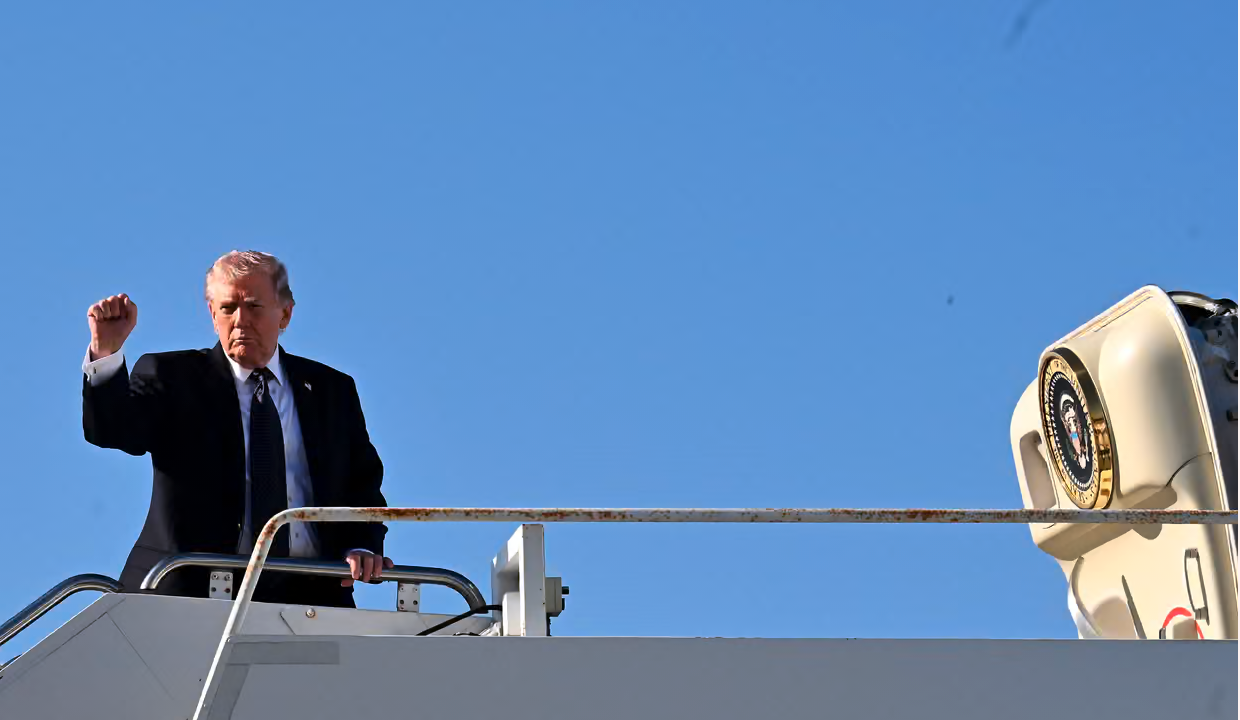
WASHINGTON: Trump said in a Truth Social post that he would lift the global tariff from 10 percent to the fully allowed 15 percent level, framing the move as legally defensible in the wake of Friday’s Supreme Court decision.
The Supreme Court ruled 6–3 on Friday that Trump could not rely on the International Emergency Economic Powers Act to impose the contested tariffs, dealing a major setback to the legal foundation of the administration’s earlier sweeping import duties.
Within hours, the administration signaled it would keep broad-based tariffs in place by shifting to Section 122. On February 20, the White House issued a proclamation asserting that fundamental international payments problems exist and that a temporary import surcharge is required to address large and serious US balance-of-payments deficits.
Section 122, codified at 19 USC 2132, permits the president to proclaim a temporary import surcharge not exceeding 15 percent ad valorem for a period not exceeding 150 days unless Congress extends that period by law.
Trump also indicated that further trade actions could follow in the coming months, as the administration develops new tariff measures designed to fit within legally permissible authorities after the Court’s ruling.
The ruling has also created uncertainty around previously collected tariff revenues. The Wall Street Journal reported that the Court’s decision puts roughly $133.5 billion in tariff collections in limbo, with questions remaining over whether refunds will be required and how any repayment process would work.
(Analysis) The rapid pivot highlights a central tension in the administration’s trade strategy: preserving broad tariff leverage while navigating tighter judicial limits on emergency-based economic policy, likely setting up fresh litigation and renewed political pressure on Congress if the White House seeks to extend tariffs beyond Section 122’s 150-day window.
.