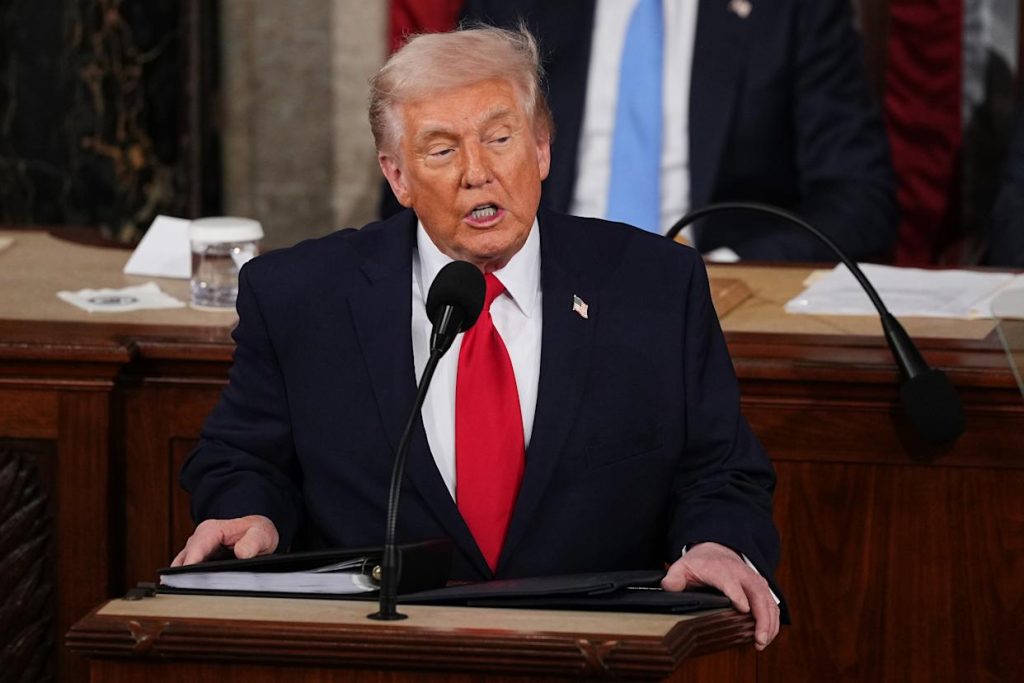
Trump did not make Iran the centrepiece of a domestically loaded State of the Union speech. But he inserted Iran at a pivotal moment in the narrative: framing denial of a nuclear weapon as a red line, then widening the charge sheet to include missile development and backing of militant actors, while repeating that he prefers diplomacy but will act if talks fail.
That combination mattered less for its length than for its function. It moved the public debate away from a binary question of whether force is on the table and toward the operational and political questions that precede action: how soon, on what legal and strategic basis, and at what scale. Reuters characterised the speech as a rare, high-visibility opportunity to present a concise public case for potential military steps at a moment when the administration faced criticism for building up forces without fully explaining the rationale.
The context around the speech amplified the signal. Axios reported that behind the scenes, senior officials briefed the congressional leadership group often referred to as the gang of eight on the evolving crisis, while negotiations were still being described as active and potentially returning to Geneva.
In parallel, investigative reporting described a sharp expansion of U.S. air and naval posture: more than 150 aircraft deployed across Europe and the Middle East, with advanced platforms positioned to support a sustained air campaign while limiting exposure to Iranian missile threats. The reporting noted that most aircraft were stationed in Europe, suggesting a posture designed for scale and survivability rather than a short, symbolic strike.
(Analysis) How Trump sells force while saying he wants diplomacy
The speech architecture follows a familiar political pattern: set a simple public threshold for peace, then keep the burden of failure on the other side. Axios described the address as the first time Trump publicly laid out a rationale for possible war while still presenting diplomacy as the preferred route. That sequencing preserves flexibility: it supports continued talks and simultaneously lowers the political cost of escalation if the talks are later framed as insufficient.
Equally important is the synchronisation between message and posture. A limited verbal reference, delivered from the biggest domestic platform of the year, becomes more consequential when paired with visible force movements that communicate readiness. In that sense, the Iran segment did not need to dominate the speech to perform its job: it had to put the logic of action into the public record at the same moment the operational option set was becoming more credible.
What next
The near-term test is whether the Geneva-linked track produces a framework Trump can present domestically as a clear win. If it does not, the State of the Union segment becomes a ready-made reference point: the public rationale has been placed on record, and the administration retains freedom of timing and scale under the banner of preventing a nuclear-armed Iran.