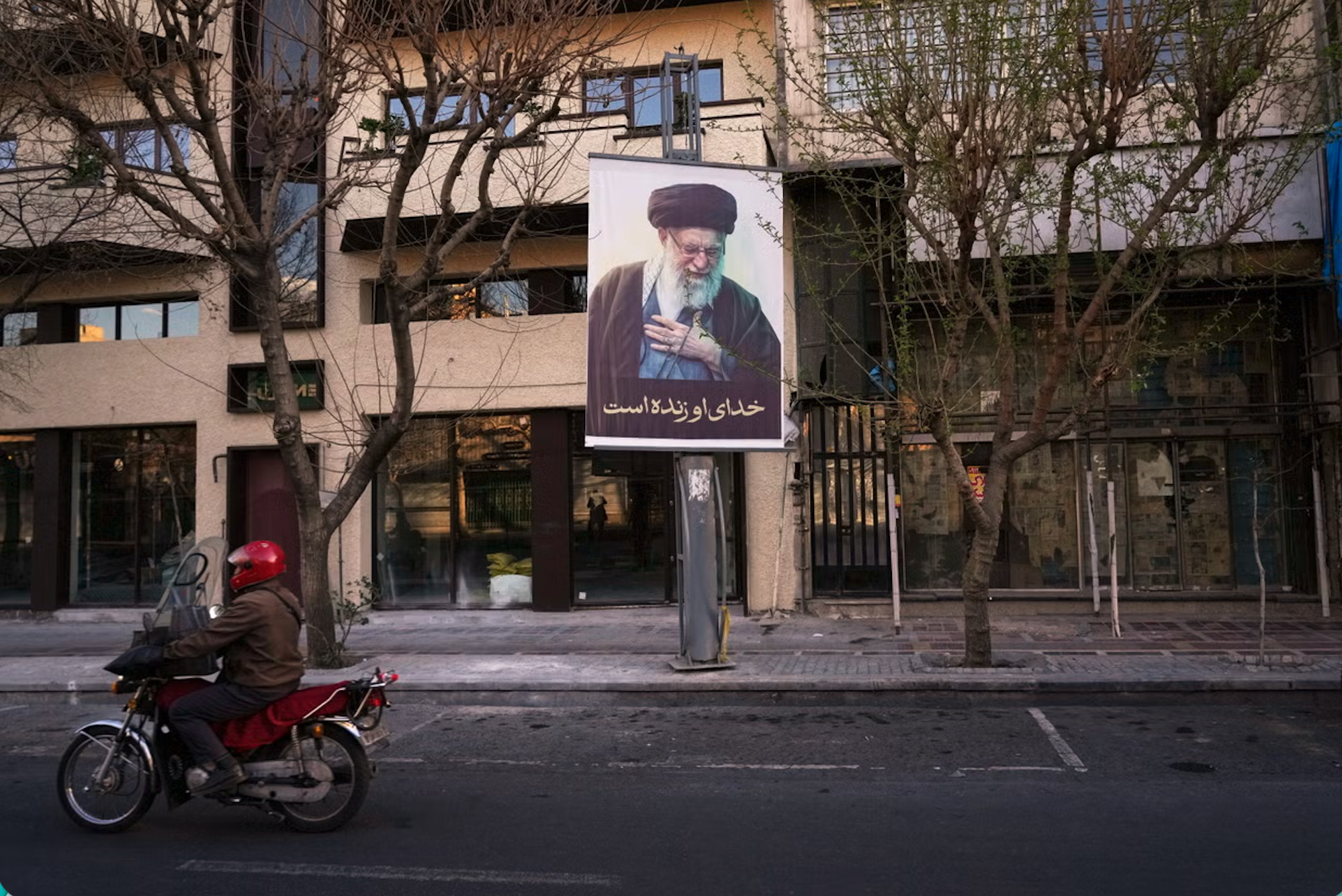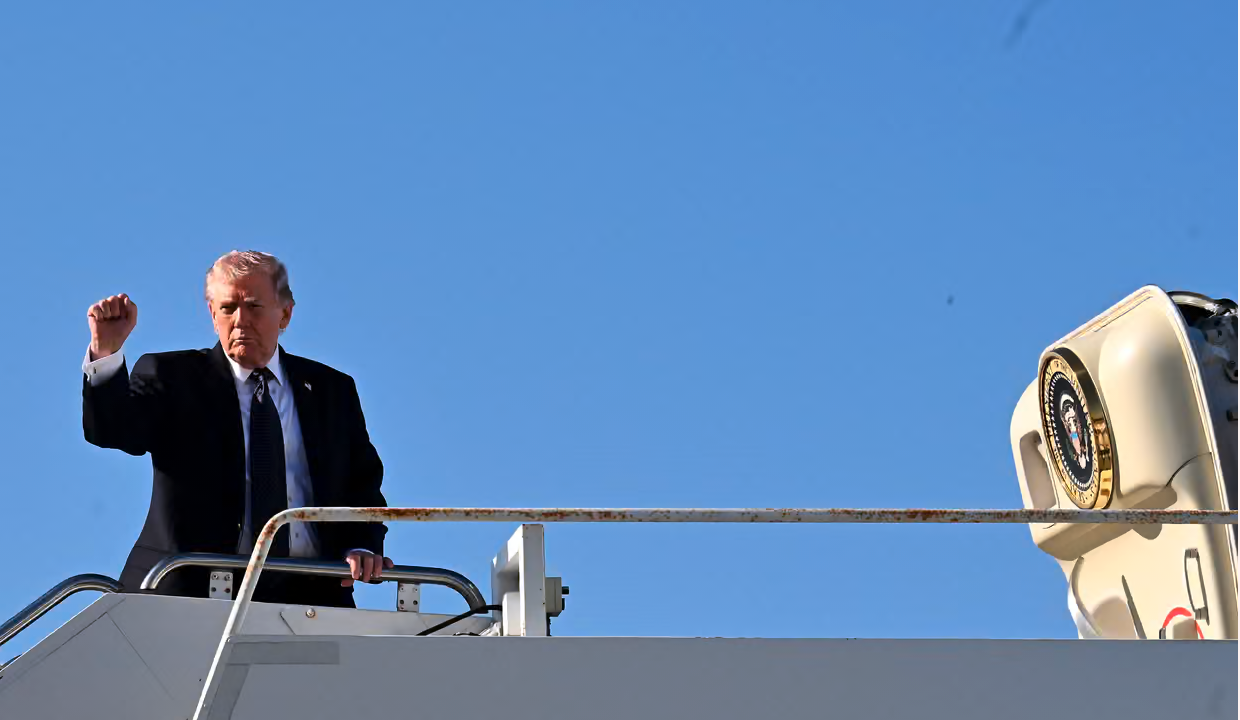
POLITICO’s Alexander Burns argues that President Donald Trump’s legacy has become clearer than ever in the wake of the strike on Iran’s regime and the death of Supreme Leader Ali Khamenei. In Burns’ telling, Trump is “burying the 20th century” — its villains, alliances, political norms and ceasefires — while unleashing a future defined by uncertainty and disruption, with no new equilibrium in sight.
Across both of his presidential terms, Burns writes, Trump’s most consequential achievements have been acts of demolition rather than construction. He points to the Supreme Court’s reversal of Roe v. Wade as an end to the decades-long legal and political stalemate over abortion rights. He cites U.S. military interventions in Latin America that pushed Cuba’s government — one of the last Cold War-era regimes — toward collapse. He argues that Trump’s tariffs and trade threats shattered the Reagan-to-Clinton consensus on free trade, upending decades of global commercial arrangements and diplomatic relationships.
Burns also contends that Trump’s “America First” worldview and contempt for Europe’s political establishment have increasingly relegated NATO’s 1949 charter to “antique status.” And he says Trump’s corporate favoritism, personal enrichment and use of the justice system for vengeance have erased many of the post-Watergate legal and ethical norms that once constrained presidential power. The strike that killed Khamenei, Burns writes, eliminated the enduring leader of the 1979 Iranian revolution — another crumbling artifact of the 20th century.
In each of these cases, Burns notes, Trump’s allies frame the president as finishing the unfinished work of a generation — doing what previous leaders were too weak, conventional or unpatriotic to do. But Burns argues that Trump is tearing down old systems without a coherent vision for what should replace them. At 79, Trump is himself a product of the post-World War II era he is now unwinding, Burns writes, and it is not evident that he is interested in designing the grand policies of the future.
Even if Trump had a modernizer’s imagination, Burns argues, time is not on his side. Trump has roughly 35 months left in office and only about eight months before midterm elections that could constrain his power. Burns says it is unlikely that, before Trump leaves office, the world will see a stable global trade order, thriving new governments in Havana and Tehran, or a post-NATO international security system that reflects what Burns calls America’s overdue destiny as a Pacific nation.
Burns contrasts Trump’s approach with Joe Biden’s failed effort to position himself as a steward of history and norms. Trump’s opponents long criticized him for a thin grasp of 20th-century achievements such as NATO, NAFTA and arms control, and Burns says Biden sought to restore and repair what Trump had broken. But Biden’s slow, self-satisfied and politically dysfunctional administration, Burns argues, did not deliver on that promise — and in doing so, it squandered the chance to build a bridge back to the 20th century.
By the time America chooses Trump’s successor, Burns suggests, restoring the old order will not be an option. The next president will not be able to recreate détente with regimes in Iran and Cuba, which Burns says are unraveling now. U.S. credibility as a trade negotiator has already been altered permanently, he argues, and NATO’s role will not return to its late-1990s stature simply because a future president recommits rhetorically to allies.
Burns underscores that this reality is already apparent to foreign leaders. He cites Canadian Prime Minister Mark Carney’s remarks at the World Economic Forum in Davos, where Carney said the old order was not coming back and described an epochal rupture in geopolitics — a speech Burns calls the climactic moment of the meeting.
Yet, Burns argues, for all Trump’s zeal to crush big institutions, enemies and conventions of the past, he has not yet locked in a durable future agenda. Many of Trump’s policies on technology, energy and international security, Burns writes, could be undone by a successor as quickly as Biden reversed Trump’s earlier policies. Other moves, such as Trump’s major tax cuts, are unpopular and could face reversal when Democrats return to power. Burns adds that the broad coalition that delivered Trump’s 2024 win fractured within months of his inauguration, undermining hopes of a lasting political realignment.
If the 20th century is truly dead, Burns concludes, America’s trajectory in the 21st remains an immense question mark. That uncertainty, he argues, is Trump’s most consequential inheritance for the next president — and, for a visionary successor, an opportunity unmatched in recent U.S. history.