The war is moving toward a new operational threshold with the approaching arrival of the 31st Marine Expeditionary Unit in the Middle East.
The basic idea is the addition of a rapid intervention tool that can move from sea to land in a short time, giving Washington the option of carrying out targeted raids if it concludes that the Iranian threat in the Strait of Hormuz can no longer be contained by airstrikes alone.
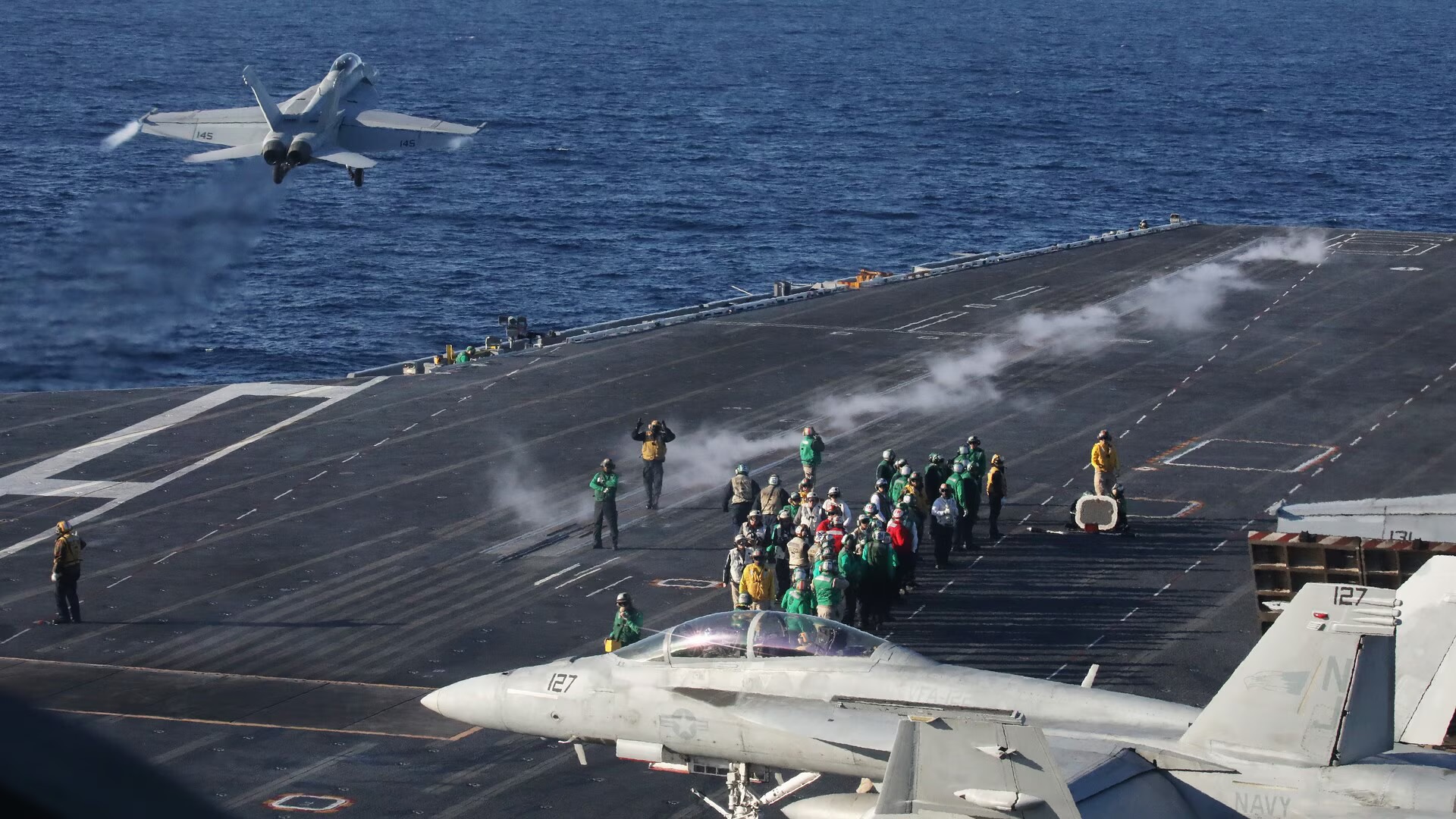
This assessment aligns with what The New York Times reported about the unit’s role, along with overlapping reports about the dispatch of the amphibious assault ship USS Tripoli to the region.
The importance of this is tied to the nature of the problem itself: small fast boats that can carry mines or launch hit-and-run attacks and then withdraw.
With maritime traffic becoming more complicated and commercial vessels coming under attack in recent days, having a force capable of moving close to islands and narrow passages becomes a matter of direct military value.
Detail
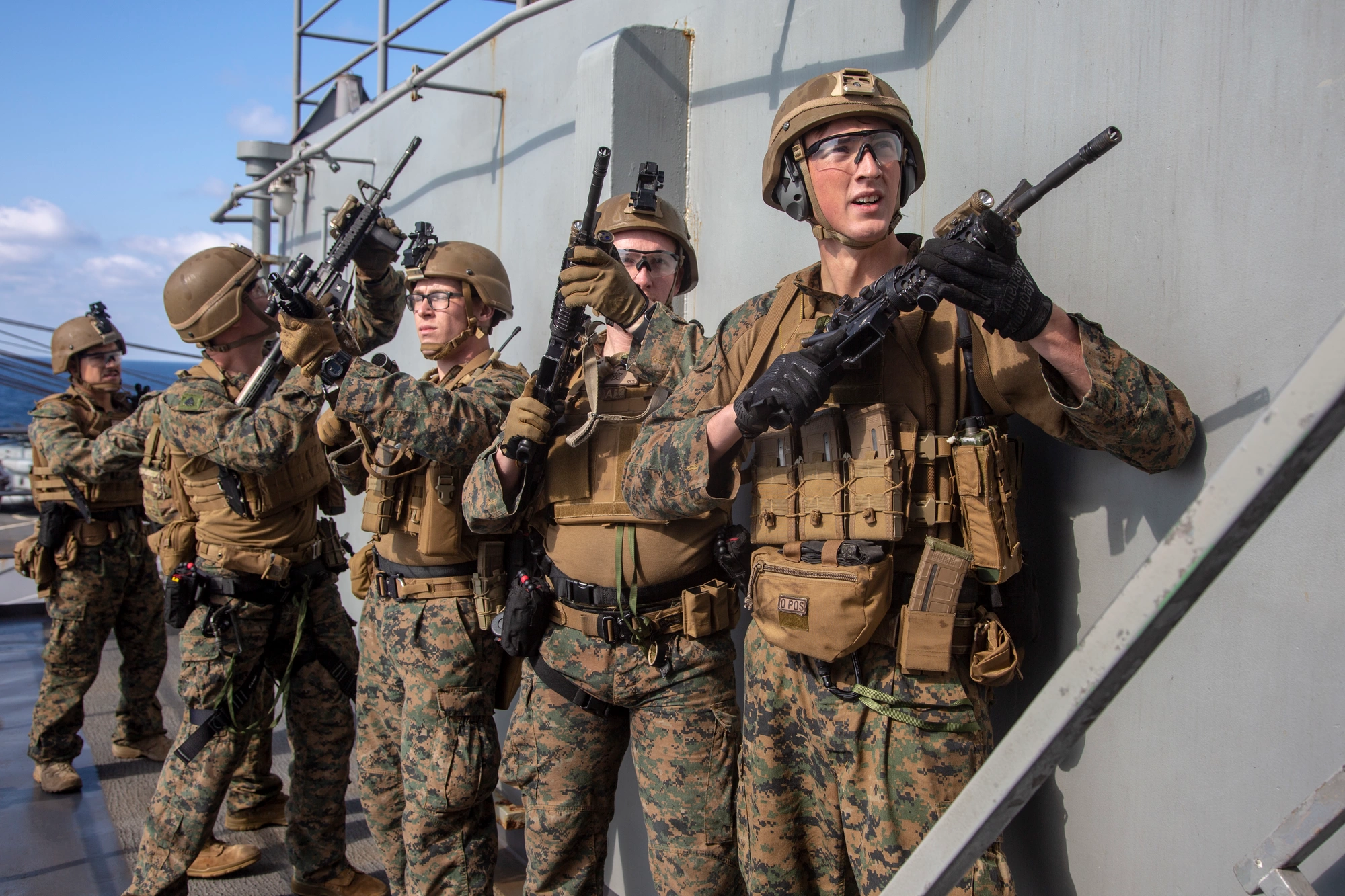
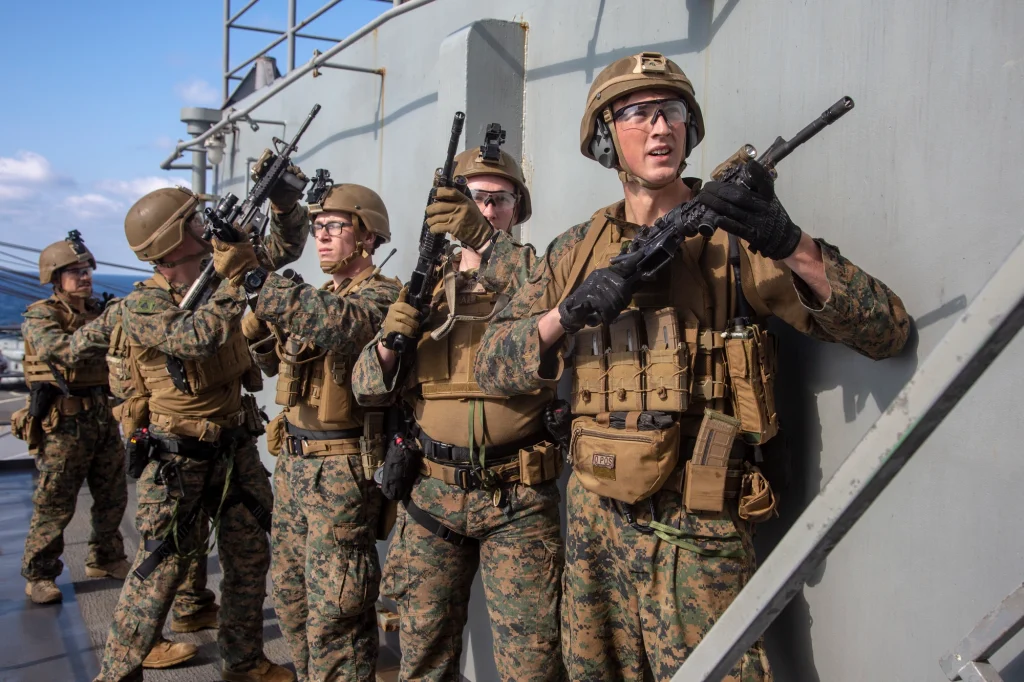
The unit in question is a US sea-land intervention force known for its high flexibility.
The Marines’ website describes the 31st Unit as the only permanently forward-deployed force in the Indo-Pacific theater, and as a formation designed for rapid response through a mix of infantry, aviation, and logistical support. This means that its use in the Gulf adds a full operational structure:
• air transport
• support
• landing and evacuation
• with the ability to carry out short and rapid missions
The deeper issue here is that the Iranian threat in Hormuz has changed form. After the US strikes, the main reliance shifted to smaller and more evasive tools. That is why Marine units appear suited to this kind of war: escorting ships, jamming drones, carrying out limited island landings, and securing key positions for a short period. This means the Pentagon wants to have this option ready within days.
There is another dimension that is no less important. Moving this unit from East Asia to the Middle East leaves a gap in a theater considered central to US deterrence calculations, especially around Korea and Taiwan. With some air defense capabilities also being shifted from South Korea to the Middle East, the message becomes clearer: Washington is rearranging its military priorities in a way that places the Iran war at the top of its agenda for now, even if that creates shortages on other fronts.