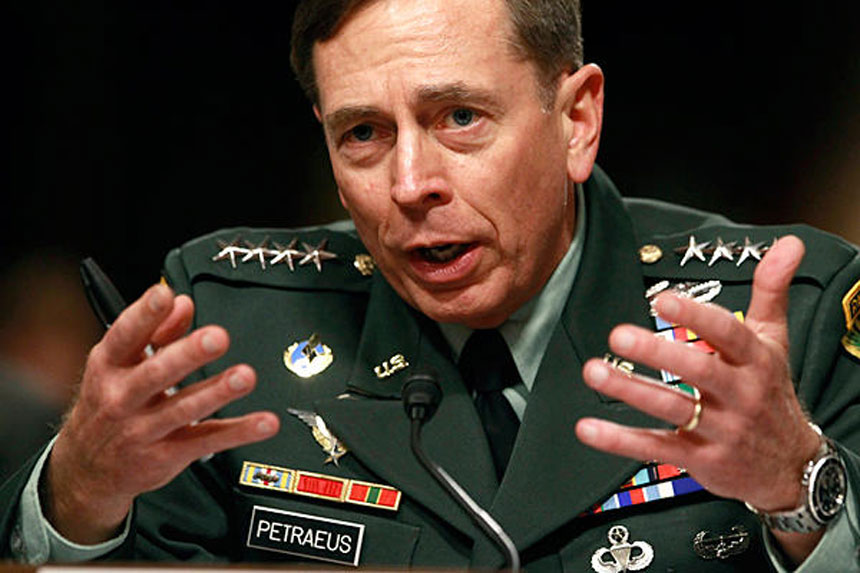
American columnist Bret Stephens has revived David Petraeus’s most famous wartime question: how does this war end? In an opinion piece published today, he builds his answer around four scenarios that he sees as the most likely paths for the war with Iran, ranging from regime change to the possible collapse of the state itself.
The first scenario is regime change. Here, the writer imagines a return of mass protests inside Iran, with the possibility that some police or military personnel could join them if the regime weakens further under military and political pressure. But he also warns that this outcome is far from guaranteed, because despite its military vulnerability, the regime still retains the ability to crush internal dissent with severe force.
The second scenario is regime modification rather than regime removal. In this case, the regime stays in power but accepts American and Israeli demands related to the nuclear program, missile capabilities, and support for regional allies. Stephens ties that possibility to deeper isolation and pressure, especially if the United States were to take control of Kharg Island, the main outlet for the overwhelming majority of Iran’s oil exports and a central source of state revenue and payroll funding.
The third scenario is a ceasefire without clear resolution. Under this outcome, the war continues for a short time and then ends with a mutual declaration, with every side claiming some form of victory. But the writer argues that such an ending would not settle the core crisis. It would instead leave behind a weaker, more isolated Iranian regime that could still fall later because of internal conflict or a future uprising.
The fourth scenario, and the worst in his view, is state collapse. This would not simply mean the fall of the regime, but an internal breakdown resembling Syria’s wartime fragmentation, with some areas under government control and others outside it, outside intervention, and rising chances of unrest among Kurdish, Baluchi, and Arab communities on the periphery. According to the article, that path would be disastrous for the United States and its Arab allies even if it eliminated the Iranian nuclear threat.
Detail
• The article is framed around Petraeus’s famous question about how wars end, but the four scenarios themselves are Bret Stephens’s reading, not Petraeus’s own stated plan.
• Stephens presents regime change as the most optimistic scenario, but not as a likely or guaranteed one.
• He presents regime modification as a more realistic option if Tehran faces much greater military and economic cost, especially through pressure on Kharg Island.
• Under a ceasefire scenario, he expects every side to declare political and media victory while Iran remains weaker than it was before the war.
• He warns that state collapse could open the door to prolonged internal conflict and major refugee flows into the region and Europe.
• The piece ends with an explicit recommendation: intensify pressure through control of Kharg, a blockade of Iranian ports, and destruction of what remains of Iran’s military and nuclear capabilities, backed by threats of further strikes if Tehran escalates again.
What Next?
The importance of this article lies not only in the four scenarios themselves, but in the fact that it reflects a growing mood inside the pro-escalation camp in Washington: not merely weakening Iran militarily, but trying to shape the political end state of the war as well. That means the American debate is no longer limited to how the war is being fought, but what kind of Iran is meant to emerge from it.
(Analysis)
The headline needs one important correction: these are not really Petraeus’s scenarios, but Bret Stephens’s scenarios inspired by Petraeus’s old question. That matters editorially, because confusing the man who asked the question with the man proposing the answer changes the meaning of the piece.
As for substance, the article does not merely describe possible endings. It argues for a preferred one. It is not a neutral mapping of outcomes, but a case for heavier pressure on Iran. Its clearest message is that the writer sees the current form of the regime as an insufficient endpoint. He wants either a tamed regime or a fallen one, while treating a ceasefire on its own as an unstable outcome.
Sources: Bret Stephens’s article published today, and reporting on the oil importance of Kharg Island.