What happened — and why it matters?
For years, Mexico’s most powerful criminal groups have been defined as much by who leads them as by how they operate. The death of “El Mencho” ends a decade-long hunt and opens a leadership vacuum inside CJNG — a cartel that expanded rapidly by leveraging alliances and “franchise-style” relationships with smaller gangs.
In the short term, the question is not whether CJNG disappears, but whether it splits — and whether rival organizations try to take territory, smuggling routes, and local protection rackets while the organization regroups.
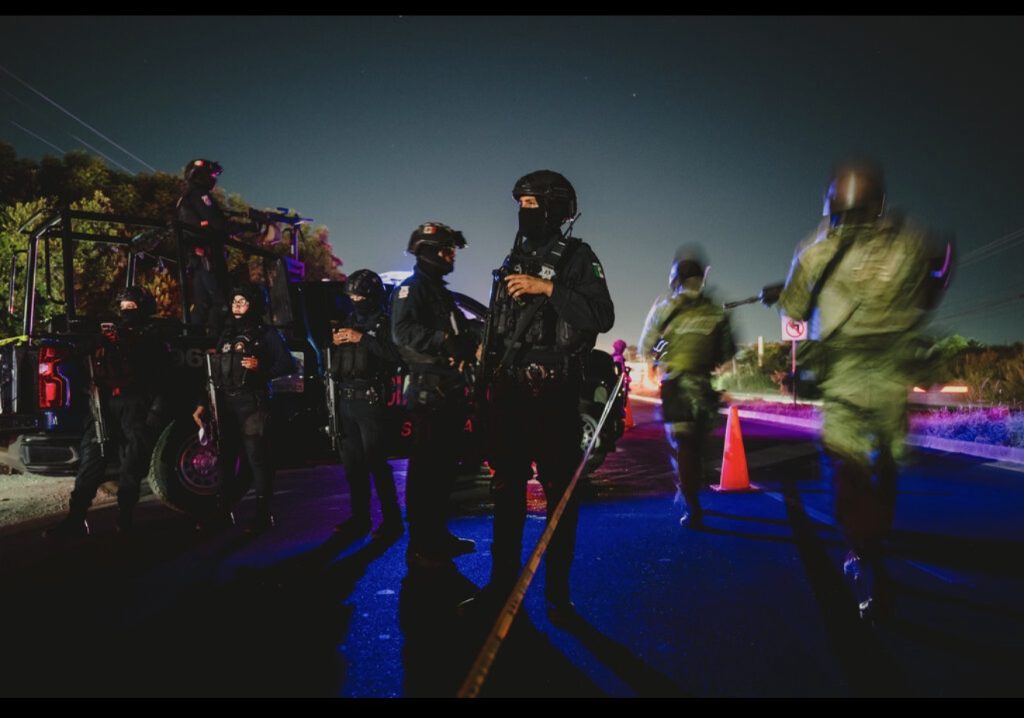
The immediate aftermath was a nationwide jolt: officials reported coordinated retaliation across multiple states, and Mexican authorities said hundreds of cartel roadblocks were later cleared.
Mexico’s major cartels: the post–El Mencho map
Based on the background you provided (NYT explainer text), the core idea is this: Mexico’s cartel ecosystem is not a two-player game. CJNG and the Sinaloa Cartel are often described as the dominant poles, but several other organizations and alliances can exploit disruption.
Key dynamics to watch in the next weeks:
1.CJNG succession and cohesion
• Any succession struggle can generate localized wars as commanders and affiliated groups test each other’s strength.
• The more CJNG relied on external affiliates to expand, the more it risks fracturing when the center weakens.
2.Sinaloa’s internal split
• Your text frames Sinaloa as divided between factions commonly described as Los Chapitos and Los Mayos, with violence and rivalry already stressing the organization’s internal order.
• A CJNG leadership vacuum could become an opening for Sinaloa factions — or for independent groups — depending on local balances of power.
3.Regional cartels and alliances
• Groups operating in northeast Mexico, Michoacán, Guerrero and elsewhere have their own territorial logic; even if they cannot replace CJNG nationally, they can seize corridors and local revenue streams.
The new battlefield: propaganda and “fake chaos”
Reuters reported that after the killing, social media filled with exaggerated or false claims — including misleading images and rumors about attacks and airports — which experts described as a tactic to magnify cartel power and intimidate the public.
This matters for two reasons:
• It complicates real-time situational awareness for citizens, local authorities, and travelers.
• It creates a reputational shock that can outlast the physical incidents — particularly relevant to tourism and major events.
The World Cup problem: security, logistics, and perception
Mexico is set to host 13 matches across Mexico City, Monterrey, and Guadalajara. After the violence, President Claudia Sheinbaum said there was “no risk” to World Cup visitors and that security guarantees were in place; FIFA President Gianni Infantino said he felt “very calm,” with FIFA coordinating with federal, state, and local authorities.
But the “World Cup risk” is not only about stadium security. It’s about:
• airport and highway reliability,
• city-wide mobility,
• supply chains (from transport to hospitality),
• and whether cartel retaliation produces episodic shutdowns.
Financial Times reported that the post-operation violence had ripple effects on business operations (including precautionary suspensions), and that FIFA requested security coordination amid the unrest.
Time also reported travel disruption and uncertainty for tourists in affected areas, highlighting how quickly the tourism ecosystem can be shaken by spikes in violence and rumor.
What comes next?
• Short-term: watch whether CJNG consolidates under a clear successor or fragments into competing nodes; fragmentation is typically when violence spikes.
• Pre–World Cup track: expect deeper coordination between federal security forces and host-city authorities; scrutiny will focus on Guadalajara because the initial post-operation violence hit Jalisco hard.
• Information warfare: authorities are likely to intensify monitoring of disinformation channels tied to organized crime, given Reuters’ reporting on cartel-linked fear campaigns.