Iraq’s Ministry of Foreign Affairs announced that it had deposited lists of coordinates and maritime charts defining its baselines and maritime zones with the United Nations, as part of procedures related to the Law of the Sea and the formal registration of geographic coordinates.
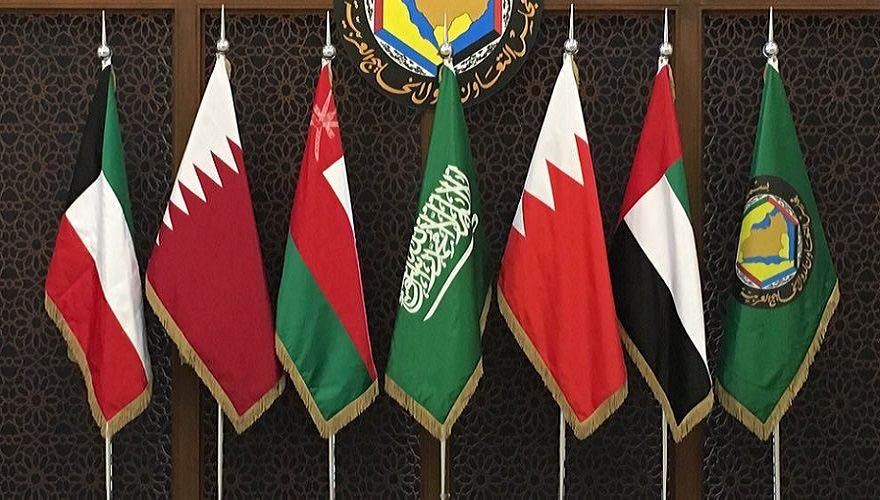
Kuwait responded by stating that some of the deposited points overlap with areas it considers under its sovereignty, particularly in the northern Gulf. The dispute quickly drew regional attention, with Gulf Cooperation Council states expressing support for Kuwait. Saudi Arabia also indicated that the Iraqi submission could affect the Saudi–Kuwaiti joint maritime area.
Baghdad, for its part, said the step is consistent with international law. Iraqi officials have also pointed out that Kuwait deposited its own maritime maps with the United Nations in 2014 without prior consultation with Iraq, according to international media reporting.
Tensions are closely linked to the Khor Abdullah waterway, a strategically sensitive maritime corridor serving both countries. Iraq and Kuwait signed an agreement in 2012 regulating navigation in the channel. However, Iraq’s Federal Supreme Court annulled the agreement in 2023 following legal challenges that argued it compromised Iraqi sovereignty.
⸻
(Analysis) Reading the Maps and the Maritime Access Equation
The deposited maps are not merely technical documents. In a geographically narrow and highly interconnected area like the northern Gulf, coordinates become political instruments. A single point drawn near shoals or navigation channels can influence interpretations of movement rights, seabed usage, and operational control.
The structural vulnerability of Iraq’s maritime access is the central variable. Iraq enters the Gulf through a very limited coastline and highly sensitive navigation corridors. This means that any reinterpretation of baselines or maritime limits carries disproportionate implications for port access and maritime security. Even if framed as a legal step, the Iraqi deposit can be interpreted domestically and regionally as an assertion of sovereign positioning over a strategic bottleneck.
Kuwait, by contrast, possesses a broader coastline and a coastal configuration that provides greater flexibility in defining baselines and managing maritime space. This wider frontage does not eliminate the sensitivity of the dispute, but it changes the risk calculus. What may represent a sovereignty dispute over specific maritime points for Kuwait can be perceived in Iraq as a matter of essential access and economic viability for its ports.
The area of friction centers on northern Gulf maritime features that Kuwait considers within its sovereign domain. Iraq maintains that its submission reflects regulatory rights within international maritime law. The entry of additional Gulf actors into the political narrative, including references to the Saudi–Kuwaiti joint zone, indicates that while the legal framework remains bilateral, the diplomatic dimension is broader.
In the near term, the deposit is more likely to serve as a mechanism for formalizing legal positions rather than redrawing boundaries. Any substantive change would confront the post-1991 framework and UN Security Council resolutions that consolidated the Iraq–Kuwait boundary regime, particularly Resolution 833. Escalation would become more plausible only if legal coordinates translate into operational measures on the ground, such as port expansions, infrastructure on shoals, or navigation procedures interpreted as unilateral enforcement.