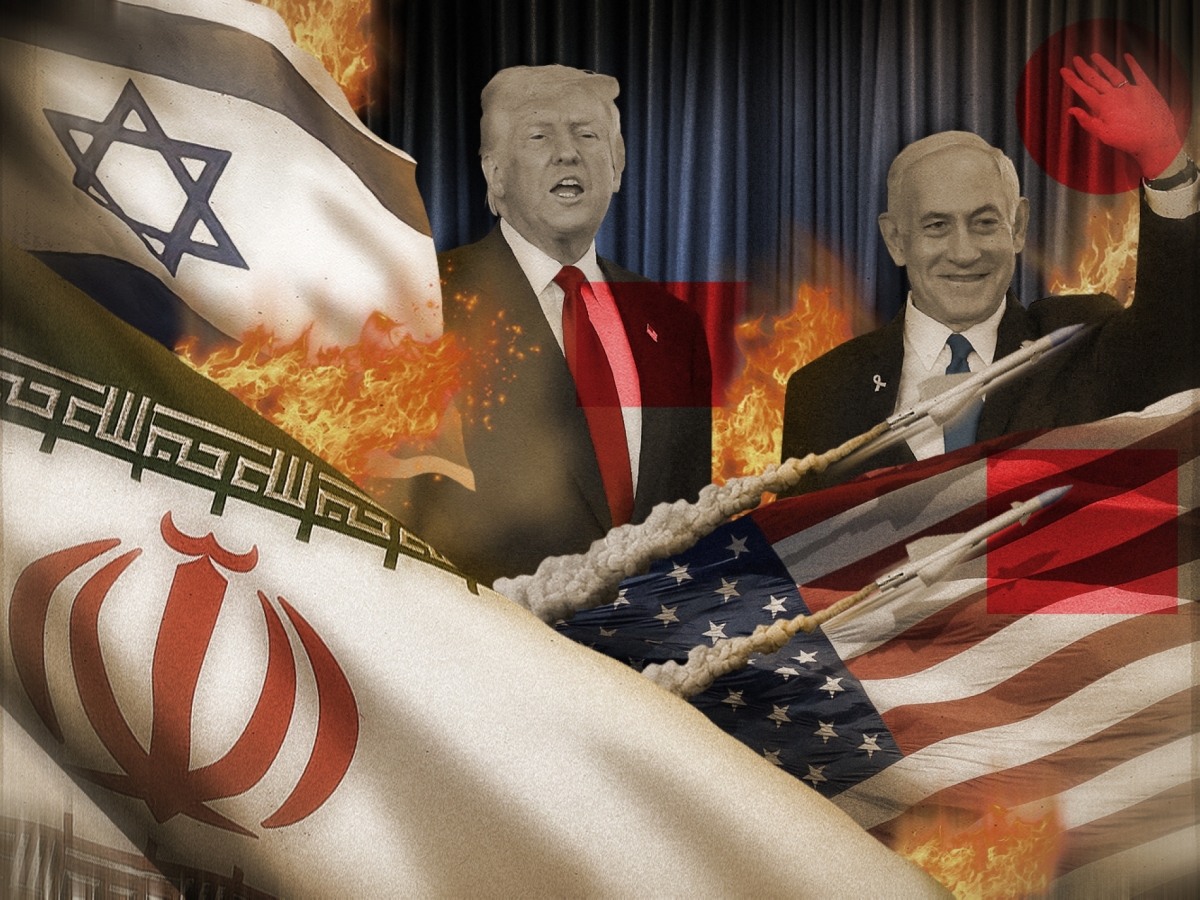
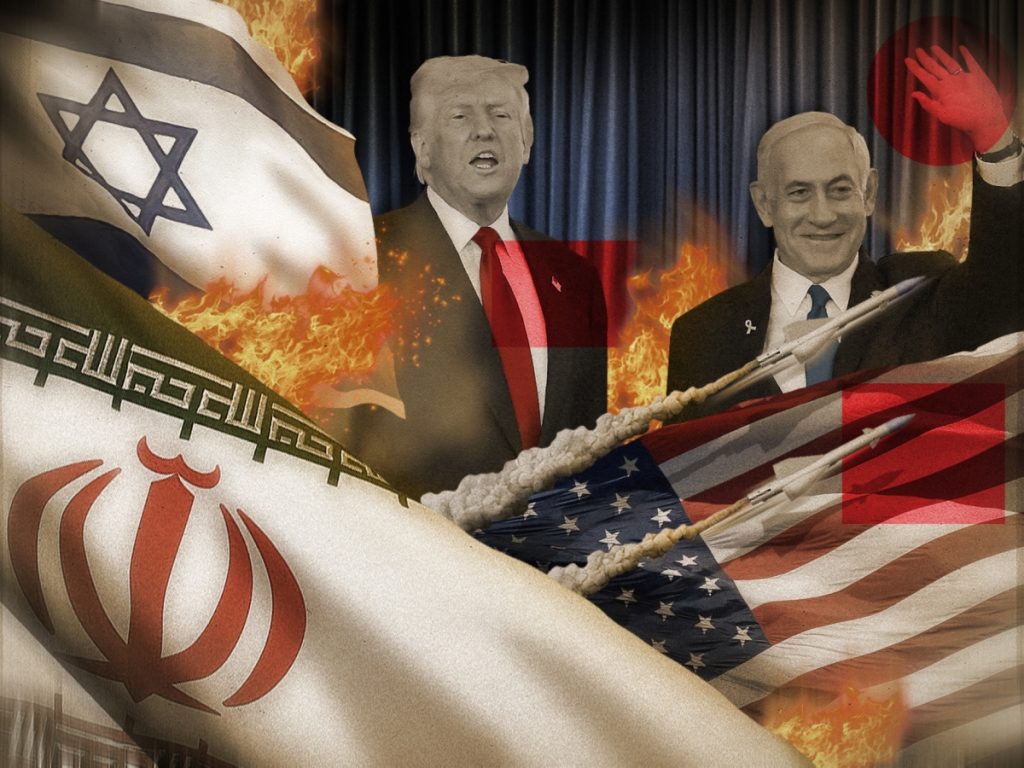
What the latest reports reveal is not a disagreement between the United States and Israel over the war, but a division of roles within it. The enemy is one, and the goal is one: to weaken the regime in Tehran to the maximum extent possible. But the path toward that goal splits into two lanes.
While Israel is pushing the war toward the regime’s internal structure itself, it is striking the instruments of control, pursuing the Basij, targeting security centers and commanders, and maintaining a line of rhetoric suggesting that the moment of popular rupture may be approaching. It sees an opportunity to dismantle the tools of power that control the streets and protect the regime from within.
The United States, by contrast, appears more tightly focused on the nuclear question. In Trump’s calculus, the war does not truly end as long as Iran’s nuclear fuel still exists and remains available for future use.
Detail
The Israeli strategy, as reflected in leaks and reports, rests on a clear assumption: every day the regime weakens from within is a step toward its end.
That is why Tel Aviv is operating on several levels:
• striking the security structure and the internal instruments of control.
• betting on a widening gap between society and the state.
• speaking of creating the conditions for an Iranian uprising.
• hunting figures and symbols who represent the center of decision-making or the machinery of repression.
But the paradox is that Israel’s own internal assessment appears more pessimistic than its public rhetoric. In private channels, it says the regime has not cracked, that it is prepared to fight to the end, and that any large-scale move into the streets could turn into a massacre because the Revolutionary Guard still holds the upper hand on the ground. That means Israel is encouraging a moment it already knows could be extremely bloody, yet still sees the deepening of internal fracture as part of the war itself.
On the other side, the United States is moving with a different logic. Washington does not appear to be betting heavily on an imminent popular uprising, but rather on a more concrete question: what do we do with the nuclear material?
Here Trump enters the most dangerous zone of the war. If the airstrikes have destroyed a large part of Iran’s military structure, then the remaining dilemma is the nuclear fuel buried deep inside fortified sites. That raises the possibility of the operation everyone fears: a special landing or ground incursion to seize the uranium or destroy it from within.
The American path is no less dangerous than the Israeli bet on the streets, and may in fact be even riskier. The problem is not only reaching the sites, but the nature of the uranium itself:
• the storage locations are not fully confirmed.
• some of the stockpile is in heavily fortified mountain sites.
• any mistake in handling the canisters could cause a toxic and radioactive leak.
• Iran may also have prepared decoys and deceptive field sites to confuse any entering force.
That is why Washington appears to be thinking about the war from the top down, while Israel is thinking about it from the inside out. America wants to settle the nuclear core of the issue. Israel wants to break the regime’s backbone, both politically and in security terms.
What does this difference mean?
First, it means the two sides do not differ on the final objective, but they do not assign the same weight to the means.
Israel sees the war as a historic opportunity to widen the fracture inside Iran, exhaust the repressive apparatus, and weaken the coherence of power, even if the regime does not fall immediately.
America sees regime change as not the primary condition for success, and believes the real danger is that Iran could remain weakened while still retaining nuclear material that could restart the project later.
Second, it means each strategy carries its own trap:
• the Israeli strategy could push Iranians into the streets without protecting them.
• the American strategy could drag Washington into one of the most dangerous ground operations of the modern era.
What next?
The next phase will likely revolve around the question that decides which of the two strategies moves to the forefront. If Washington leans toward the nuclear operation, the war enters a new chapter of risk. If Israel continues pressing the Iranian الداخل without a clear moment of collapse, the war could turn into a prolonged war of attrition without a fast political resolution.
For now, the picture looks like this: America and Israel are fighting the same enemy, but each is searching for its breaking point in a different place. Israel is looking for it in the street, in security, and in morale. America is looking for it in tunnels, canisters, and nuclear fuel buried under the mountain.