
The latest:
Oil exports from Gulf producers outside Iran have returned to roughly pre-war volumes, Kpler data show, with Saudi Arabia and the UAE now shipping more crude and condensate than before the war and pipeline rerouting absorbing much of the risk around the Strait of Hormuz. Kuwait and Qatar remain below their earlier levels, Kpler crude analysis head Homayoun Falakshahi told Iran International.
Details:
- The numbers: Combined exports from Gulf producers excluding Iran averaged close to 14 million barrels per day in September and October, against 14 million before the war, according to Kpler. Falakshahi said Kuwait and Qatar were the two producers still running under their pre-war volumes.
- November caveat: Kpler’s preliminary November estimate fell to roughly 12 million barrels per day. Falakshahi said tracking data for the last seven to 10 days tends to understate shipments, meaning the figure could be revised upward as more cargoes are identified.
- Dark shipping: More vessels are crossing Hormuz with tracking signals switched off, said Iman Nasseri, senior vice president for the Middle East and Asia at FGE NexantECA. Traffic may not have fallen, he said, but the behavior of ships and owners has changed. He added first-half November estimates were already raised by more than 3 million bpd, with further December adjustments expected.
- Crude glut: Energy analysts speaking to Iran International estimated the global crude market was already in surplus by 1 million to 2 million barrels per day in the last quarter. Falakshahi put the 2027 average surplus near 2 million bpd if export flows hold, seeing little room for prices to rise absent new escalation.
- Fuels still tight: Nasseri estimated about 12 million barrels a day have kept flowing through Hormuz since September, including nearly 10 million of crude. Refined product exports ran 1.5 million to 2 million bpd, down from about 5 million before the war, keeping diesel and jet fuel above pre-war prices.
- Tehran’s threats: Iranian army commander Amir Hatami ordered tighter restrictions on shipping through Hormuz until Washington meets Tehran’s demands, warning renewed US strikes would draw a harsher response possibly beyond the region. Parliament speaker Mohammad Bagher Ghalibaf said Tehran is ready to use military means to break the blockade.
- Trump warning: President Donald Trump said Sunday strikes could resume after the new year without a deal, and warned Iranian ships attempting to breach the blockade would be sunk. Supreme National Security Council secretary Mohsen Rezaei called the blockade plans delusional and absurd on X.
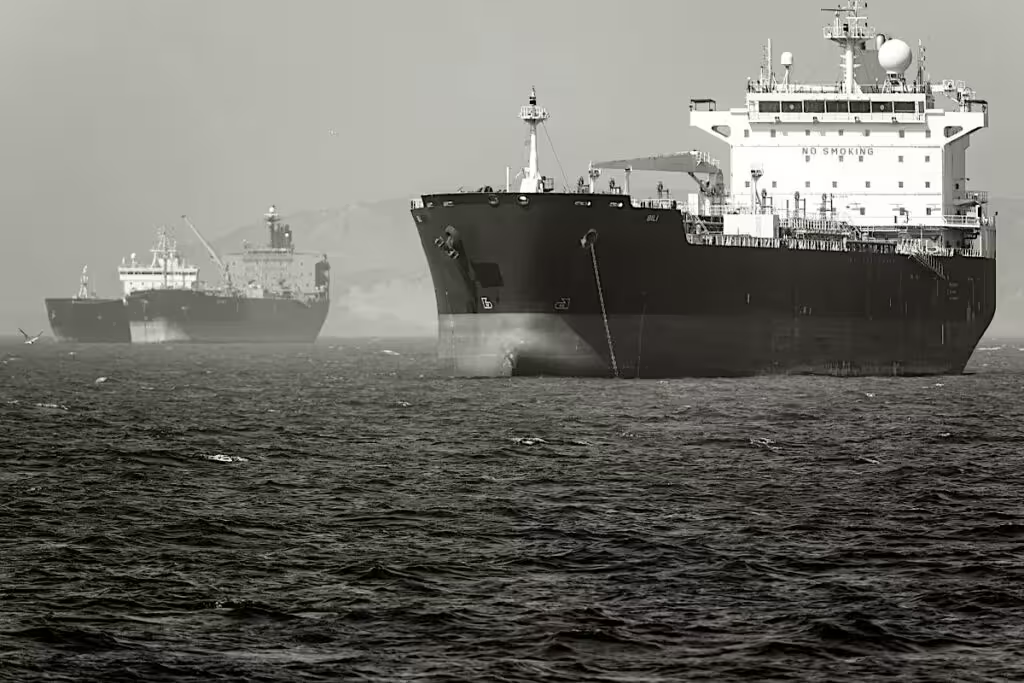
- Attacks on ships: UKMTO said Tuesday three vessels were struck by unidentified projectiles while sailing east through Hormuz on Monday; all continued their voyages with crews safe. The IRGC claimed three tankers caught fire after hitting mines, while the Joint Maritime Information Center said the mine claims were unconfirmed.
- The risk toll: TradeWinds reported at least 64 attacks on ships near Hormuz since late September, with vessels operated by Sinokor, ADNOC Logistics and Kuwait Oil Tanker Company among the most targeted. Charlie Brown of United Against Nuclear Iran said Gulf states found owners willing to sail and absorb part of the insurance risk, aided by US military escorts.
- Iran’s collapse: Kpler has recorded no new Iranian crude or condensate exports, Falakshahi said, with refined products, LPG and petrochemicals at 120,000 to 150,000 bpd, down from about 800,000 before the war. Brown said the blockade halted Iran’s Kharg Island-to-China crude trade. Falakshahi denied reports an Iranian tanker pierced the blockade, saying its purported tracking signal was fabricated.
Between the lines:
The divergence is the story: pipeline rerouting, US-coordinated convoys and owners absorbing insurance risk kept Gulf crude moving at pre-war volumes, while Iran’s Kharg-to-China trade stopped. The surplus Falakshahi describes means Tehran’s leverage over prices has thinned even as its threats sharpen — and the gap between refined product and crude flows explains why fuels, not crude, stayed expensive.
What’s next
Watch Kpler’s revised November and December export figures, whether Trump resumes strikes after the new year absent a deal, and whether Iran converts Hatami’s shipping restrictions into enforcement at Hormuz.