
Key Points
- Abu Dhabi ranked third and Dubai fourth in Counterpoint Research's 2026 city AI adoption index.
- Singapore scored 65.9 and Seoul 64.9; Abu Dhabi trailed second place by 0.4 points.
- The ranking measures local adoption, not national model development, chip output or research scale.
The latest:
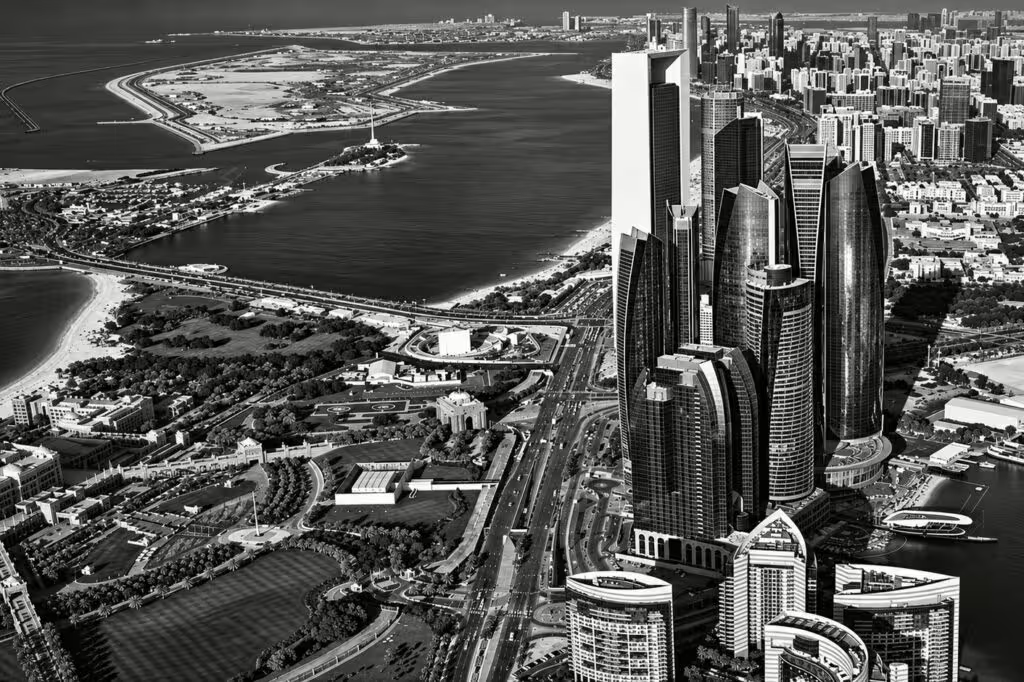
Abu Dhabi and Dubai placed third and fourth worldwide in Counterpoint Research’s 2026 index of how far cities have adopted artificial intelligence, finishing ahead of every US and Chinese city covered. Singapore and Seoul held the top two spots. Abu Dhabi climbed five places from last year, while Dubai kept its previous position, according to the report released Tuesday.
Details:
- The scores: Singapore scored 65.9 points out of 100, followed by Seoul on roughly 64.9, Abu Dhabi on 64.5, Dubai on 62.4 and San Francisco on 57, according to South Korea’s Yonhap news agency. That left Abu Dhabi just 0.4 points short of second place.
- The methodology: The index assesses the world’s 100 largest urban areas across ten factors. Researchers reviewed more than 6,000 public- and private-sector initiatives this year, up from about 4,800 in the previous edition, measuring technology adoption and the development of each city’s local ecosystem.
- Why Abu Dhabi rose: The report attributed the emirate’s gain to investment in software and data centre infrastructure, AI applications in financial services and healthcare, and the use of the technology in government services through the TAMM platform. It cited contributions from G42, Microsoft, Oracle and Khazna.
- Dubai’s path: AI initiatives in Dubai grew by more than 50% during 2025, the report said, with government projects accounting for more than half of all new activity. Those concentrated on city management, public safety and improving the efficiency of government services.
- Beijing slips: San Francisco came fifth, London sixth and Beijing seventh. The Chinese capital had ranked third in last year’s edition, marking the sharpest fall among the leading technology hubs listed in the 2026 results.
- The wider field: The United States and China each placed four cities in the top 15. India’s Bengaluru entered that group for the first time, according to the report.
- Scope widened: Counterpoint expanded this year’s assessment to cover AI-based city applications and physical AI, which links intelligent systems to the material world through robotics and self-driving vehicles.
- What it isn’t: The report said the ranking reflects city performance under its own methodology for measuring adoption and local ecosystem development. It does not amount to a separate ranking of national capabilities in advanced model development, chip production or the volume of AI research.
Between the lines:
The two Gulf cities rank on deployment rather than invention. Abu Dhabi’s score rests on data centre build-out, financial and health applications and a government services platform, while more than half of Dubai’s new activity in 2025 came from government projects — a public-sector-led adoption model that the index rewards and that is explicitly separate from model building or chip output.
What’s next
Watch whether Abu Dhabi closes the 0.4-point gap with Seoul in the next edition, and whether Beijing recovers after falling from third to seventh. Counterpoint’s expanded physical AI criteria could further reshape the top 15.