Key Points
- Trade via Kurdistan's border crossings dropped from 41.2 trillion dinars in 2024 to 25.85 trillion in 2025.
- Total flows reached 227 trillion dinars between 2019 and 2025, generating over 9.5 trillion dinars in customs revenue.
- The ASYCUDA customs system remains unimplemented at the crossings, pending a federal-regional deal on revenue sharing.
The latest:
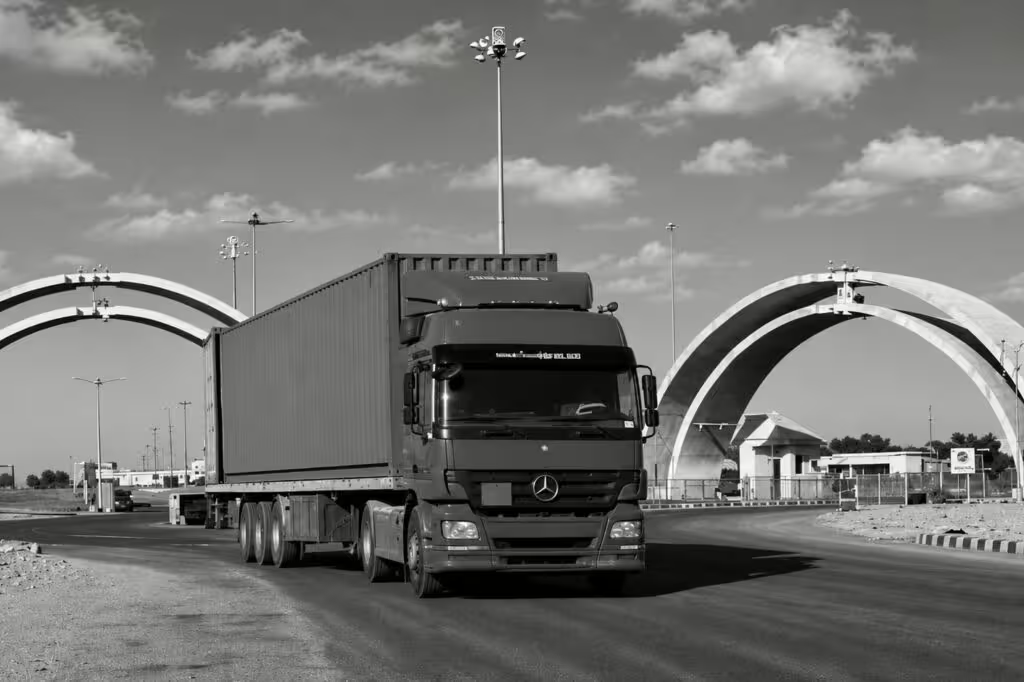
Trade moving through the Kurdistan region’s border crossings fell to roughly 25.85 trillion dinars in 2025, down from a peak of 41.2 trillion the previous year, according to finance ministry data cited by Dohuk Chamber of Commerce and Industry head Shukri Jamil Nouri. He said the Ibrahim Khalil crossing with Turkey remains the central artery for commercial truck traffic entering Iraqi markets.
Details:
- The headline figure: Nouri told the Iraqi News Agency that data from the Kurdistan Regional Government’s Ministry of Finance and Economy put total trade through the region’s border crossings at about 227 trillion dinars for the 2019-2025 period, the broadest official accounting of cross-border commercial flows released for those years.
- The drop: Trade volumes hit their highest recorded level in 2024 at roughly 41.2 trillion dinars before falling to about 25.85 trillion in 2025, a decline of nearly 37% in a single year. Nouri did not identify what drove the contraction.
- Customs revenue: Customs receipts across the region’s crossings exceeded 9.5 trillion dinars over the same 2019-2025 window, according to the ministry data cited by Nouri.
- Dohuk’s share: Dohuk province collected the largest share of customs revenue among the region’s governorates, at roughly 5 trillion dinars, more than half the regional total for the period.
- Why Ibrahim Khalil matters: Nouri said the crossing’s economic weight comes from its geography, positioning it as a corridor for commercial trucks arriving from Turkey and heading into Iraqi markets. He called for upgrading the crossing’s infrastructure alongside customs modernization.
- The Turkey file: Iraqi-Turkish trade stands at around 17 billion dollars, Nouri said, citing July statements by Turkish Trade Minister Omer Bolat, who indicated a push to raise the figure to 30 billion dollars. No timeline was attached to that target.
- The customs system: The ASYCUDA automated customs platform has not been formally applied at the region’s crossings. Nouri described its absence as one of the files requiring treatment, saying implementation remains under discussion between the federal government and the KRG.
- The obstacle: Settling the region’s budget share and the mechanism for distributing customs revenue is the remaining barrier to completing ASYCUDA’s rollout, Nouri said. He gave no date for when the two governments might resolve it.
- The chamber’s track: Dohuk’s chamber is continuing dialogue and coordination with the Baghdad Chamber of Commerce and Industry and relevant federal bodies, Nouri said, aiming at shared understandings that would advance development of the Ibrahim Khalil crossing.
Background:
ASYCUDA is a UN-developed automated customs platform used to standardize declarations and revenue recording. Its application at Kurdistan’s crossings has been tied to the wider federal-regional dispute over who collects and distributes customs income.
Between the lines:
The two unresolved files are linked. Because customs revenue distribution is itself the barrier to installing the system that would measure that revenue, neither side gains a neutral accounting of what the crossings actually generate. With Dohuk alone recording 5 trillion dinars over seven years, the stakes of the formula are substantial for both governments.
What’s next
Watch for a federal-KRG agreement on the budget share and customs revenue formula, the trigger for ASYCUDA’s rollout, and whether 2026 trade volumes recover toward the 2024 peak or extend the decline.