The latest:
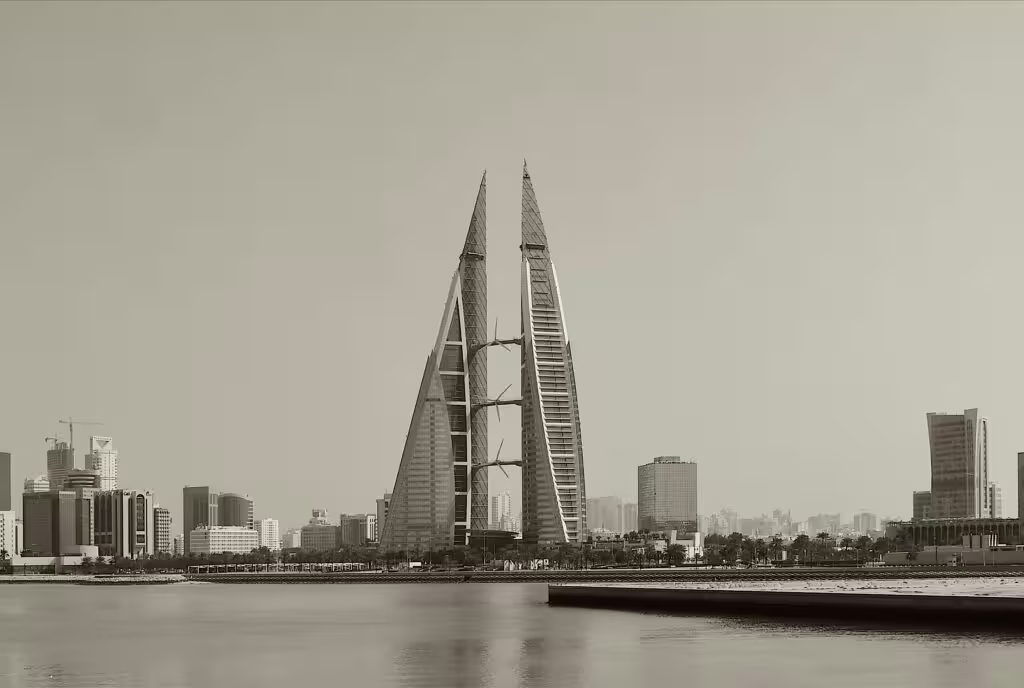
A fire broke out at a civilian industrial facility in Bahrain after what the kingdom described as an Iranian air attack, with no injuries reported. Iran’s Revolutionary Guard said separately that its aerospace force launched a combined missile and drone assault on American positions at the Riffa and Awali bases. Bahrain’s defense force said air defenses intercepted several Iranian attacks.
Details:
- The strike: Bahrain’s Interior Ministry said on X that civil defense crews were working to contain the fire. The ministry did not specify the site’s location or what it produces. It had earlier urged residents to move to the nearest safe place over a potential threat, issued an all-clear, then sent a second warning.
- The interceptions: Bahrain’s defense force said its air defenses brought down a number of Iranian air attacks, and that debris from the intercepts caused material damage without injuries. It accused Tehran of pursuing what it called a systematic hostile approach toward the kingdom, which hosts the US Fifth Fleet.
- Iran’s account: The Revolutionary Guard said in a statement carried by IRNA that it targeted American sites at the Riffa and Awali bases in response to continued aggression and repeated violations of Iranian airspace. It also said it hit two US Patriot air-defense radars at the same two bases.
- The US denial: US Central Command denied the Patriot system was hit. Centcom said Friday its forces downed two attack drones launched by the Revolutionary Guard toward Bahrain, with no casualties or damage. On an earlier Iranian claim of striking an early-warning radar, the US military said it intercepted two Iranian drones without damage.
- Bahrain’s protest: The Foreign Ministry condemned the continuing Iranian air attacks and rejected the Revolutionary Guard’s stated justifications, saying the evidence shows a purely civilian industrial target. It said Bahrain retains its right to take all measures needed to protect its sovereignty, citizens and residents.
- Gulf reaction: Saudi Arabia, Qatar and Kuwait each condemned the attacks and declared full solidarity with Manama. GCC Secretary-General Jasem Albudaiwi said Bahrain’s security is inseparable from that of the council’s member states. Saudi Arabia called the strikes a violation of international law and good-neighborly principles.
- The diplomacy: A Qatari negotiating delegation visited Tehran on Friday evening. Iranian Deputy Foreign Minister Kazem Gharibabadi said Saturday the talks ran about two hours and that Iran remains in contact with mediators, including Qatar, on whether to give diplomacy another chance.
- Iran’s terms: Foreign Minister Abbas Araghchi said reopening the Strait of Hormuz is not difficult and requires only US acceptance of Iranian conditions he called reasonable and consistent with international law. He said there is no solution unless Washington acknowledges its mistakes and honors earlier commitments.
- Trump’s position: President Donald Trump said Friday Iran wants a deal but not one acceptable to him. Asked about Vice President JD Vance’s post-midterm statement blaming the war for Republican losses, Trump said he would fight the war again because Iran cannot be allowed a nuclear weapon.
- Air incidents: The Revolutionary Guard said it downed an American MQ-9 over the Strait of Hormuz, an MQ-1 near Qeshm Island and a reconnaissance drone off Bushehr. Iran’s army said it hit a US F-16 over Gulf waters, forcing an emergency landing; Centcom denied that. Bahrain issued similar alerts on November 15, 17 and 18.
Background:
The United States and Israel attacked Iran in February. The conflict has since spread to Arab Gulf states, with Iran launching repeated attacks across the region. Bahrain, home to the US Fifth Fleet, says it has intercepted several Iranian air attacks in recent days.
Between the lines:
The sequencing is the story: Qatar’s delegation spent two hours in Tehran on Friday, and by Saturday Doha was condemning strikes on a neighboring Gulf state. Iran is signaling openness to mediators while its Revolutionary Guard escalates against the same governments carrying the messages. Araghchi’s Hormuz framing sets a price rather than offering a concession.
What’s next
Watch whether Centcom responds to the Revolutionary Guard’s Patriot radar claim, whether Qatar’s mediation channel produces another Tehran visit, and whether Bahrain’s Interior Ministry issues further public threat alerts.