Key Points
- Sentinel imagery from November 21 shows no tankers at Kharg Island's loading berths, contradicting Iranian media claims.
- Iranian outlets have repeatedly asserted that crude loading resumed in defiance of the American naval blockade.
- The gap between state messaging and observable activity is now the central question over Iran's export capacity.
The latest:
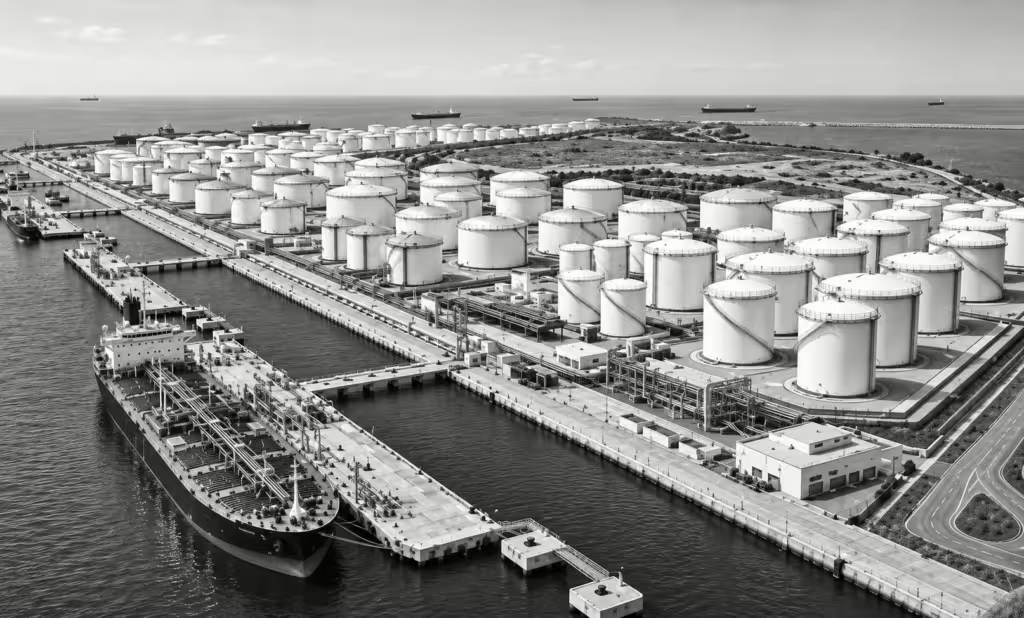
No oil tankers were observed at the loading berths of Iran’s Kharg Island terminal in Sentinel satellite imagery dated November 21, and no loading activity was monitored at the island over the past week. Iranian media have claimed repeatedly that crude loading resumed there in an effort to break the American blockade.
Details:
- The imagery: Sentinel satellite images captured on November 21 show the loading berths at the Kharg Island terminal empty of tankers. Monitoring over the preceding week recorded zero vessels loading crude at the island, the main export outlet for Iranian oil.
- The Iranian claim: Iranian media have asserted on a continuing basis that loading operations at Kharg have restarted, framing the resumption as a move to break the American blockade. The claim has been repeated without accompanying evidence of departures from the terminal.
- The tanker gathering: Euronews Farsi reported accounts of more than 14 tankers massing near Kharg Island. Its earlier reporting cautioned against conflating an article published by Fars with an operational plan approved by the Iranian government.
- What it proves: Images of vessels clustered near Kharg do not on their own establish that any convoy set out. They do not show that the tankers departed the anchorage or crossed the perimeter of the blockade.
- The denial: Tasnim news agency carried a denial attributed to sources close to the Iranian foreign ministry, casting doubt on reports that Iranian tankers were moving to break the American blockade. The agency did not identify the sources by name.
- The fake signal: TankerTrackers said a vessel signal that appeared in the Strait of Hormuz under the name “Blockade Breaker” was fabricated. The company’s finding places at least one widely circulated piece of evidence for a breakout attempt outside the record.
- The named vessel: Separate reporting identified an Iranian oil tanker named Khat Shikan, Persian for line breaker, heading toward the Gulf of Oman in an attempt to break the American naval blockade. Its cargo status and point of departure were not specified.
- The assessment: One reading circulating alongside the imagery holds that Tehran expects an Israeli-American offensive and is promoting a false narrative of a broken blockade to delay it, on the calculation that Washington would treat an actual breakout and the clashes following it as a stronger justification for a wider campaign.
Background:
Kharg Island handles the overwhelming share of Iran’s crude exports, making its loading berths the single clearest physical indicator of whether oil is leaving the country. Activity there is routinely tracked by commercial satellite operators and independent tanker-monitoring firms.
Between the lines:
The dispute is no longer about whether tankers exist near Kharg but about what their presence demonstrates. Vessels at anchor, a fabricated transponder signal in Hormuz, and a single named ship heading for the Gulf of Oman are each consistent with messaging rather than movement, while the empty berths in the November 21 imagery remain the only direct measure of whether crude is actually being loaded.
What’s next
Watch for subsequent Sentinel passes over Kharg showing tankers at the berths, independent confirmation of Khat Shikan’s position in the Gulf of Oman, and any Iranian government statement replacing media claims with an acknowledged operational plan.