Key Points
- Charles Le Brun's Holy Family is back at Potsdam's New Palace after more than 80 years missing.
- The painting was moved to Rheinsberg Castle in 1942 and vanished from Prussian collections after July 1945.
- Its return marks one of Germany's most significant recoveries of war-displaced royal collection art.
The latest:
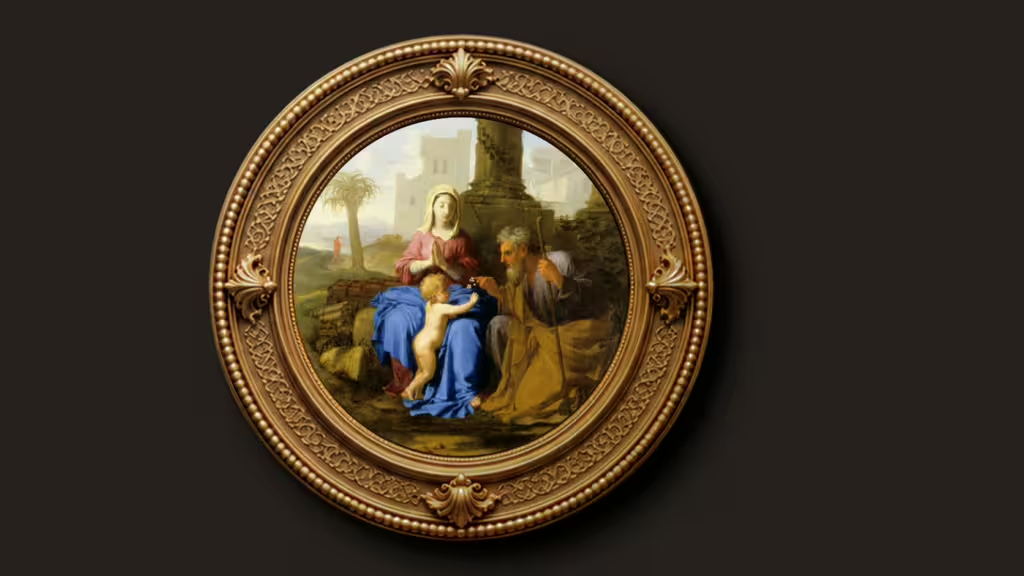
A Baroque masterpiece bought by Frederick the Great for his newly built New Palace hangs in Potsdam again after vanishing for more than eight decades. Charles Le Brun’s Holy Family was formally received Wednesday by the Prussian Palaces and Gardens Foundation Berlin-Brandenburg, with Culture Minister of State Wolfram Weimer attending. The federal culture ministry called the recovery a cultural-historical sensation.
Details:
- The painting: Le Brun served as court painter to Louis XIV, and the Holy Family ranks among the most important acquisitions Frederick the Great made for the New Palace, according to the Federal Government Commissioner for Culture and the Media, which described it as a significant testament to French Baroque painting.
- The disappearance: The work was evacuated to Rheinsberg Castle in 1942 during the Second World War and can be documented there until 30 July 1945, the ministry said. After that date its trail was lost, and it disappeared from the Prussian collections with no recorded location for decades.
- How it resurfaced: The painting reappeared in 2021, when its then-owner in Canada approached the foundation directly, the ministry said. The statement did not name the owner, disclose the terms of the transfer, or explain how the work reached Canada.
- Who paid: The return was supported by the Ernst von Siemens Art Foundation and the Friends of the Prussian Palaces and Gardens. Weimer singled out both for thanks, saying they made the recovery possible. No figure was given for the cost of bringing the painting back.
- The minister’s words: Weimer said the Holy Family is back at its historic place in the New Palace after 80 years and can now be admired by visitors. He called the return an exceptional gain for Germany’s cultural heritage, tying the work to the history of the royal Prussian collections.
- Federal funding: The federal government is the largest single funder of the foundation and will provide institutional funding of up to 21.6 million euros in 2026, the ministry said. A further 17.74 million euros is earmarked under the second Special Investment Programme.
- Other backers: Berlin and Brandenburg also fund the foundation alongside the federal government, according to the ministry, which presented the recovery as part of a broader commitment to preserving and repatriating cultural property lost as a result of the war.
- Not the first: The ministry said the federal government has repeatedly supported the foundation in recovering collection objects that went missing because of the war. It did not identify the earlier cases or say how many objects from the Prussian collections remain unaccounted for.
Background:
The New Palace was built at Sanssouci under Frederick the Great in the late 18th century and housed paintings he acquired for the Prussian royal collections. Large parts of those holdings were evacuated during the Second World War, and many items never returned.
Between the lines:
The 2021 approach came from the holder in Canada rather than from a German claim, meaning the recovery turned on voluntary contact rather than litigation. That, with the funding role of two private foundations, suggests Berlin’s route back for war-displaced works still depends heavily on private money and the cooperation of current possessors.
What’s next
Watch whether the foundation publishes details of the transfer arrangement with the former Canadian owner, when the Holy Family goes on public display at the New Palace, and whether further missing Prussian collection works resurface.