Key Points
- Trump dismissed concerns in Manila over outages hitting US aviation, banking and Microsoft systems
- The NSA staggered staff arrivals after problems with NSA Net, its classified internal network
- Officials said mission-critical capabilities held and found no evidence of a cyberattack
The latest:
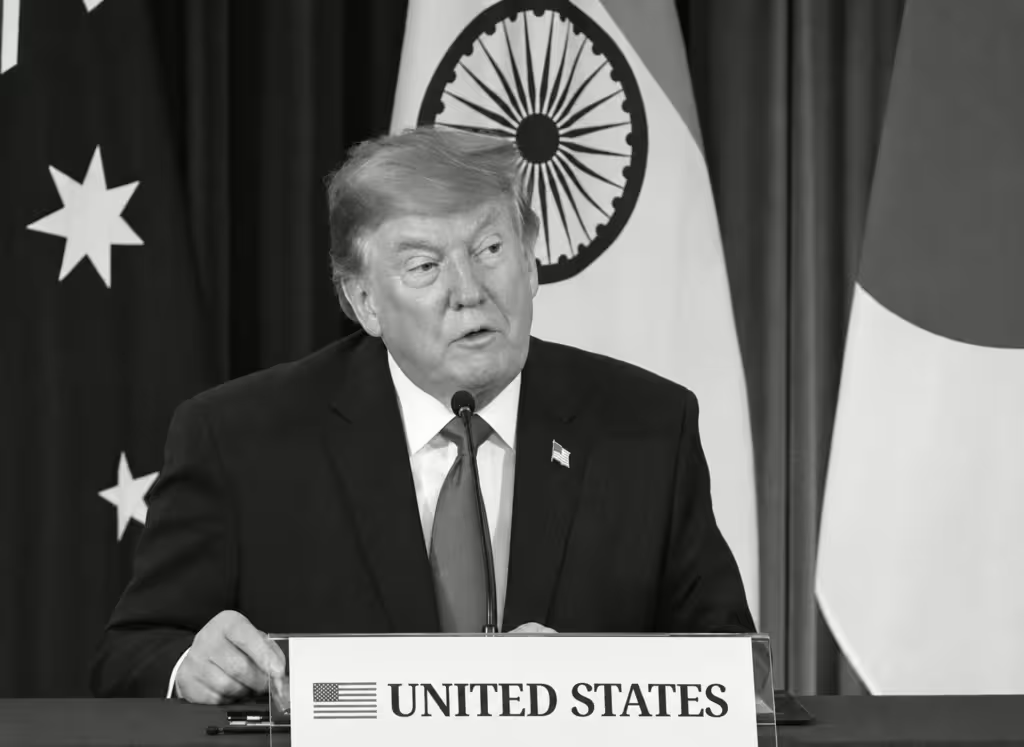
Four separate technology failures across US aviation, banking, cloud services and intelligence infrastructure drew a dismissive response from President Donald Trump, who told reporters in Manila on 17 November that the situation would be very much under control. Asked whether he was concerned, he said no. The remarks landed as the National Security Agency worked through a disruption to its classified internal network.
Details:
- The remarks: Asked in Manila about the Federal Aviation Administration and United Airlines, Trump replied with a single phrase. Pressed on JPMorgan Chase, he repeated it and added that when you are big and powerful and have all the money, “things like that happen.” He said people were safe and that he was not worried about Thanksgiving travel.
- The NSA disruption: Staff at the agency’s Fort Meade headquarters in Maryland were given staggered arrival times to limit simultaneous logins to NSA Net, the network used for classified communications. Backup facilities elsewhere were expected to absorb part of the workload. The NSA has not publicly identified what caused the interruption.
- Competing accounts: Recorded Future News reported the network was running intermittently rather than fully shut down. Sources told CBS News routine system patching was involved, while a US official described a temporary degradation during scheduled maintenance. Officials said mission-critical capabilities remained operational and cited no evidence of a cyberattack.
- Microsoft’s findings: A preliminary report into the global Microsoft 365 outage of 12 November identified three contributing factors: a latent defect in networking gateway servers, a Teams failover that pushed traffic onto a primary gateway also serving Exchange Online, and nearly 14% of that gateway’s capacity being unavailable. The defect traced to a change deployed from July.
- The ground stop: The FAA’s nationwide ground stop on 13 November began around 3.30pm Eastern Time and was lifted at 8.15pm. The agency said legacy equipment became unstable after its FTI telecommunications network received roughly 1,000 connection attempts every four to five seconds.
- Under investigation: Investigators flagged a radar site in Amarillo, Texas, and a radio communications site in El Dorado, Arkansas, as possible sources. L3Harris, the FAA’s network service provider, had been deploying a new router at the Arkansas site. The root-cause investigation continued.
- The flight toll: The FAA logged 12,462 cancellations that Friday, including 9,082 by major airlines, while cautioning that not all were directly caused by the ground stop. United Airlines told CNN that a separate technology disruption on 16 November hit fewer than 150 flights, with airborne and United Express services unaffected.
- The bank: JPMorgan Chase said a software bug involving its on-premises hardware slowed transaction processing on 16 November. The bank said customer funds remained safe and that there was no evidence the problem was cyber-related, though some transactions were delayed.
- The funding ask: On 17 November, the Trump administration asked Congress for $50.1 billion for air traffic control modernisation, covering telecommunications infrastructure, airport facilities, consolidated control centres and towers. A day earlier Trump had rejected responsibility for the ground stop, praising Transportation Secretary Sean Duffy while blaming ageing equipment and previous administrations.
- No established link: The incidents outside the NSA have each been attributed to separate technical problems. No public evidence has established a connection between them and the disruption to NSA Net.
Between the lines:
The administration is making two arguments at once. Trump has framed the failures as the ordinary cost of scale while rejecting responsibility for the FAA stoppage, yet the $50.1 billion request and the FAA’s own account of unstable legacy equipment overwhelmed by connection attempts both describe systems officials say are structurally outdated rather than merely unlucky.
What’s next
Congress must act on the $50.1 billion modernisation request. The FAA’s root-cause investigation into the Amarillo and El Dorado sites continues, as does scrutiny of the L3Harris router deployment. Thanksgiving travel week is the next stress test.