Key Points
- Google launched TPU 8tx and TPU 8i Max, expanding its eighth-generation chip line to four systems
- It is the first time Google has introduced four TPU systems within a single year
- The 8tx targets regulated firms running sensitive models; 8i Max targets very large context windows
The latest:
Google has added two new systems to its eighth-generation TPU portfolio, TPU 8tx for secure and confidential inference and TPU 8i Max for massive context windows and the highest compute density per rack. The company said it is the first time it has shipped four TPU systems in a single year. TPUs now serve nearly 100 customers, according to Google.
Details:
- The announcement: Google said the two systems join its eighth-generation line as its third and fourth entries this year, in a post by Amin Vahdat, senior vice president and chief technologist for AI and infrastructure, published November 9, 2026. The company framed the expansion around what it calls the agentic era.
- What 8tx does: TPU 8tx is optimized for secure and confidential inference and, according to Google, also performs well for small-scale training. It is aimed at regulated enterprises and governments running frontier or proprietary models and autonomous agents alongside their most sensitive data.
- The security claim: Google said 8tx builds security directly into the hardware layer, keeping sensitive data and model weights protected and isolated even while actively in use. The company did not name the specific regulatory regimes or certifications the design is intended to satisfy.
- The performance figure: Built on the same silicon as TPU 8t and paired with fifth-generation AMD EPYC CPU hosts, TPU 8tx delivers up to 2x lower latency than TPU 8t, Google said, with what it described as a near-zero performance penalty from the added protection.
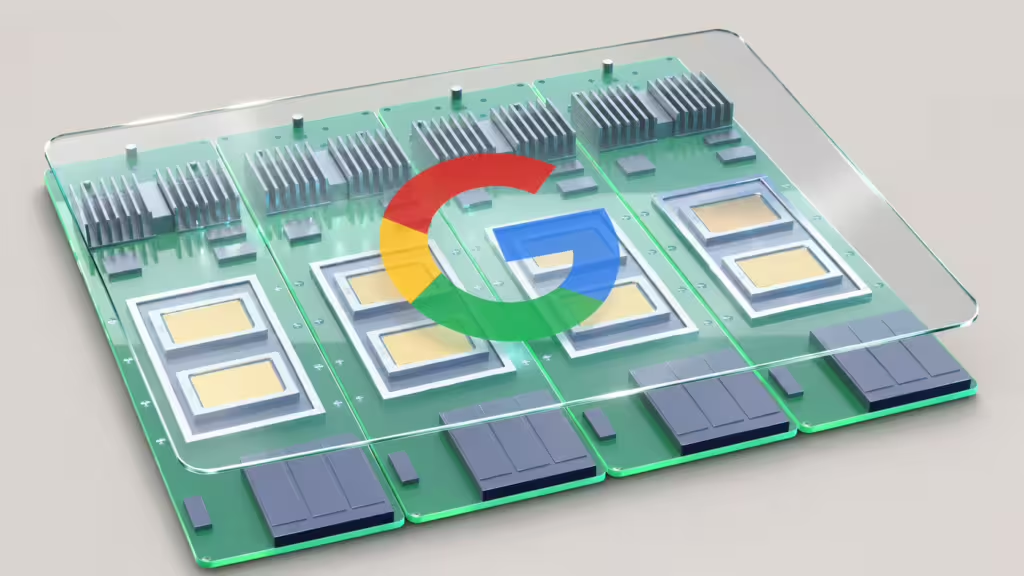
- What 8i Max does: TPU 8i Max combines two low-latency TPU 8i chips on a single package. Google said it delivers double the compute, double the SRAM and double the HBM bandwidth of TPU 8i, while fitting twice the silicon inside the existing rack footprint.
- The customer base: TPUs now serve nearly 100 customers, according to Google, including frontier AI labs, trading firms, retailers and universities. The company did not break down how that total is distributed across those categories or disclose revenue tied to the chips.
- Not disclosed: Google did not publish pricing, general availability dates or regional rollout plans for either system, and did not specify the context-window size 8i Max is built to support beyond describing it as massive.
Background:
TPUs are Google’s in-house AI accelerators, designed as an alternative to merchant chips for training and running large models. The eighth generation previously included TPU 8t, the silicon base Google says it reused for 8tx.
Between the lines:
The split between the two systems points at two separate bottlenecks rather than one. Google positioned 8tx around data that cannot move, pairing hardware-level isolation with a claim of near-zero performance cost, which is the trade regulated buyers have historically resisted. 8i Max addresses a different constraint: doubling silicon inside the same rack footprint matters most where data-center space and power, not chip supply, set the ceiling.
What’s next
Watch for Google Cloud to publish availability dates, pricing and regions for both systems, and for independent latency and context-window benchmarks testing the 2x latency and double-bandwidth claims against TPU 8t and 8i.