The latest:
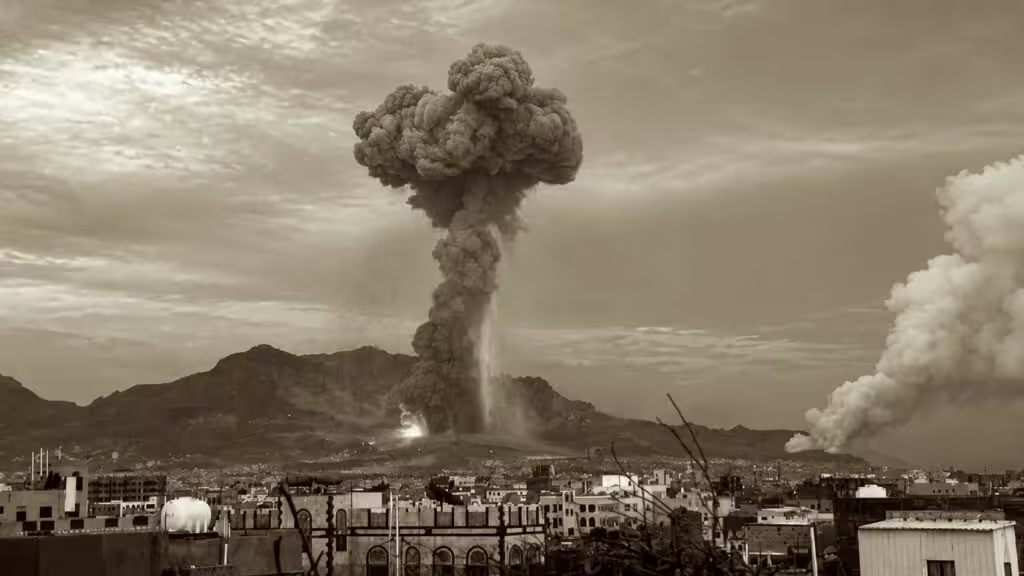
Nine members of the Qahem family, including five children under 10, were killed when a fighter jet leveled their home in northern Yemen on October 18, survivors and the Houthi-run health ministry said. Three weapons experts who reviewed aftermath footage for The New York Times identified debris from an American-made 500-pound MK-82 bomb fitted with a Paveway II guidance kit.
Details:
- The casualties: Yousef and Mohammed al-Qahem, both witnesses, said nine family members died, five of them children under 10, matching a casualty list from the Houthi health ministry. They said 19 others were wounded, including 13 children, many in critical condition.
- The munition: Trevor Ball, a former US Army explosive ordnance disposal technician, N.R. Jenzen-Jones of Armament Research Services, and independent weapons expert Frederic Gras each identified the fragment as part of a Paveway II guidance system for a 500-pound MK-82. A second Paveway fragment appeared at the same site.
- Why it matters: A Paveway II kit converts a free-fall bomb into a precision-guided munition, which makes it likely the house was a deliberately selected target rather than collateral damage from a strike aimed elsewhere.
- The coalition’s position: Maj. Gen. Turki al-Malki, spokesman for the Saudi-led coalition, said the site sat in an agricultural area that was “directly supporting the war effort of the terrorist Houthi militia through counter-jamming operations.” He did not answer whether those operations took place inside the targeted house.
- The family’s denial: Yousef and Mohammed al-Qahem said the family had no ties to the Houthis. Mohammed said Yahya al-Qahem, among the dead, was a construction worker unconnected to the conflict. Yousef, a 28-year-old fruit and vegetable broker, said he was walking to his car when the blast hit.
- The site analysis: Satellite imagery and video from before the strike showed no Houthi fortifications or troop concentrations within a half-mile radius, with homes, farm structures and plots of land dominating the surroundings. It was the second strike on the same home in two days.
- The American role: The Pentagon said it does not comment on intelligence matters. A US official, speaking anonymously, said Washington shares information with Riyadh, including intelligence on potential targets, but does not select or validate Saudi targets. Crown Prince Mohammed bin Salman asked President Trump for direct US airstrikes; that request was not granted.
- The wider toll: More than 260 civilians have been killed in Houthi-controlled areas since July, according to Ain Humanitarian Center for Rights and Development, a Houthi-linked NGO that did not separate coalition air raids from Saudi-backed government missile and drone attacks.
- Houthi strikes: The Houthis have sharply escalated attacks inside Saudi Arabia, including strikes on an international airport in the Saudi capital that killed at least 18 people and wounded more than 300.
- Access limits: Saudi officials have disclosed few details about the campaign, which they describe as an effort to restore the internationally recognized Yemeni government. Houthi rules requiring journalists to obtain permits before visiting strike sites have narrowed independent reporting in the north.
Background:
A Saudi-led coalition bombed Yemen for years with US weapons, killing hundreds of thousands through violence, hunger and disease, including a 2018 school bus strike that killed over 40 children. Biden ended US support for offensive operations in 2021; a truce followed in 2022.
Between the lines:
The guidance-kit finding narrows the range of explanations: a precision munition on a house with no fortifications within half a mile points to intent, not error. That sharpens the question al-Malki left unanswered — whether the jamming operations he cited were inside the targeted home. Washington’s formula, sharing intelligence without validating targets, leaves responsibility for that choice in Riyadh.
What’s next
Watch whether the coalition releases a target assessment for the October 18 strike, whether Congress revisits US arms transfers and intelligence-sharing with Riyadh, and whether the campaign shifts front lines in northern Yemen.