Key Points
- Oracle canceled a multibillion-dollar AI chip leasing contract with Tencent, the Financial Times reported.
- US officials had approached Oracle with concerns about the deal, the newspaper said.
- The lease would have given Tencent access to chips Washington bars from reaching China.
The latest:
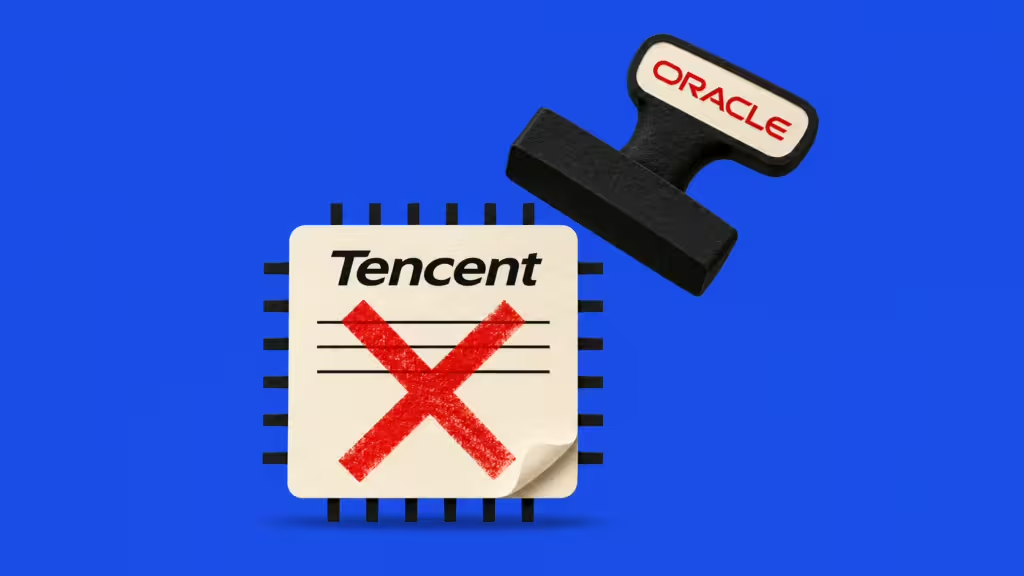
A multibillion-dollar chip leasing contract between Oracle and Tencent has been canceled after the US software group bowed to pressure from the Trump administration, the Financial Times reported Wednesday, citing people familiar with the matter. The agreement, signed last month and estimated at $7 billion, was Tencent’s largest overseas lease. It would have routed the Chinese group around export curbs imposed by both Washington and Beijing.
Details:
- The deal: Tencent signed a five-year lease spread across multiple Oracle data centers in Southeast Asia, the Financial Times reported last month. The arrangement was valued at an estimated $7 billion, making it the Chinese technology group’s largest overseas leasing agreement to date.
- The hardware: The contract would have given Tencent access to roughly 100,000 advanced artificial intelligence chips, according to the report. Those processors are unavailable inside China because of restrictions imposed by Washington on exports and by Beijing on domestic purchases of foreign hardware.
- The US pressure: American officials approached Oracle directly to raise concerns about the Tencent contract, the Financial Times said, citing people familiar with the matter. The report did not identify which agencies made the approach or specify what the officials told the company.
- The Chinese pressure: Tencent separately received visits from senior officials in Guangdong, the southern province where the group is based, the newspaper reported. Those officials asked the company to support domestically produced Chinese chips rather than rely on foreign suppliers.
- The structure: The arrangement was a lease rather than a sale, giving Tencent compute capacity inside Oracle-operated facilities offshore. That structure placed the chips outside mainland China while still serving a Chinese customer’s artificial intelligence workloads.
- No comment: Oracle, Tencent and the White House did not respond to requests for comment from Reuters on the report. None of the three has publicly confirmed the cancellation, the terms of the original agreement, or the content of the official approaches described.
- The verification gap: Reuters said it could not immediately verify the Financial Times account. The reporting rests on unnamed people familiar with the matter on both the American and Chinese sides of the transaction.
- The timeline: The lease was reported signed in October and reported canceled in early November, a window of weeks between the agreement becoming public and its collapse. No date has been given for when Oracle formally walked away.
Background:
Washington has restricted exports of advanced artificial intelligence chips to China for several years, limiting Chinese firms’ access to the processors used to train large models. Beijing has pushed in the opposite direction, urging domestic technology companies to buy Chinese-made alternatives.
Between the lines:
The offshore lease structure was the point: chips held in Southeast Asian data centers, not shipped to China, served a Chinese customer without crossing a border. Pressure from US officials on Oracle and from Guangdong officials on Tencent, as reported, converged on the same outcome from opposite motives — Washington closing a workaround, Beijing pushing its own suppliers.
What’s next
Watch for confirmation or denial from Oracle, Tencent or the White House, any disclosure in Oracle’s next quarterly filings on canceled data center commitments, and whether Tencent announces replacement capacity or domestic chip purchases.