The latest:
US bases built to shield Gulf states have become the opening targets of any new round of fighting with Iran, officials told Reuters at the Manama Dialogue security conference in Bahrain. Four European officials said Washington has massed enough force in the region to strike Iran at short notice, possibly as early as this week. Trump said he could launch another operation after Tuesday’s midterms.
Details:
- The threat: Trump said he might order what he described as another smaller version of the Epic Fury operation after Tuesday’s midterm vote, referring to the US-Israeli campaign that began on February 28. He also said no strikes would come before the elections and that talks with Tehran had been productive, without ruling out further action.
- The targets: Two European officials told Reuters any US attack would most likely hit Iranian nuclear sites, including research and development facilities, with Pickaxe Mountain among the possible locations. The same officials assessed that military action would probably only degrade Tehran’s capabilities rather than destroy them.
- Iran’s list: Iranian officials told Reuters Tehran has drawn up detailed target lists for a renewed US-Israeli attack, including undersea communications cables and military bases, some of them secret. That approach would push the cost of war beyond the battlefield to Gulf energy infrastructure, desalination plants and telecom networks.
- The strategy: Three delegates said Iran cannot match US and Israeli firepower and does not need to, adopting attrition instead: making the defence and upkeep of US forces expensive, turning host states into pressure points, and treating any American pullback as proof Washington cannot protect its partners.
- The damage: Near the US Fifth Fleet base in Juffair, Bahrain, strike marks remain metres from residential areas. A warehouse roof and corrugated metal facade were torn and charred where munitions landed, and a radar facing Iran lost a third of its dish.
- Bahrain’s exposure: Some Iranian hardliners have revived the description of Bahrain as Iran’s fourteenth province, though Tehran dropped its territorial claim in 1970. Bahrain’s rulers crushed the mostly Shi’ite-led 2011 protests and accused Iran of stoking the unrest, a charge Tehran denied.
- Gulf reaction: One Gulf official told Reuters they were essentially looking at the worst possible scenario, expecting a US strike and an Iranian response against civilian infrastructure across the Gulf. Another said only one person decides whether the conflict resumes and how severe it becomes, pointing to Trump.
- The diplomacy: Saudi, Turkish and Pakistani officials held talks with Iranian counterparts in Tehran last month, with Riyadh saying the effort aimed to prevent renewed escalation. Qatari officials met in Tehran and Doha over the weekend. Egyptian Foreign Minister Badr Abdelatty said another round would be more dangerous and destructive, and would achieve nothing.
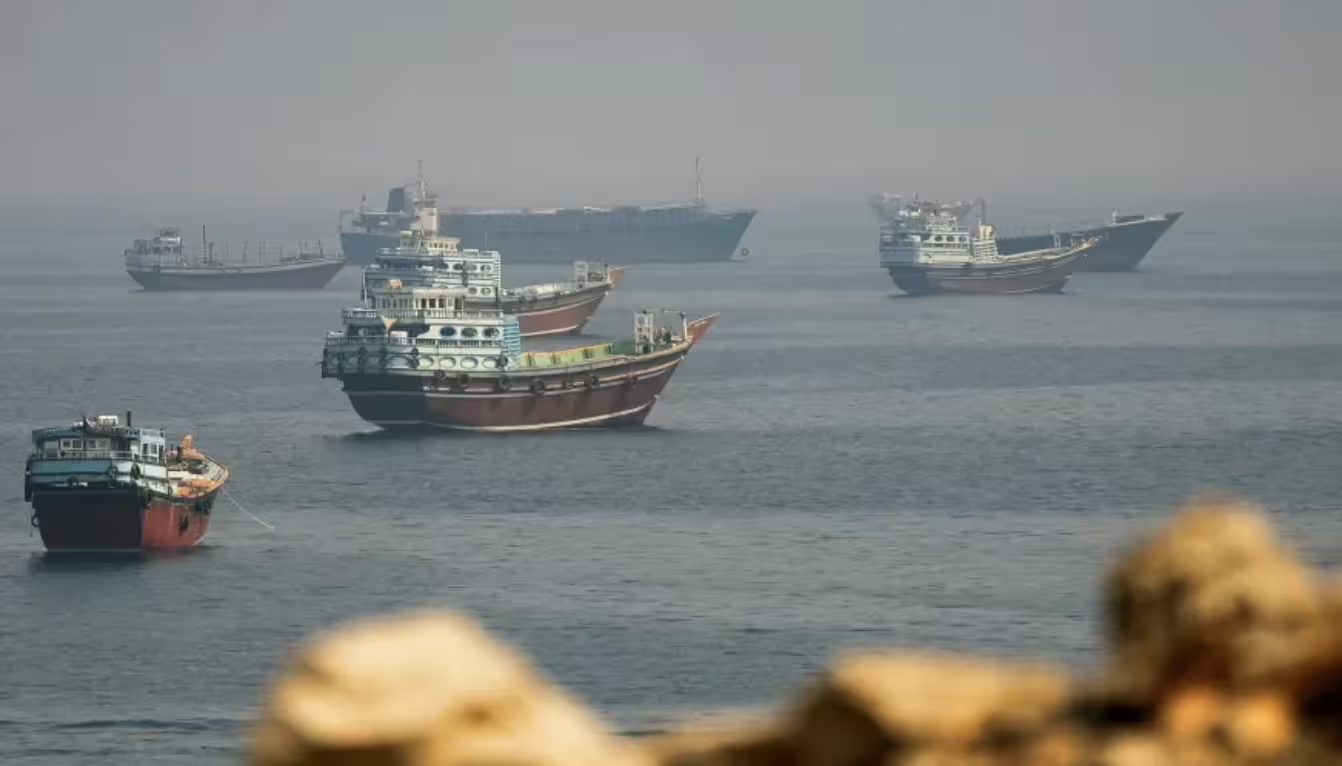
- The Doha track: An official familiar with the talks said Iranian negotiators left Qatari-mediated discussions on Sunday, not because of difficulties, with a draft proposal circulating and a possible follow-up meeting. Iran’s foreign ministry said the basis is a seven-step plan drafted in September to reopen the Strait of Hormuz and end the US naval blockade.
- The terms: Spokesman Esmail Baqaei said no final deal can begin and Hormuz cannot reopen unless the blockade ends and Iran’s demands are met. Foreign Minister Abbas Araqchi told Al Jazeera the strait could open within two days under a deal. Trump rejected Iran’s initial proposal, and a White House official said all options remain on the table.
Background:
The last round of fighting exposed a gap at the centre of a decades-old US security architecture in the Gulf. Rather than deterring Tehran, the wide American footprint gave Iran fixed targets and handed the states hosting those bases vulnerabilities their rival can exploit.
Between the lines:
Emile Hokayem of the International Institute for Strategic Studies, which runs the Manama Dialogue, assessed that Iran’s aim is to exhaust the Americans rather than defeat them, forcing Washington to spend more energy, weapons and money over time. On his reading, Tehran’s message to Gulf capitals is that four decades of investment in the US left them exposed rather than protected. A fifth European official close to Gulf leaders said war is coming and nobody supports it.
What’s next
Tuesday’s US midterm elections are the marker Trump set for any renewed action. Watch for a follow-up Doha meeting on the circulating draft, the US response to Iran’s accelerated Hormuz timetable, and movement of American assets already in the region.