Key Points
- Houthi missile killed 13 at Riyadh airport Saturday, third strike in a week
- Saudi Arabia pushed the UAE out of Yemen before the Houthi advance began
- Emirati withdrawal from Mocha left a gap the Houthis moved into quickly
The latest:
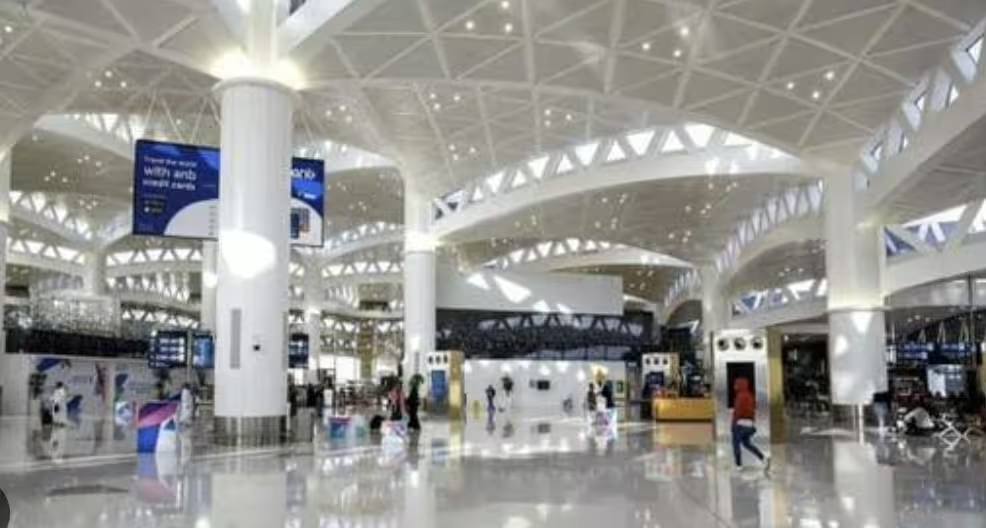
A Houthi missile struck King Khalid International Airport in Riyadh on Saturday, killing 13 people including a senior Bangladeshi cleric, The Times reported. Saudi energy minister Prince Abdulaziz bin Salman threatened a serious response without specifying it. Authorities said the airport, the capital’s main link to the outside world, would reopen on Saturday.
Details:
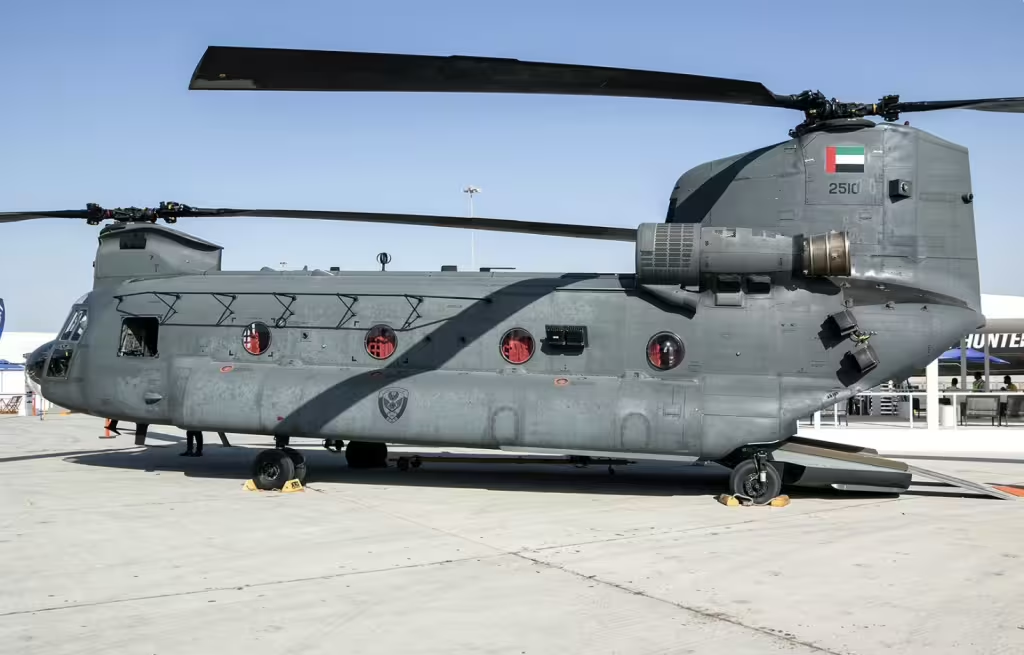
- The Emirati pullout: The Times reported that Saudi Arabia recently elbowed the UAE, its former military ally, out of Yemen, wanting to signal to Iran that the country was Riyadh’s backyard alone. The Emiratis left with their Apache helicopters and their command centre in Mocha, on Yemen’s Red Sea coast.
- What followed: With the Emiratis gone, the Houthis seized the opening and carried out a lightning advance last month, according to The Times. They took Mocha and the neighbouring Bab al-Mandeb Strait, which controls access to the Red Sea and the Suez Canal beyond.
- The escalation chain: The war had theoretically been paused by a 2022 ceasefire. The Times reported that Saudi Arabia escalated in June by striking a Houthi-held airport to stop an Iranian-backed plane from landing, a move intended as a show of dominance.
- The week of strikes: Saturday’s attack was the third on the airport in a week, and no missile warning was heard beforehand. On Thursday a Houthi missile destroyed a passenger jet on the tarmac, killing a pilot and two others. Days earlier another strike killed one person.
- Oil infrastructure: The Houthis have begun targeting Saudi oil tankers and, with Iran-backed militias in Iraq, a pipeline across Saudi Arabia that Riyadh used to divert millions of barrels away from the Strait of Hormuz toward the Red Sea.
- Iran’s objective: According to The Times, Iran had been pressuring the Houthis to close Bab al-Mandeb and the Red Sea to oil shipments as its chokehold over the Strait of Hormuz weakened. It got its wish. Iran now has an outpost overlooking the Red Sea.
- Travel fallout: International airlines have cancelled flights to Riyadh. The British government cautioned citizens against flying to the capital, and the American embassy warned that US government employees need special permission to use any Saudi airport.
- The conferences: Prince Abdulaziz spoke at the WPC Energy Congress in Riyadh, one of two flagship events scheduled this month. The second is the Future Investment Initiative, which draws leading financiers and senior US and British officials to showcase the crown prince’s business-friendly kingdom.
- The counter-offensive: Saudi-backed government forces launched an offensive last week to retake territories recently captured by the Houthis. The Times reported that this is what prompted the Riyadh airport strikes.
Background:
The war is almost 12 years old and has caused hundreds of thousands of deaths, yet The Times reported it has only strengthened the Houthis. Iran has long backed the group, which has also developed a trading relationship with al-Qaeda in Somalia.
Between the lines:
The Times frames Riyadh’s choice as two unpalatable options. It can sue for peace with emboldened rebels and seek a wider deal with Iran, buying time at the cost of face and deterrence, though Riyadh believes that only postpones the next round. Or it can press the offensive, possibly with US participation, risking deeper entanglement and more strikes on civilian infrastructure. Both paths run through the gap the Emirati departure opened.
What’s next
The airport’s scheduled Saturday reopening, whether the Future Investment Initiative proceeds as planned, the progress of the Saudi-backed offensive, and whether Washington joins the campaign directly.