The latest:
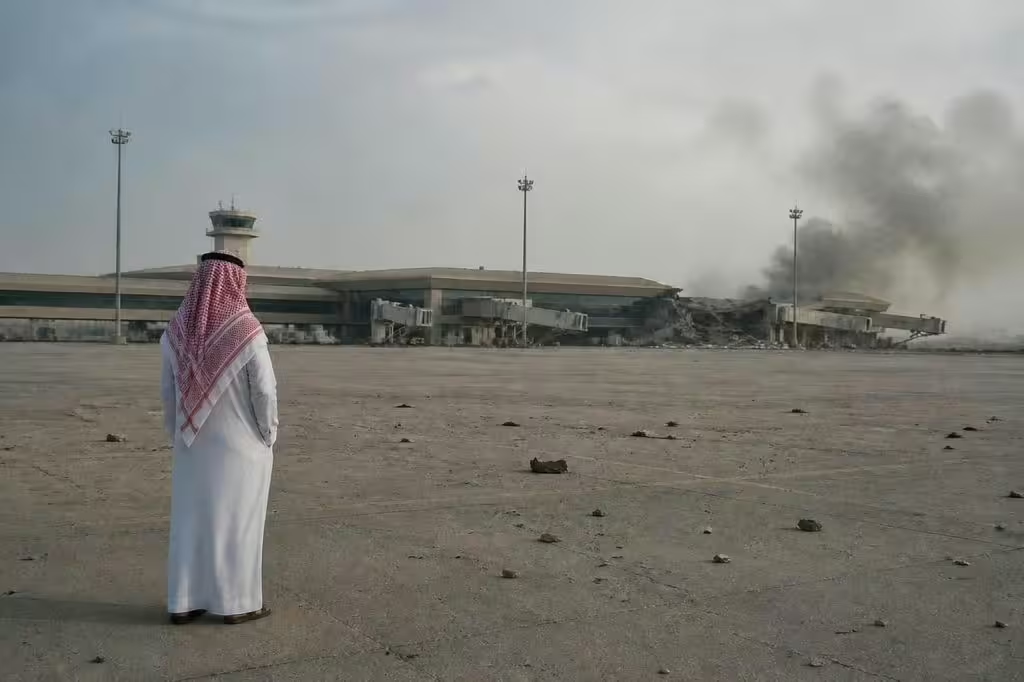
Several explosions were heard across Riyadh on Thursday, including a large blast at King Khalid International Airport that stopped departing flights and sent passengers out of a crowded terminal without their checked bags, a witness told the Associated Press. Firefighting and ambulance crews deployed and smoke was visible. Yemen’s Houthis claimed a ballistic missile caused the damage.
Details:
- The airport scene: A witness who spoke anonymously, citing the sensitivity of discussing security in the kingdom, said departures stopped and travelers were told to evacuate without checked luggage. Three people familiar with the matter told Reuters the smoke came from a parked aircraft believed to be empty, and that the fire was later contained.
- Flight disruption: Flightradar24 reported King Khalid International closed again Thursday afternoon, with the last landing more than 80 minutes earlier. Cirium recorded 49.7% of Riyadh departures canceled by 15:00 GMT, with 31 more cancellations expected Friday across Saudi airports. FlightAware reported hundreds of flights scrapped.
- Houthi claim: Houthi military spokesman Brigadier General Yahya Saree said in an evening statement that the group fired additional ballistic and cruise missiles at Riyadh and Najran airports. The group offered no evidence, and Saudi authorities issued no immediate comment on the claim.
- Saudi interceptions: Coalition spokesman Major General Turki al-Malki said forces intercepted two ballistic missiles fired toward Riyadh and a third toward Khamis Mushait, near the Yemeni border. Civil defense authorities said falling debris from an interception damaged a kindergarten and a medical complex, without reporting injuries.
- The death toll: Saudi officials said Wednesday that Houthi attacks on Riyadh and Abha airports killed three people — the first fatalities since the kingdom and allied Yemeni forces launched a major offensive to retake Red Sea coastal territory seized by the Houthis last month.
- Threat to oil: The Houthis warned experts, engineers and workers at all Saudi oil facilities to stay away from sites the group considers targets, and renewed warnings to airlines, airports and travelers. The group declared a blockade on Saudi shipping in July and has since struck tankers and energy installations.
- Turkey’s position: Foreign Minister Hakan Fidan said Turkey and Pakistan are assessing air defense, electronic warfare and technical assistance for Riyadh under the Mecca pact, stressing it is defensive. He said Ankara will not send troops into another country to launch attacks, and that parliamentary ratification is nearly ready.
- Pakistan’s role: Islamabad agreed to speed additional troops to Saudi Arabia without a parliamentary vote, unlike 2015, when lawmakers unanimously chose neutrality. The information ministry said all required government procedures were met and called deployment details a confidential operational matter, declining to specify cabinet involvement.
- Unanswered questions: The three signatories have not disclosed troop numbers, missions, command arrangements, costs or duration, and the text of the Mecca pact has not been published. The Saudi government did not respond to a Reuters request for comment.
- Riyadh on edge: Five sources said multinational firms at King Abdullah Financial District told staff to work from home after the morning blasts. Diplomats received warnings and some schools informed parents of shelter-in-place orders, though authorities issued no public alert. Lufthansa and Air India suspended Riyadh flights.
Background:
Yemen’s civil war, paused by a 2022 truce, reignited after the Houthis seized stretches of the Red Sea coast last month, including areas along the Bab al-Mandab strait — a corridor that gained importance for Gulf oil exports after Iranian attacks disrupted Hormuz.
Between the lines:
The strikes pull two outside militaries toward a war they have so far framed as defensive. Fidan’s explicit refusal to send troops for offensive operations, and Pakistan’s silence on whether its forces will fight the Houthis, mark the line both capitals are trying to hold. Analysts note Pakistan’s deployment without a parliamentary vote underscores military control of foreign policy under Field Marshal Asim Munir.
What’s next
Riyadh hosts the World Petroleum Congress this week، and the Second Gulf-European Summit in Two Weeks, Watch Turkish parliamentary ratification of the Mecca pact, military delegations defining Saudi defense needs, Lufthansa’s October 16 resumption date, and whether Syria commits defensive support.