Key Points
- Qatar's Foreign Ministry says Washington and Tehran are still talking and exchanging messages through Doha.
- Iran's interior minister left Doha carrying the emir's proposals for President Masoud Pezeshkian after talks.
- Mediation runs alongside continued fighting, Gulf attacks and Iranian warnings of new weapons.
The latest:
Talks and message exchanges between Washington and Tehran are continuing without interruption, Qatar’s Foreign Ministry said Tuesday, with Doha acting as mediator between the two sides. Ibrahim bin Sultan Ibrahim Al Hashmi, the ministry’s director of media and communications, told the weekly briefing that Qatar is trying to create conditions for solutions that account for both sides’ concerns.
Details:
- The Qatari channel: Al Hashmi said at the ministry’s weekly briefing that messages are moving between Washington and Tehran, with Qatar serving as mediator and aiming to build conditions for solutions that take both sides’ concerns into account. He did not say when either side last responded.
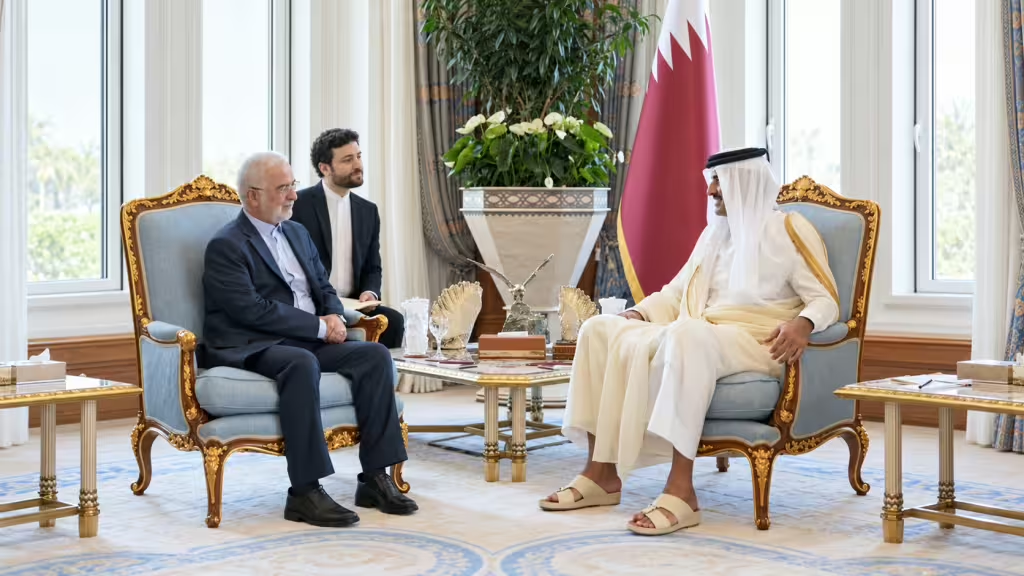
- The emir’s proposals: Iranian Interior Minister Eskandar Momeni left Doha for Tehran on Tuesday evening after meeting Qatari officials. Momeni said he conveyed a message from Pezeshkian to the emir, who offered views and proposals that Momeni would relay to the president on his return. He described the talks as good and constructive.
- The UN position: UN Secretary-General Antonio Guterres, speaking in Islamabad alongside Pakistani Foreign Minister Ishaq Dar, urged all parties to end the conflict, return to diplomacy and fully restore navigational rights under international law. He credited Pakistani mediation with the June 17 Islamabad memorandum of understanding, the ceasefire and a negotiating framework.
- Trump’s framing: US President Donald Trump said the Iran war was essentially almost over and insisted Tehran would not be allowed to obtain a nuclear weapon. He described higher gasoline prices as a small price to pay for keeping the world safe.
- Iranian hard line: Mohsen Rezaei, secretary of Iran’s Supreme National Security Council, wrote on X that Washington lost the military war and will fail in the economic war, adding that “Hormuz will not be opened by threats or pressure.” Army spokesman Mohammad Akraminia said Tuesday the army holds a large stockpile of new missiles and drones. Ebrahim Rezaei of parliament’s National Security Committee said adversaries should expect more powerful weapons and further surprises, calling defense nominee Mehrdad Akhlaghi a signal of combat readiness.
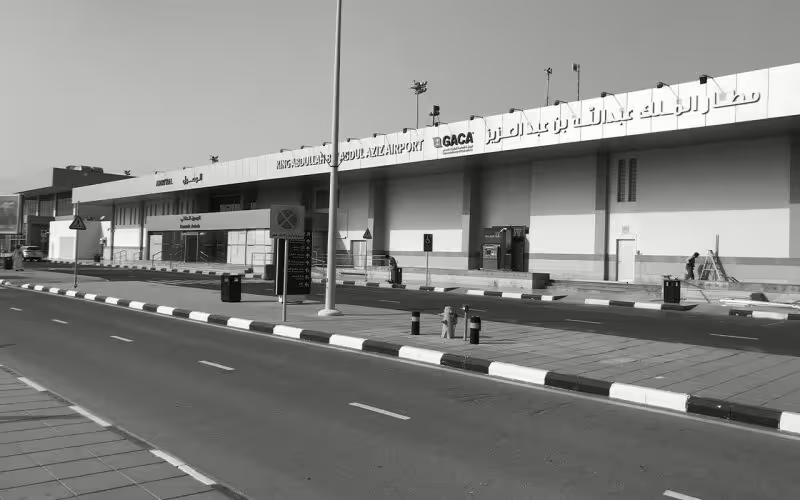
- The fighting continues: Saudi Arabia’s General Authority of Civil Aviation said attacks on airports in Jazan and Najran on Monday evening caused property damage and left three people with minor injuries. European Commission President Ursula von der Leyen condemned recent attacks by Yemen’s Iran-backed Houthis on Saudi Arabia, saying they hit a refinery and airports.
- Oil under pressure: Saudi Energy Minister Prince Abdulaziz bin Salman said oil pumped through the East-West pipeline to the Red Sea port of Yanbu reached 5.8 million barrels by Tuesday morning. Bloomberg reported that Chinese independent refiners are buying more Iraqi crude as a US blockade restricts Iranian shipments.
- Tehran’s oil shake-up: Pezeshkian appointed former Oil Minister Mohsen Paknejad as presidential adviser on Tuesday, two days after accepting his resignation. Paknejad left after weeks of controversy over Iran’s use of intermediaries to sell sanctioned oil and parliamentary questions over unrepatriated revenues. Officials have not linked his departure to those disputes.
- Disputed claim: US Central Command rejected Iranian state media reports that a US Navy MH-60R helicopter crashed in the Red Sea after declaring an emergency, saying all US aircraft and personnel in the Middle East were safe and accounted for. IRIB and the IRGC-linked Fars agency had cited flight-tracking data.
- Domestic crackdown: The Human Rights Activists News Agency reported that Branch 23 of the Tehran Revolutionary Court sentenced Borzou Rezaei to death on a charge of collaboration with hostile states over Iran’s January 2026 protests. He was arrested in March and held at the Greater Tehran Penitentiary.
Background:
Iran’s supreme leader Mojtaba Khamenei took office after his father’s death on February 28. State media published a written condolence message attributed to him Tuesday; he has not appeared publicly or been seen in a verified new image since.
Between the lines:
Two tracks are running at once. Doha and Islamabad are moving messages and proposals while Iranian officials publicly promise new weapons, surprises and no retreat on Hormuz. Qatar’s stated aim of accommodating both sides’ concerns sits against Trump’s position that Tehran will never obtain a nuclear weapon, leaving the gap mediators must close undefined by either party.
What’s next
Watch Momeni’s delivery of the emir’s proposals to Pezeshkian in Tehran, parliament’s confidence vote on a permanent oil minister and on defense nominee Mehrdad Akhlaghi, and any further Houthi strikes on Saudi airports or energy infrastructure.