Key Points
- Yemen's government opened a nationwide counteroffensive Sunday with Saudi air cover against Iran-backed Houthi forces.
- The Houthis seized Mocha and positions near Bab al-Mandeb in September, tightening control of the corridor.
- Riyadh links the campaign to energy security, with Washington so far limiting itself to intelligence support.
The latest:
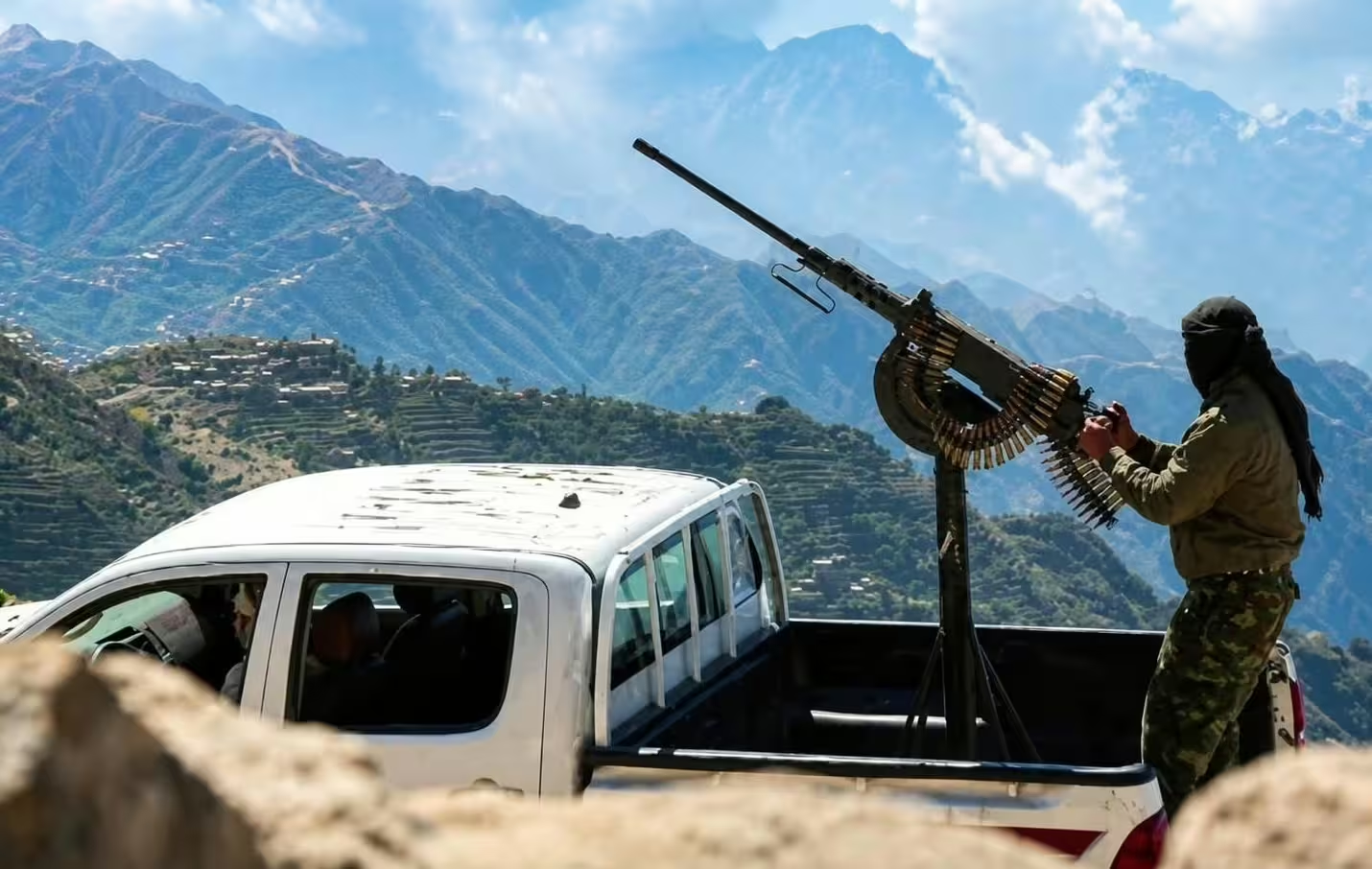
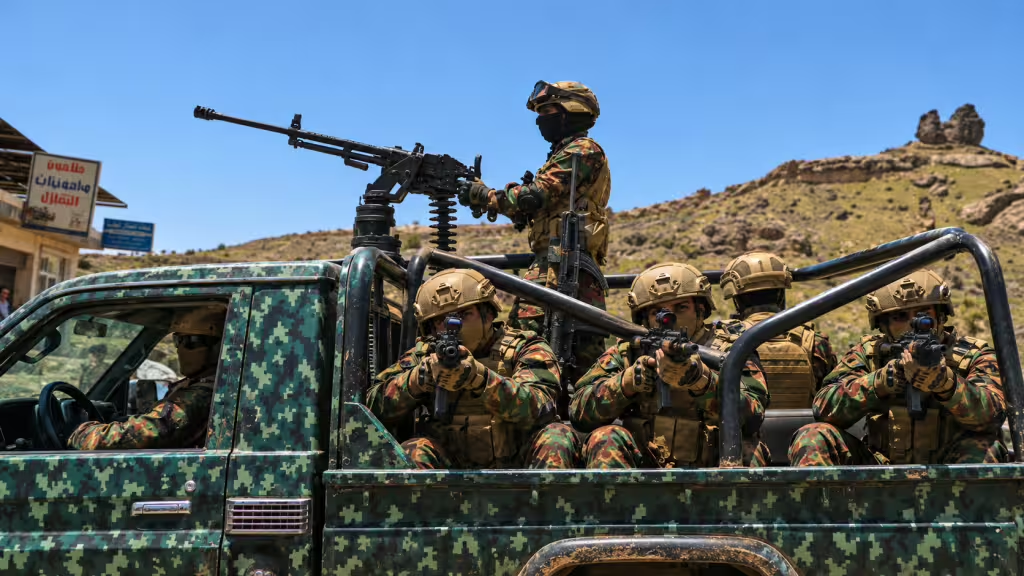
Yemeni government forces opened a nationwide counteroffensive against the Houthis on Sunday, with Saudi aircraft providing cover and striking targets, in a campaign aimed at reversing the group’s gains along the Red Sea. Presidential Leadership Council chairman Rashad al-Alimi said in a televised address that every opportunity for de-escalation had been exhausted and ordered the armed forces to begin operations to restore state authority.
Details:
- The objective: Al-Alimi said the campaign would continue until territory held by the Houthis was recovered, setting restoration of government authority across Yemen, including Sanaa, as the goal. The Houthis have held the capital since 2014. The immediate military focus is Taiz, the Red Sea coast and the approaches to Bab al-Mandeb.
- The scale: Axios reported that tens of thousands of Yemeni government troops are taking part, with Saudi forces flying air cover and striking Houthi targets. Reuters reported two days earlier that more than 100,000 Yemeni troops could ultimately be involved, depending on whether Riyadh opts for a coastal Red Sea operation or a broader multi-front campaign.
- The ontime+ account: A Saudi official source told ontime+ the decision reflects a fundamental change in Riyadh’s assessment of the war, saying Saudi patience had run out and the leadership had opted for what it considers a decisive battle. The source said the Royal Saudi Air Force is already directly involved and ground forces could follow if necessary.
- The weapons channel: The same source told ontime+ that Saudi Arabia had informed a Gulf state it must stop facilitating weapons transfers to the Houthis. ontime+ is withholding the name of the state because the source was not authorized to identify it publicly.
- The strike tally: The Saudi-led coalition said early Sunday it carried out 97 precision operations against Houthi reinforcements on the Tor al-Baha front and the Taiz axis, using aircraft, drones, artillery, missiles and snipers. Coalition spokesman Maj. Gen. Turki al-Maliki said the Houthis were taking significant losses and accused them of claiming “illusory victories.”
- The Yemeni operations: Government forces said Saturday they had conducted 257 operations across Sanaa, Midi, Baqim, Al-Jawf, Marib, Al-Bayda, Lahj and Taiz, hitting command centers, weapons depots, supply lines and troop concentrations. Military spokesman Col. Majed al-Nuzaili said strikes on Sanaa showed the ability to reach strategic targets deep inside Houthi-held territory.
- The Houthi response: The Houthis have fired missiles and drones toward Saudi Arabia. Military spokesman Yahya Saree said Saturday the group had struck Aramco targets in Riyadh; the coalition rejected that account as misleading. Houthi forces recently captured Al-Turbah south of Taiz, according to Yemeni officials cited by The New York Times.
- The American limit: Axios reported that Saudi Defense Minister Prince Khalid bin Salman asked U.S. Defense Secretary Pete Hegseth for American airstrikes on Houthi targets. U.S. officials said Washington was not prepared for now to join direct offensive operations while already providing intelligence and targeting support. Reuters reported regional and European partners are offering mainly defensive assistance.
- The Pentagon’s concern: According to Axios, U.S. Central Command has questioned whether a large Yemen operation could distract from the military focus on Iran. A U.S. official said Washington could reconsider direct action if the offensive runs into serious difficulty. The Saudi government has not publicly detailed the full extent of its role.
Background:
Houthi forces seized Mocha and strategic positions and islands near Bab al-Mandeb in September, tightening their grip on one side of the corridor linking the Red Sea and the Gulf of Aden. The strait has grown more important for Saudi energy exports as disruptions around the Strait of Hormuz complicated alternative Gulf routes.
Between the lines:
The ontime+ source framed the campaign as a turning point rather than another round of retaliation, saying Riyadh’s goal is no longer deterring missile and drone attacks but changing the balance on the ground. That ambition sits against Washington’s refusal to join offensive strikes and CENTCOM’s stated worry about diverting from Iran, leaving the opening phase dependent on Yemeni formations with Saudi air power.
What’s next
Watch whether Saudi ground forces enter, which the ontime+ source tied to the progress of Yemeni units; whether Washington revisits direct strikes; and control of Taiz, Al-Turbah and the Bab al-Mandeb approaches.
Sources: