Key Points
- Mediators are pushing Tehran to concede on its nuclear program to restart ceasefire talks with Washington
- Trump rejected Iran's seven-day truce offer to reopen the Strait of Hormuz and pause the U.S. blockade
- Failure risks a return to full-scale war, with Trump telling aides renewed bombing looks likely
The latest:
Peace negotiators are pressing Iran to offer a concession on its nuclear program as the only remaining way to revive ceasefire talks with the United States, mediators told The Wall Street Journal. They described the effort as a long shot aimed at placating President Trump on the issue he cares about most. Tehran, the mediators said, has given little sign it is ready to discuss the program at all.
Details:
- The rejected offer: Trump on Friday turned down an Iranian proposal that would have opened the Strait of Hormuz and suspended the U.S. blockade of Iranian ports for seven days to create space for negotiations, according to the Journal. Arab mediators said Iran has not moved on any point since.
- Trump’s framing: The president has tried to shift the conflict back to his original war aim of denying Iran a nuclear weapon and away from reopening the Hormuz waterway. In his United Nations speech last week he said he was weighing whether to annihilate Iran’s government to prevent it from obtaining a bomb.
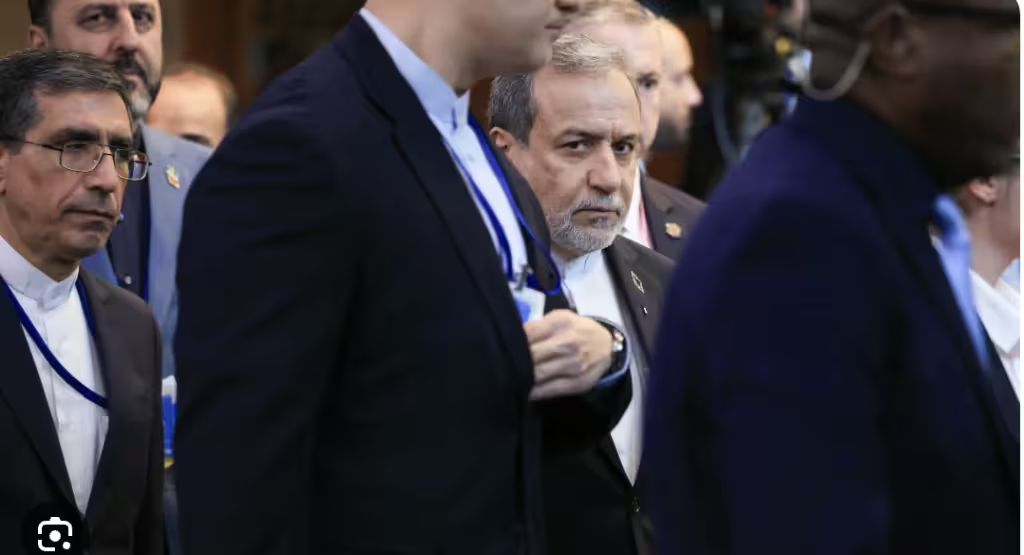
- Tehran’s position: Foreign Minister Abbas Araghchi said Sunday on NBC’s Meet the Press that Iran is ready for diplomacy but equally prepared for the war to resume, including what he called a doomsday war, and that the choice belongs to Trump. He stayed in New York for further talks.
- Who holds power: Middle East government officials in regular contact with Tehran said Iranian leaders believe they can absorb a long-term blockade or a renewed bombing campaign. They said power is now concentrated in the Islamic Revolutionary Guard Corps, a paramilitary and economic force long opposed to compromise with the West.
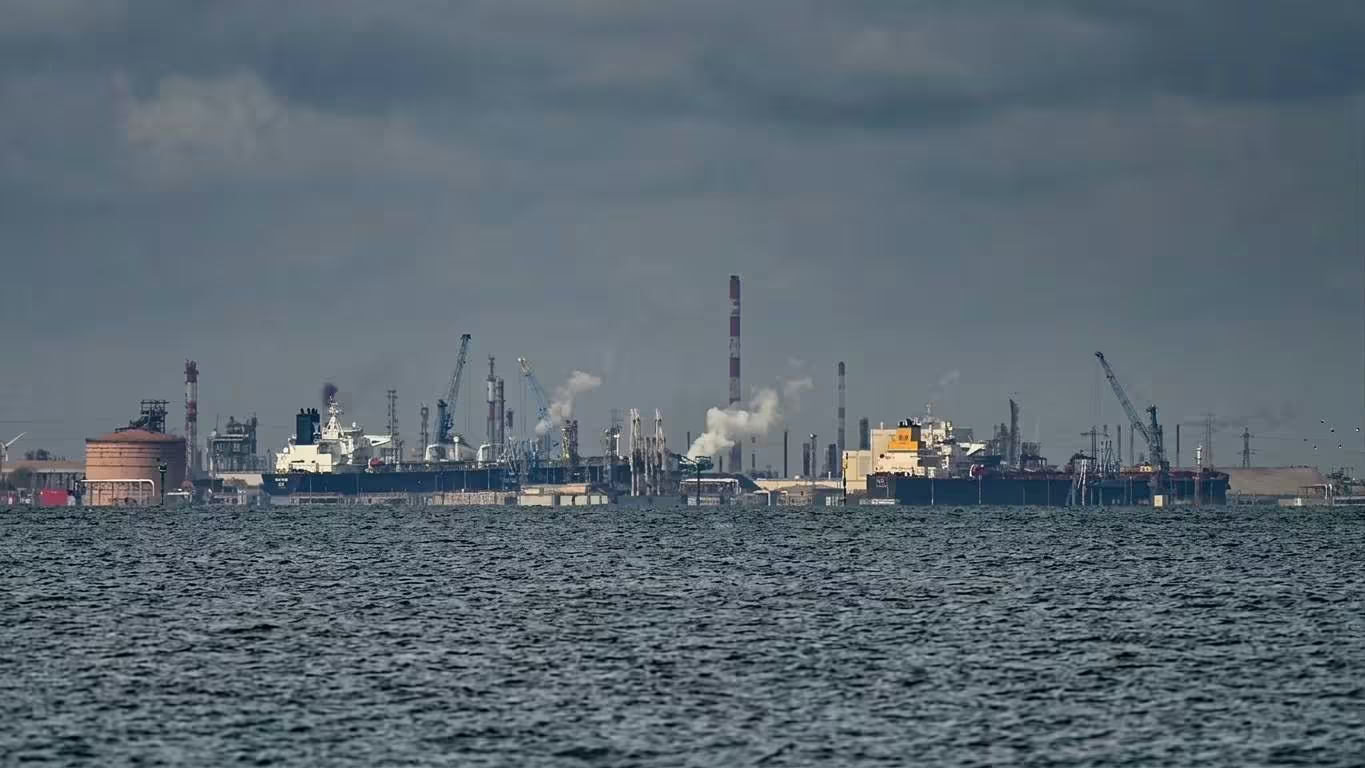
- The blockade effect: U.S. officials have grown more confident the naval blockade is severely damaging Iran’s economy, the Journal reported. U.S. and Gulf officials said Iran is losing control of the Strait of Hormuz, with millions of barrels moving through a waterway essential to global crude transit.
- Qatar’s read: Qatari Prime Minister Sheikh Mohammed bin Abdulrahman Al Thani told Bloomberg the conflict is becoming harder to resolve over time, citing attacks by Iran-backed Houthi militants in Yemen and by groups in Iraq on Saudi Arabia. He said what is missing is any clear master strategy to end it.
- The June document: Iran wants Washington to return to a memorandum of understanding Trump agreed to in June, which would have reopened Hormuz and eventually launched nuclear talks in exchange for partial sanctions relief, the unfreezing of billions of dollars held overseas, and an end to the blockade.
- Washington’s answer: U.S. officials said the June agreement was widely viewed as favorable to Iran and that Trump no longer wants to revive it. The administration has instead tightened sanctions on Iran and on countries doing business with it, including efforts to halt air traffic in and out of the country.
- The Israel condition: A senior official from a Middle East government involved in the talks said Iran would be willing to compromise on its nuclear program, and came close to doing so earlier this year with Vice President JD Vance, but would require explicit assurances that Israel would not attack again.
- Analysts’ view: Umer Karim of the University of Birmingham said the loss of grip on Hormuz weakens Iran’s leverage. Behnam Ben Taleblu of the Foundation for Defense of Democracies, a think tank critical of Tehran, said Washington appears intent on escalating sanctions and holding the blockade until it senses surrender.
Background:
Trump agreed in June to a memorandum of understanding pairing the reopening of Hormuz with eventual nuclear negotiations and sanctions relief. Ben Taleblu said Iran violated that agreement earlier this summer; the U.S. has since imposed a naval blockade on Iranian ports.
Between the lines:
Karim assessed that Iran’s hard-line leadership expects Trump and Republicans to lose the midterms, and that many Middle East officials believe a less electorally constrained Trump would be more willing to use force and less likely to settle on Tehran’s terms. That calculation, with mediators’ account that neither side has moved since Friday, explains why Karim judged any concession now would read as weakness.
What’s next
Watch whether Araghchi’s continued New York contacts produce any opening on the nuclear file, whether Washington widens sanctions to air traffic, and whether Trump acts on the renewed bombing campaign he has told staff he sees as likely.