The latest:
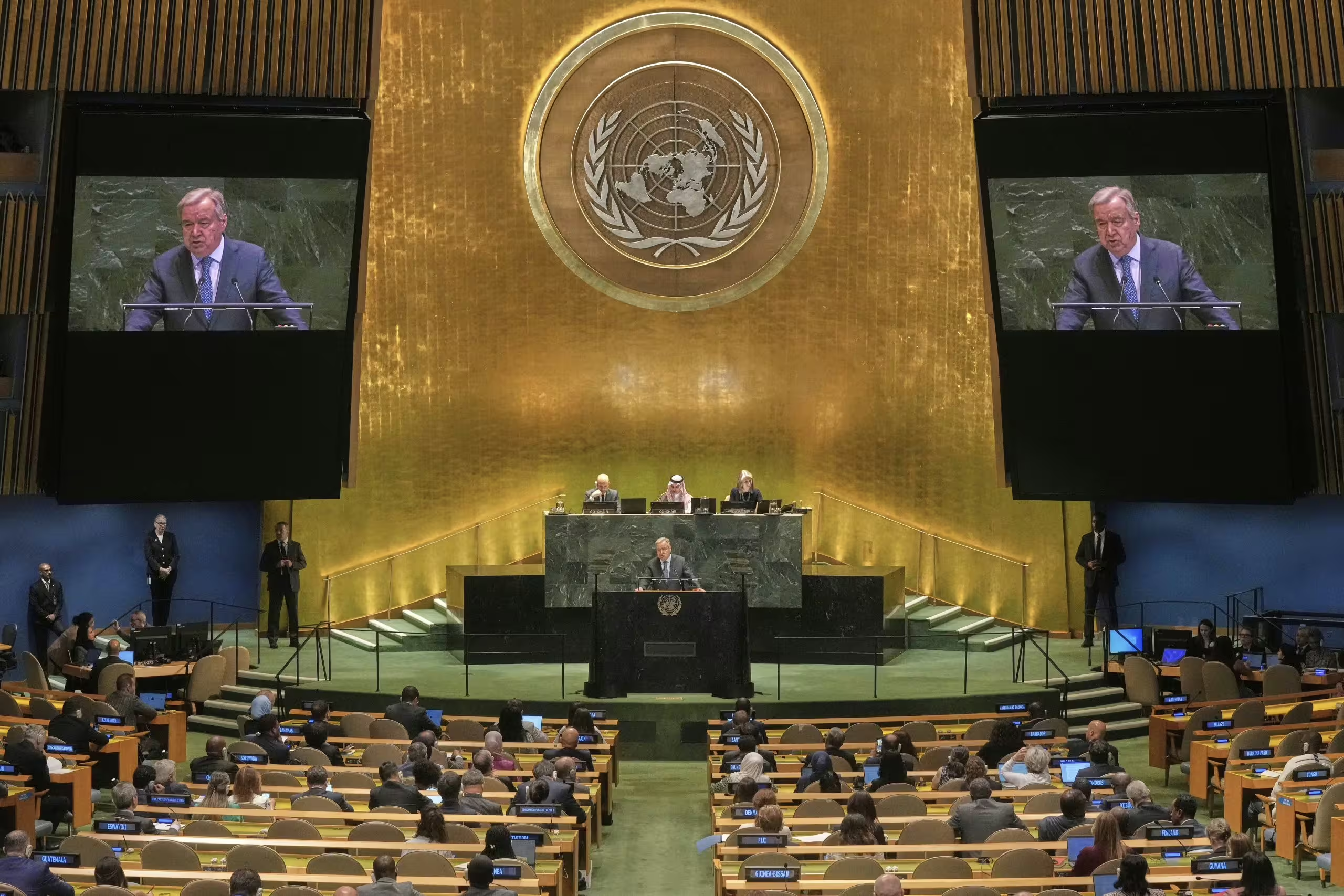
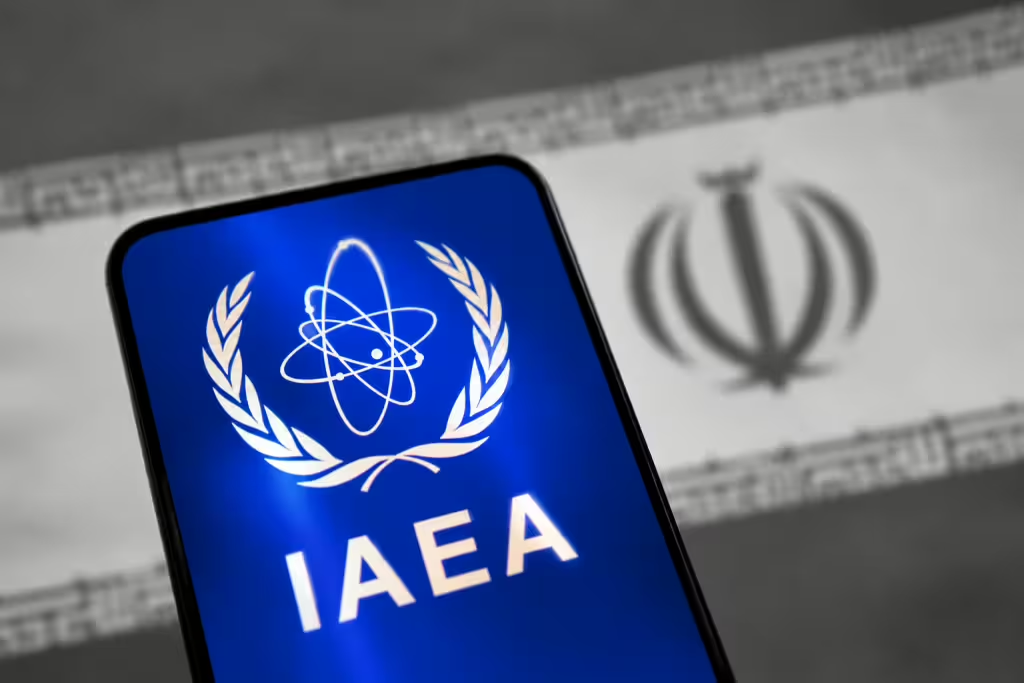
Iran was formally reported to the UN Security Council for breaching its non-proliferation obligations, after the IAEA board of governors voted Wednesday, diplomats said. The referral, the first in nearly 20 years, followed the agency’s finding that Tehran denied inspectors access to nuclear sites and withheld the information needed to account for its enriched uranium stockpile.
Details:
- The vote: The 35-member board of the UN nuclear watchdog approved the resolution Wednesday, escalating a dispute running for two decades, according to Reuters and Iran International. The measure was led by the United States and the E3 — Britain, France and Germany.
- The trigger: The IAEA said Iran failed to give inspectors access to nuclear facilities and to provide the information required to account for its stock of enriched uranium, a finding the board used as the legal basis for notifying the Security Council.
- The precedent: The last referral came in 2006, when the confrontation over Tehran’s nuclear activities moved from the Vienna-based regulator to the UN body and ultimately produced a series of Security Council sanctions resolutions.
- The missing material: The agency says it has lost track of Iran’s stockpile of uranium enriched to 60% purity, which stood at 440.9 kilograms before the strikes. Inspectors have not returned to damaged sites since attacks began in June 2025.
- Iran’s position: Tehran maintains its program is peaceful and claimed the American and Israeli attacks themselves made continued inspections impossible. Its mission in Vienna warned the resolution would accelerate the collapse of the entire non-proliferation regime.
- The opposition: China and Russia joined Iran in opposing the Western-backed text, arguing the referral “lacks a legal basis” and would worsen the crisis rather than support diplomacy. The three called the non-compliance finding politically driven and far-fetched.
- Their argument: Moscow, Beijing and Tehran contend the US and Israeli strikes on Iranian nuclear facilities were the primary reason Tehran later blocked IAEA access, reversing the causal chain the Western states used to justify the resolution.
- Parallel pressure: The vote adds diplomatic weight as Iran faces an escalating war with the United States and widening economic sanctions. Britain unveiled tighter restrictions this week targeting Iranian access to its financial system, trade and shipping.
- Sanctions track: The British measures followed the reimposition of UN sanctions under the snapback mechanism triggered last year by Britain, France and Germany, layering national restrictions on top of restored multilateral penalties.
- The earlier finding: Wednesday’s decision follows a resolution adopted on 12 June last year, one day before Israel bombed Iranian nuclear facilities. The United States joined the confrontation shortly afterward, concluding on its own that Iran was not meeting its obligations.
Background:
The IAEA board can declare a member state non-compliant with its safeguards obligations and notify the Security Council, the only UN body able to impose binding sanctions. The 2006 referral opened a sanctions cycle that shaped Iran’s nuclear file for years.
Between the lines:
The referral’s practical ceiling is set by the veto. Russia and China opposed the text and hold permanent seats, so substantive measures against Iran are difficult even with the file back at the UN. Meanwhile the agency’s account of the 440.9 kilograms of 60% uranium is frozen at pre-strike figures, meaning the case rests on records predating the damage.
What’s next
Watch whether the Security Council schedules a session on the referral, whether inspectors regain access to the bombed sites, and whether Russia and China block any follow-up resolution.