Summary:
Key Points
- Bloomberg columnist argues Trump's Economic D-Day plan needs cooperation the 2026 world will not supply
- SCO summit in Bishkek discussed expanding investment and trade with Iran, the column says
- Without a near-total financial blockade, the argument runs, Tehran can absorb continued pressure
The latest:
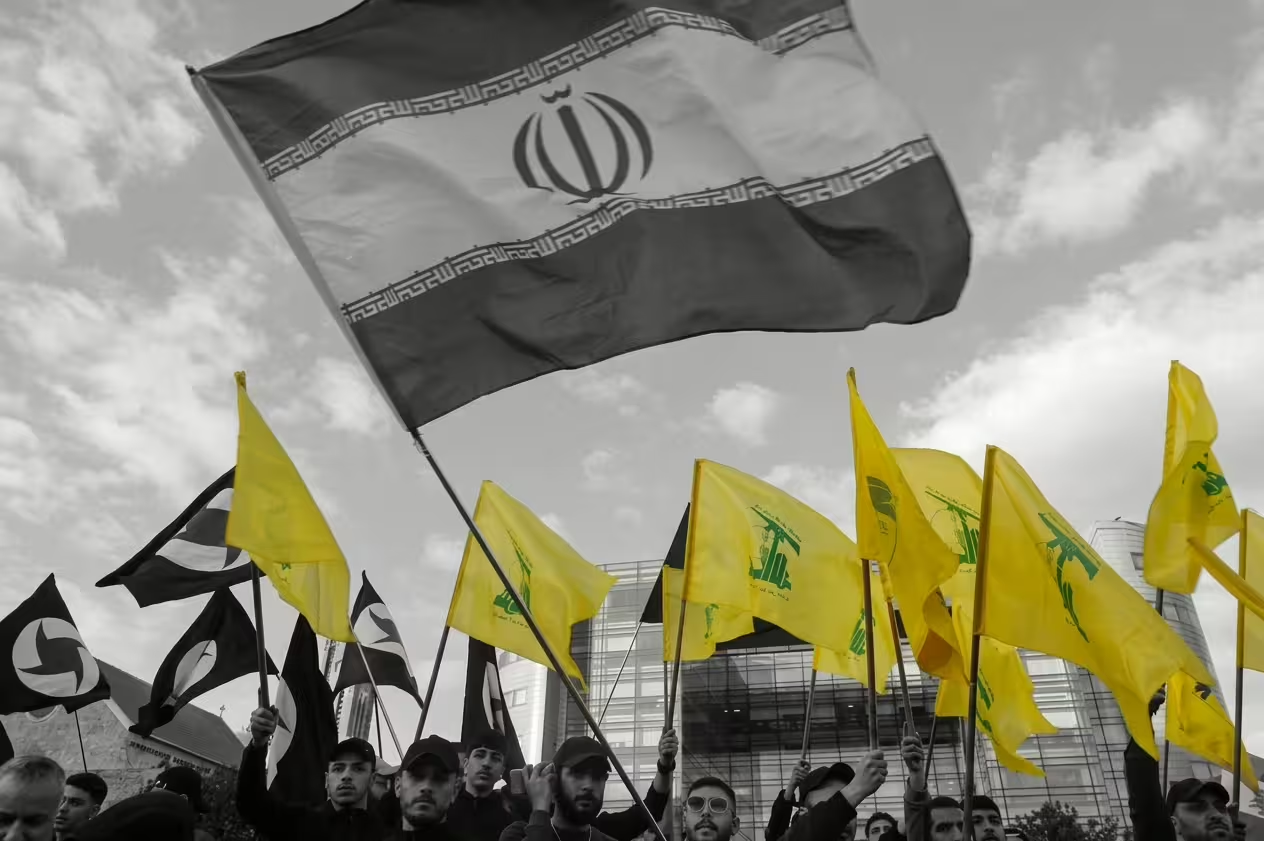
Trump’s plan for what he calls an Economic D-Day to collapse Iran’s economy is set up to fail because Washington no longer commands the compliance it had in 2001, Bloomberg Opinion columnist Marc Champion wrote. Treasury Secretary Scott Bessent framed the demand as a choice between being with the United States or against it, echoing George W. Bush after 9/11.
Details:
- The plan: Trump says he is confident his Economic D-Day plan will bring Iran to heel by collapsing its economy, according to the column. Champion wrote that delivering it requires a great deal of international cooperation, and that Bessent summed up the demand on other governments as a binary choice.
- The 2001 comparison: Bessent was echoing Bush’s post-9/11 address to Congress, the column said. Champion argued the analogy collapses because the United States was then the undisputed hegemon, with NATO allies invoking Article V collective defense on Washington’s behalf so they could join the fight.
- Iran’s calculation: Champion assessed that the Islamic Revolutionary Guard Corps is more comfortable with continued low-level war than with a peace lacking major financial and geopolitical gains. Trump needs a near-total financial blockade to force capitulation, he argued, because IRGC commanders now dominating decisions are unlikely to oblige.
- The numbers: The Shanghai Cooperation Organization represents about 40% of the world’s people and a quarter of nominal gross domestic product, the column said. Its 26th annual summit was held Aug. 31 to Sept. 1 in Bishkek, Kyrgyzstan, with talk focused on investing more in and trading more with Iran.
- The bloc’s design: Moscow and Beijing created the SCO months before 9/11, mainly to manage competition over Central Asia. Champion wrote it was never meant as a NATO-style military alliance and can be a paper tiger while still giving China and Russia a forum for balancing US power in Eurasia.
- Internal rivalries: Much commentary stresses the group’s limits, since it includes NATO member Turkey alongside India and its rivals China and Pakistan, the column noted. Champion argued this misses the point, and said India shares the goal of displacing US hegemony expressed through sanctions.
- The G20 contrast: At a virtually simultaneous G20 finance ministers meeting in Asheville, North Carolina, Bessent boasted about US economic prowess and defended measures that damaged allies, including a trade war with Canada and the sale of US reserves in euros to drive up the yen, the column said.
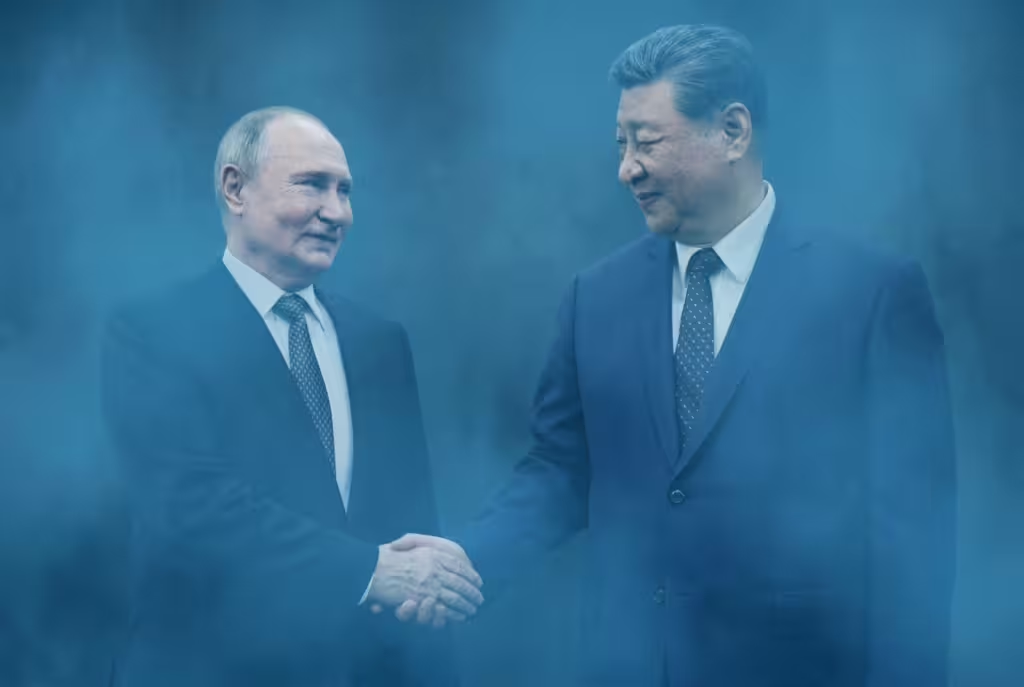
- Leaders’ positioning: Xi Jinping downplayed the protocol for his meeting with Iranian President Masoud Pezeshkian to protect his coming visit to Washington, Champion wrote, while Putin did the heavy lifting of backing a fellow SCO member. No date was given for the Xi trip.
- The Serbia precedent: Champion recalled that NATO pilots bombed Serbia for 78 days in 1999, and Russia acquiesced despite opposing the campaign, even helping negotiate Serbia’s surrender. He wrote that none of this is imaginable today.
Background:
Bush’s January 2002 Axis of Evil speech named Iran, Iraq and North Korea as the states outside US leadership, the column noted. BRICS would not be conceived for another five years, and the Global South was not yet a bloc.
Between the lines:
Champion’s core reading is that the label rogue state has lost force because a forum led by China now embraces those governments rather than quarantining them. He conceded Tehran’s partners will stay cautious on delivery, since Washington’s capacity to impose costs remains formidable, but concluded they will work against the US where they can. The G20 meeting, in his telling, looked less harmonious than the SCO.
What’s next
Watch Xi’s announced visit to Washington, whether Bishkek’s investment and trade pledges toward Iran produce signed deals, and whether Bessent converts the with-us-or-against-us framing into specific secondary sanctions on SCO members.