Key Points
- A tanker under US, EU and UK sanctions was tracked at Iraq's Khor Al Zubair port in August.
- SOMO says its records show no contractual or commercial relationship with the vessel, its owner or operator.
- The case tests whether Iraq can prove sanctioned shipping networks are not reaching its export infrastructure.
The latest:
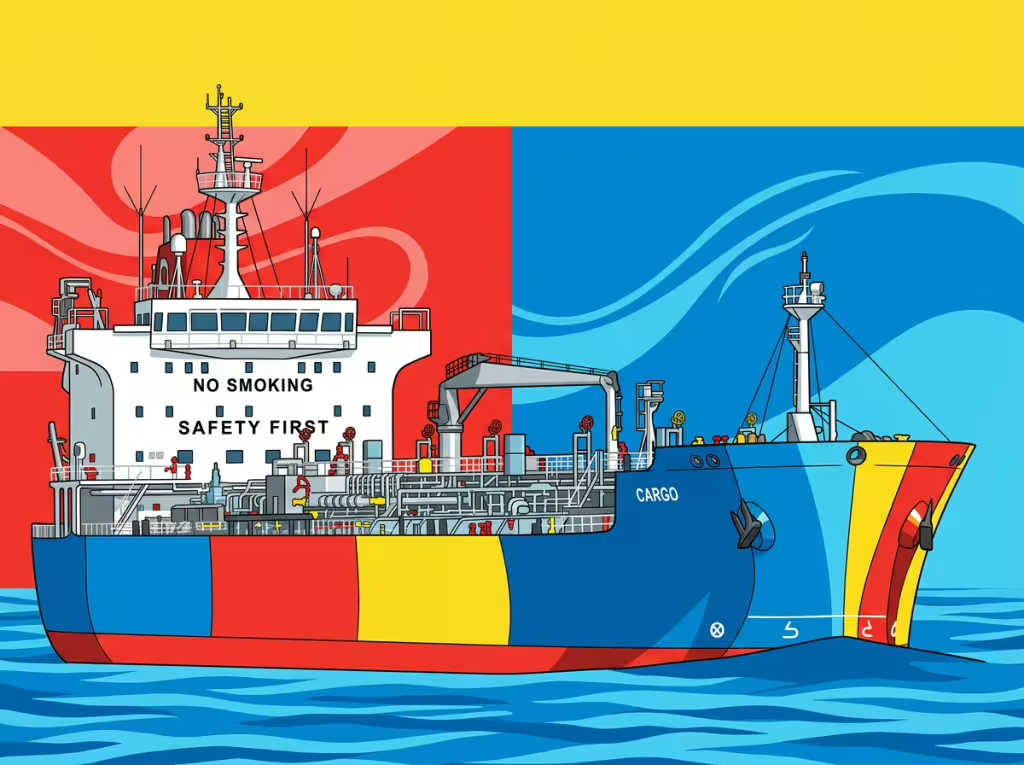
A tanker sanctioned over Iran’s petroleum trade was tracked operating at Iraq’s Khor Al Zubair port between August 8 and 16, 2026, before heading toward Oman. Iraq’s State Organization for Marketing of Oil said through a Ministry of Oil statement that its records show no contractual or commercial relationship with the vessel, its owner or its operating company.
Details:
- The vessel: Binary Star, formerly named Kurdos III, carries IMO number 9380570 — a permanent identifier that survives changes of name and flag. Sanctions databases record changes to its name, flag and operating details, practices commonly associated with vessels moving through opaque or sanctions-exposed shipping networks.
- The sanctions record: The US Treasury designated the tanker in December 2025, while it still operated as Kurdos III, under measures targeting networks tied to Iran’s petroleum trade. Sanctions records state the vessel had carried hundreds of thousands of barrels of Iranian fuel oil and bitumen in the Persian Gulf since early 2025.
- Wider designations: European and British authorities subsequently sanctioned the same vessel, meaning its exposure is not limited to one jurisdiction. That broadens the compliance reach of any bank, insurer or shipping firm that handles a cargo linked to it, regardless of where the transaction is booked.
- SOMO’s position: The organization said it relies in contracting and maritime operations on companies and tankers that meet approved compliance standards and do not appear on relevant international sanctions lists. It added that vessels nominated for Iraqi crude and product export operations are audited and verified before acceptance.
- The distinction: SOMO also said it monitors and documents vessels operating in Iraqi waters, whether they are connected to its own operations or are other vessels whose activities fall outside SOMO. That distances the organization commercially from Binary Star without explicitly denying that the tanker entered Iraqi waters or ports.
- The critic: Iraqi economist and international transport consultant Ziad al-Hashimi said the Ministry of Oil statement increased rather than resolved his concerns. He argued the denial of a commercial relationship does not answer how a sanctioned vessel was able to operate around Iraqi ports in the first place.
- The oversight question: Al-Hashimi asked how petroleum-related maritime activity can take place in Iraqi waters and ports without falling under SOMO’s approval, supervision or management. He noted the tanker’s reported shuttle movements between Iraqi ports and the Gulf of Oman during a period of intensive US scrutiny of oil shipping tied to sanctions evasion.
- The risk he flags: Al-Hashimi warned the activity could give Washington grounds for closer examination of Iraqi shipping operations and, in a more serious scenario, raise sanctions risks around Baghdad’s attempt to expand exports through alternative routes during disruptions to Gulf navigation.
- What is unresolved: Available information does not establish that SOMO used the tanker to move Iraqi oil, or that Iraqi crude was mixed with or used to disguise sanctioned Iranian petroleum. Who chartered the vessel, what cargo it handled and which Iraqi authority cleared its operation remain undisclosed.
Background:
Khor Al Zubair is part of Iraq’s petroleum port infrastructure in the south. Baghdad has been diversifying oil-shipping options during disruptions to Gulf navigation, while working to show that Iraqi exports and product movements stay separate from networks used to move sanctioned Iranian oil.
Between the lines:
The compliance exposure runs ahead of any proof about cargo. Because the vessel carries US, European and British designations, its presence at an Iraqi port can pull banks, insurers and shipping firms into additional scrutiny even if the barrels were entirely Iraqi. SOMO’s own wording — that non-SOMO vessels operate in Iraqi waters — is the gap al-Hashimi is pressing on, and it turns a single tanker into a test of Iraq’s screening system.
What’s next
Watch for any Iraqi disclosure of the charterer, cargo and clearing authority for the port call, further US Treasury designations touching Iraqi shipping routes, and whether Baghdad tightens vessel screening as it expands alternative export options.