Key Points
- Iran’s military says Tehran and Muscat agreed how to divide Strait of Hormuz waters and revenue.
- A joint ministerial statement earlier described only an interim framework for restoring ship transits.
- Any traffic normalization could affect global energy flows and ease pressure on Gulf shipping.
The latest
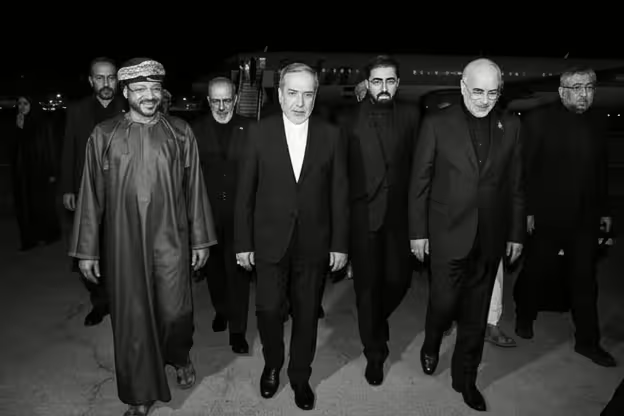
Iran’s military said Tehran and Muscat had agreed how to divide their shares of the Strait of Hormuz’s waters and revenue, advancing beyond an earlier joint foreign-ministry statement that referred only to an interim framework for resuming ship transits. Islamic Revolutionary Guard Corps spokesman Hossein Mohebbi said the US was obstructing the process and delaying progress, without elaborating. Iran has said an accord with Oman alone would not immediately reopen the strategic waterway.
Details
- Diplomatic language: The foreign ministries’ Tuesday statement said the countries discussed an “interim framework” but announced neither an agreement nor fees. Mohebbi’s remarks on Wednesday were more definitive, saying agreements covered each country’s share of the waters and both governments’ share of revenues. Neither foreign ministry responded to requests for comment.
- US-Iran divide: President Donald Trump said Wednesday that mines were gone and the strait was open, adding that about 10 million barrels had passed the previous day. Iran rejected those assertions, saying only its officials knew the explosives’ locations. The International Maritime Organization’s chief said last week the waterway was not open and mine removal remained unconfirmed.
- Reopening terms: Tehran has tied normalized traffic to US compliance with a June memorandum of understanding, including lifting sanctions and the naval blockade on Iranian ports and unfreezing Iranian assets abroad. Washington has not signaled readiness to meet those terms. Earlier this week, the US said it would tighten sanctions; President Masoud Pezeshkian said the effort would fail.
- Market reaction: Talks have tempered oil prices as traders watch for signs of easier passage. Brent crude traded above $88 a barrel, about 7% lower this week. Arne Lohmann Rasmussen, chief analyst at A/S Global Risk Management, called the talks the most constructive Hormuz development for some time, while saying a temporary corridor remained far from normal reopening.
- Shipping stakes: The strait carried one-fifth of global oil and liquefied natural gas before the conflict began nearly six months ago. It has remained largely closed since the US and Israel launched the war on Iran on Feb. 28, though some vessels continue crossing and millions of barrels still pass daily. Attacks on ships have continued.
Background
The 60-day interim ceasefire expired earlier this month after repeated breaches as the US and Iran clashed over control of Hormuz. Iran initially charged some vessels transit fees, then described charges as service fees. Oman told the IMO it opposed transit fees, while privately warning some European officials that related services could carry costs.
What’s next
The immediate indicator is whether Tehran and Muscat publish operational terms for an interim shipping corridor and whether vessel movements increase. Any broader normalization remains tied to decisions on sanctions, the naval blockade and frozen Iranian assets, while easing traffic could reopen a path toward talks on a permanent end to the conflict.