Key Points
- Pakistan’s army chief arrived in Tehran to revive mediation as Washington prepared sweeping financial measures against Iran.
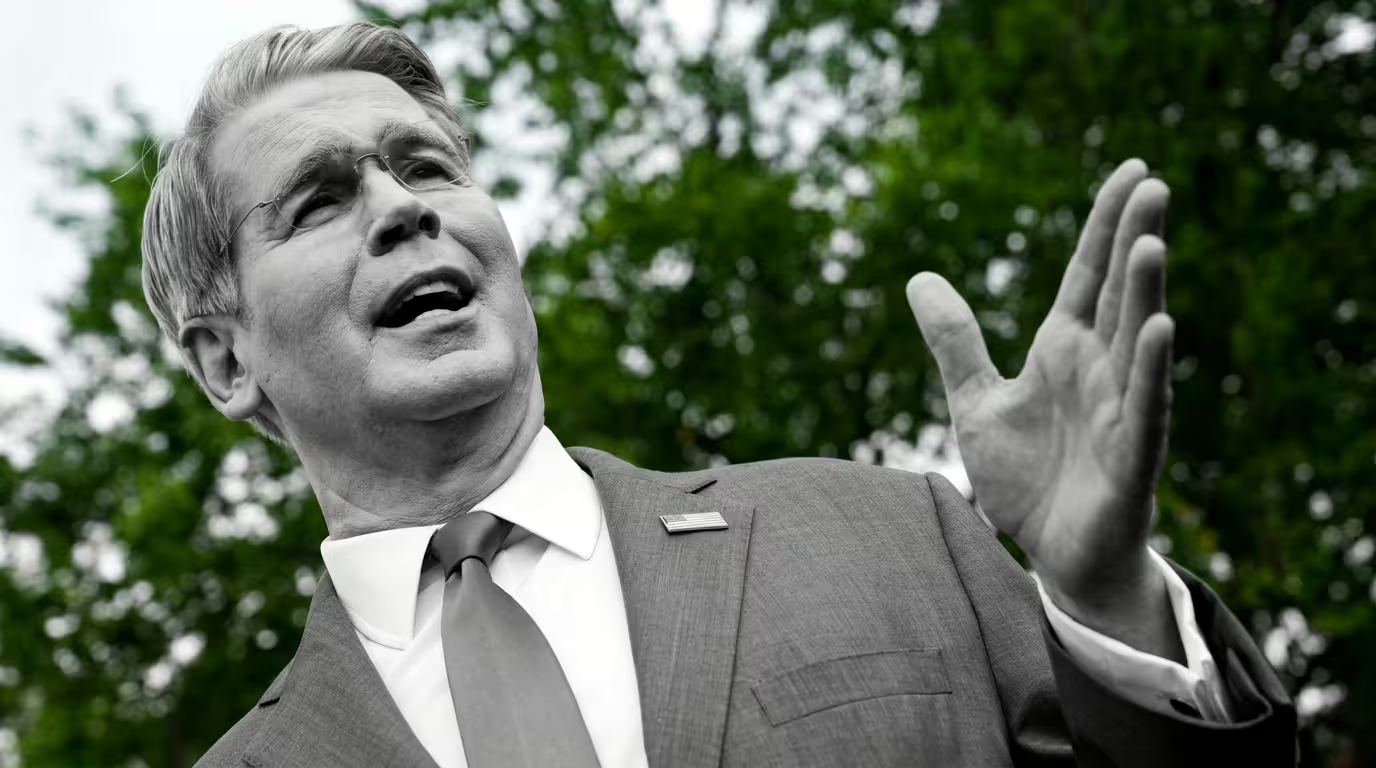
- US Treasury Secretary Scott Bessent said the offensive would target countries engaging with Iran’s economy and financial system.
- Iran threatened Gulf oil exports and shipping through Hormuz, deepening risks to energy markets and regional trade.
The latest
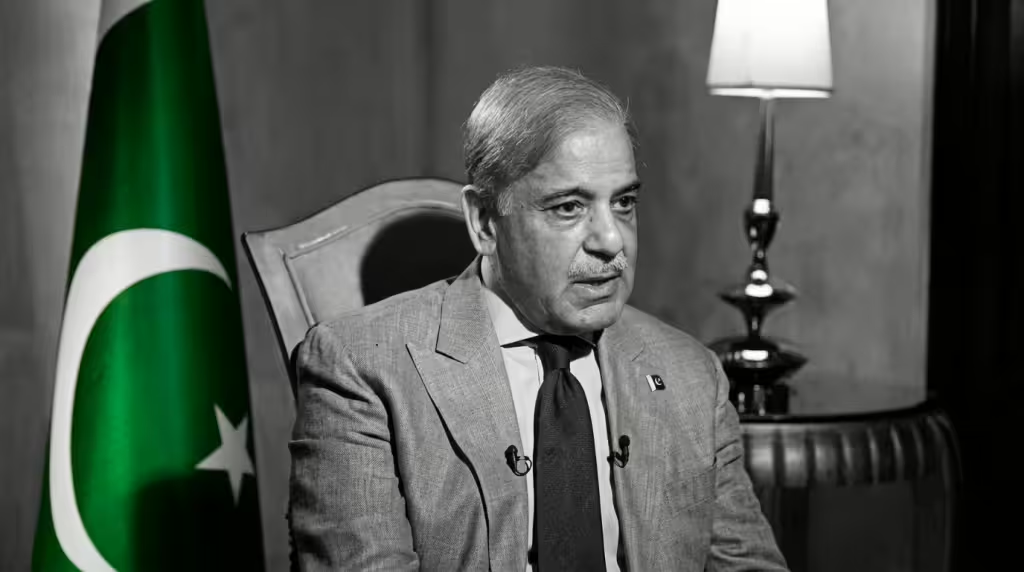
Pakistan’s army chief, Asim Munir, arrived in Tehran on Monday for talks aimed at bringing Iran back to negotiations with the United States, as Washington prepared what Treasury Secretary Scott Bessent called the greatest financial offensive ever assembled against an adversary. Islamabad described the visit as part of its efforts to promote regional peace and stability, with Munir expected to meet figures close to Iran’s supreme leader.
Details
- Mediation effort: Two Pakistani sources said US President Donald Trump called Munir last week, while another said the main request was to return Iran to negotiations. Munir has developed a personal rapport with Trump. The last official face-to-face US-Iran talks seeking to end the six-month conflict took place in June.
- Financial offensive: Bessent is due to announce the measures at a press conference at 1 p.m. EDT, or 1700 GMT, on Monday. Without specifying the planned steps, he signalled that Washington would target countries engaging with Iran’s economy and financial system, warning them to consider the consequences of continuing those relationships.
- Iranian response: Supreme National Security Council Secretary Mohsen Rezaei said no oil would be exported through Hormuz or elsewhere in the Gulf if the economic war continued. He described participation in, or support for, the US campaign as an act of war. Iran also warned ships not to cross Hormuz without permission.
- Shipping threats: Tehran listed 45 vessels it said had violated its rules and threatened retaliation against ship-to-ship transfers involving them. Separately, a projectile hit a tanker west of Saudi Arabia’s Yanbu port, causing a fire on its main deck, the United Kingdom Maritime Trade Operations said without identifying who launched it.
- China’s position: China said sanctions and pressure tactics would not help and pledged to take necessary steps to protect its interests. China has been the largest buyer of Iranian oil for several years, although the US blockade of Iranian ports, renewed in mid-July, has already reduced Iranian oil flows to the country.
- Economic strain: The Iranian rial reached a record low on Monday, falling 25% below its January level. Iran entered the war with high inflation, energy shortages and structural weaknesses, and now faces disrupted trade, lost production and reconstruction costs. Oil prices eased after two weeks of gains as investors took profits before Washington’s announcement.
- Conflict impact: Thousands of people, mostly in Iran and Lebanon, have been killed since US and Israeli strikes began on February 28. Iran’s conventional military capacity has been heavily degraded, but its remaining missile and drone forces have disrupted Hormuz shipping and pushed up global fuel prices. Direct US-Iranian air strikes have paused for weeks.
What’s next
Bessent is scheduled to disclose the US financial measures at 1700 GMT on Monday, while Munir’s Tehran meetings will focus on restoring negotiations.