Key Points
- Three Saudi sources said Riyadh opposed Egypt joining a defense agreement with Turkey and Pakistan, at least temporarily.
- Turkey sought Cairo’s participation, while competing accounts emerged over whether Egypt declined or Saudi Arabia blocked it.
- The dispute highlights Saudi doubts about Egypt’s regional security contribution and military value, according to the sources.
The latest
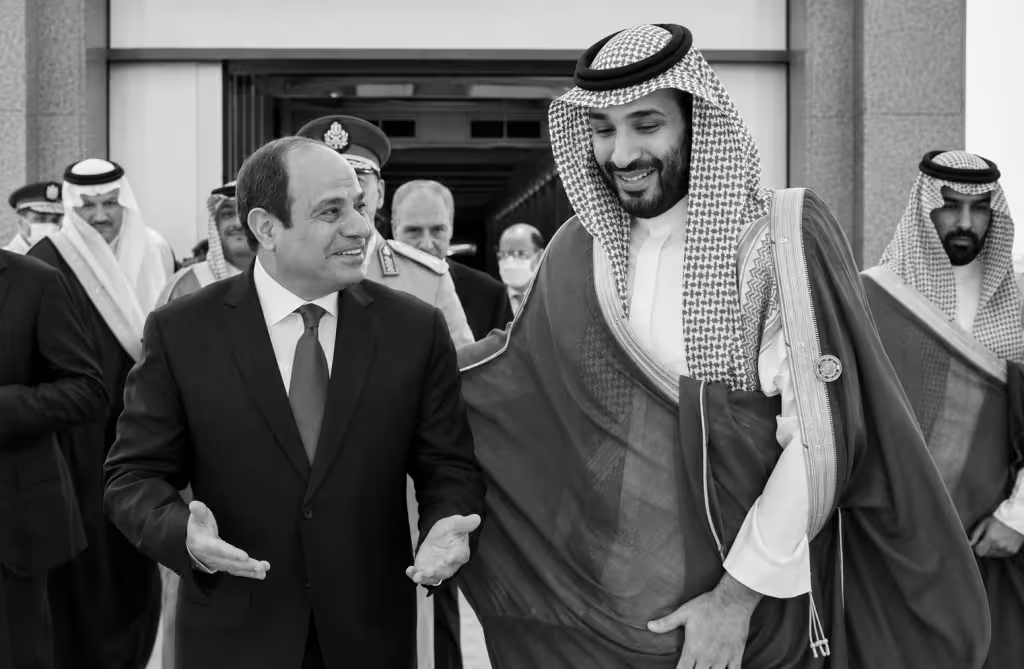
Saudi Arabia opposed Egypt’s inclusion in the Mecca Joint Defense Agreement signed with Turkey and Pakistan, three unnamed Saudi sources told Middle East Eye. They attributed Riyadh’s position to diminishing trust in President Abdel Fattah el-Sisi’s administration and a belief that Cairo no longer provides the strategic and military value Saudi Arabia expects. The sources said the exclusion applies “at least for now,” leaving open the possibility of Egypt joining later.
Details
- Competing accounts: Ankara pressed for Egypt’s inclusion and offered Cairo a place in the agreement, according to Middle East Eye. One account said Egypt indicated it was not ready to participate. Saudi sources disputed the suggestion that Cairo alone declined, with one arguing that Riyadh’s opposition prevented its accession.
- Turkish position: Turkish Foreign Minister Hakan Fidan described Egypt as a “natural partner” on Saturday, August 8, and said no obstacle would remain to its participation once technical issues were resolved. His remarks presented Egypt’s exclusion as potentially temporary rather than a definitive break.
- Defense commitment: The agreement, signed in Mecca on Friday, August 7, treats an armed attack against Saudi Arabia, Turkey or Pakistan as an attack against all three. The report did not clarify the conditions for activating joint military assistance, decision-making procedures or the precise scope of each country’s obligations.
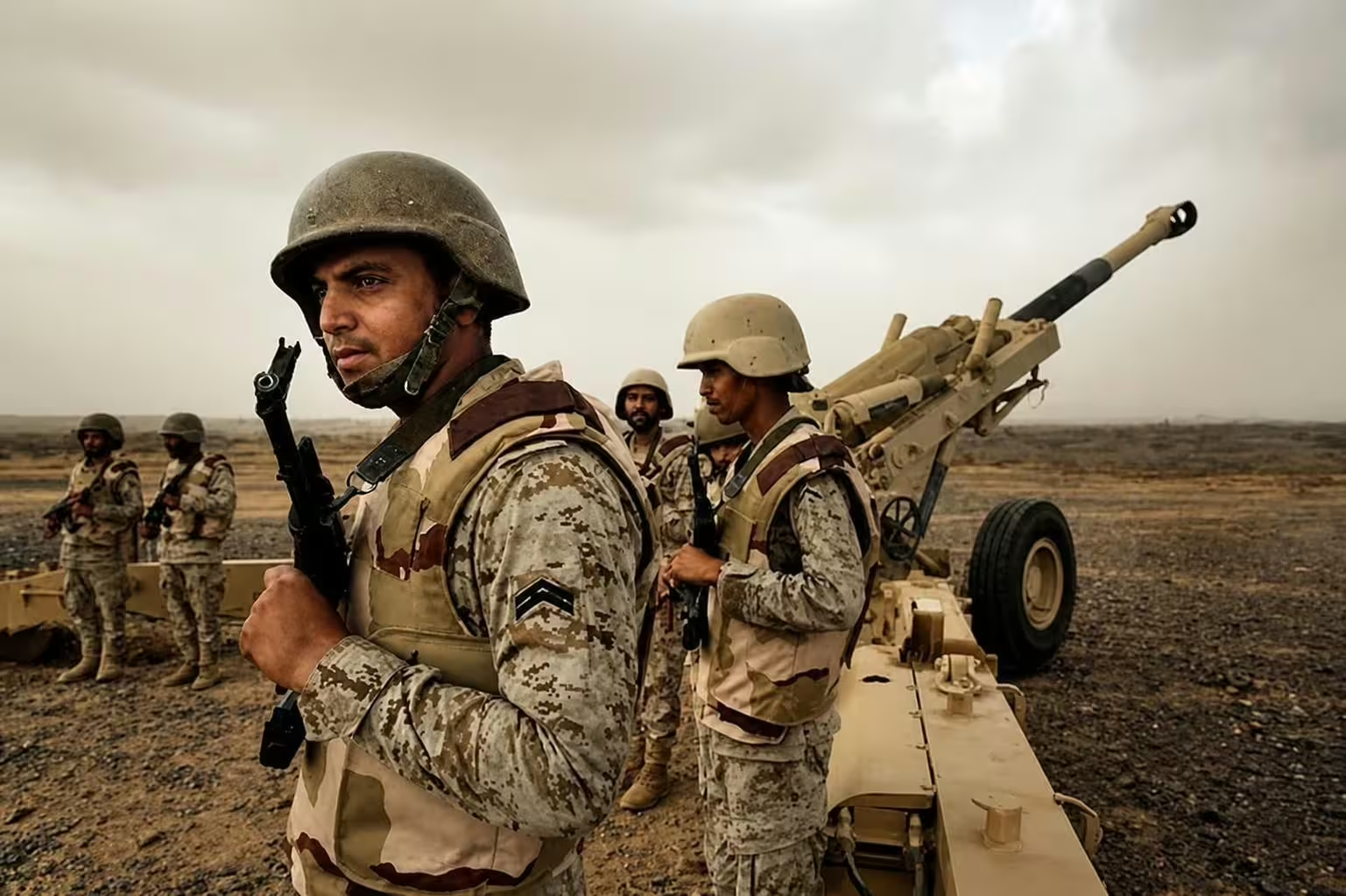
- Saudi grievances: The sources said Saudi Arabia provided approximately $25 billion to support Egypt’s economy after Sisi took power in 2013 but did not receive the expected security cooperation. One described Egypt’s contribution to the Saudi-led campaign against the Houthis in Yemen as “minimal and unreliable.”
- Military comparison: Riyadh considers Turkey and Pakistan better placed to contribute to collective defense, the sources claimed, citing Turkey’s advanced defense industry and Pakistan’s weapons production sector and large standing army. They questioned Egypt’s military technology and production capacity but offered no independent comparative data.
- Regional tensions: The sources also linked Saudi mistrust to Cairo’s close relationship with the United Arab Emirates amid Saudi-Emirati differences over southern Yemen. They identified Somaliland, relations with Israel, Ethiopia’s Grand Renaissance Dam and support for Sudan’s Rapid Support Forces as additional areas complicating Riyadh’s relationship with Abu Dhabi.
Background
Egypt participated in the US-led coalition that expelled Iraqi forces from Kuwait in 1991 and was traditionally regarded as a significant Gulf military partner. The Saudi sources argued that its regional security contribution has since declined as its dependence on external financial support increased.
What’s next
The next concrete indicator will be publication of the agreement’s official text or an announcement of technical accession talks with Cairo. Either would clarify the pact’s obligations and whether Egypt’s exclusion is temporary.