The latest:
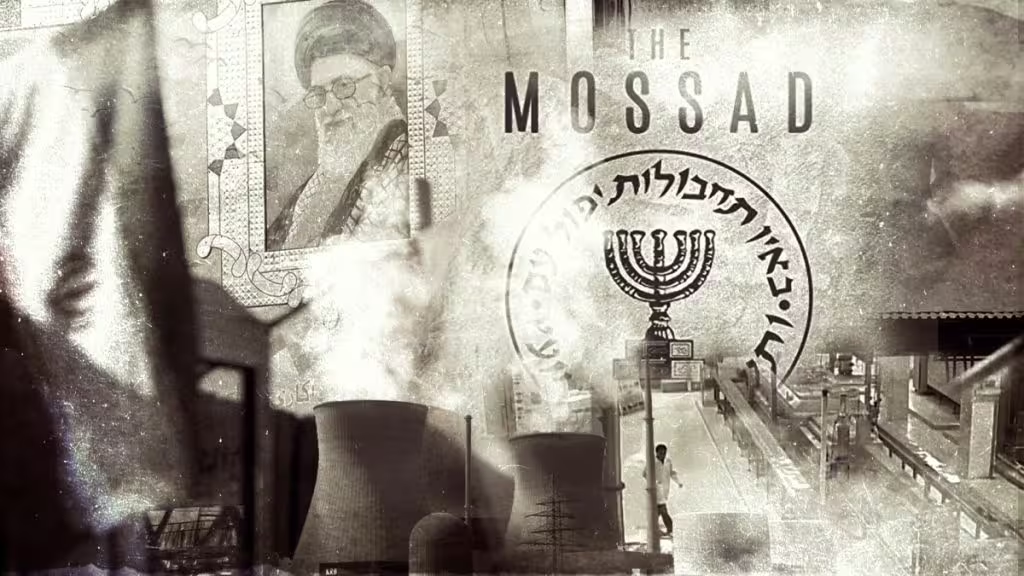
Mossad chief Roman Gofman has, according to Israeli reports, ended the roles of the agency’s intelligence director and Iran division chief, both of whom were linked to a plan to change Iran’s regime. Sources said their departures were consensual and part of a broader reorganization, while other reports linked the decision to the plan’s failure.
Details:
• The Kurdish plan: According to reports in The New York Times, the plan included supporting Kurdish fighters moving from northern Iraq into Iran after Israeli strikes opened a route toward northwestern areas.
• The political goal: Reports said the strategy envisioned Kurdish advances triggering widespread unrest that could lead to the collapse of the regime and the creation of an alternative government in Tehran.
• Ahmadinejad: The New York Times reported that the plan included a scenario in which former Iranian President Mahmoud Ahmadinejad would become Iran’s leader, alongside reports of earlier Israeli contacts with him. His office denied those reports.
• Washington’s decision: Reports indicated that the Kurdish component was not carried out as planned. Leaks, Turkish pressure and Kurdish caution were cited among the factors behind abandoning the operation.
• Netanyahu’s responsibility: The original material raises the question of Prime Minister Benjamin Netanyahu’s responsibility as the senior political authority, but presents this as an issue for assessment rather than the conclusion of an independent investigation. No public investigation has established responsibility by Gofman or the dismissed officials.
Background:
Earlier reports described a broader Israeli concept for regime change in Iran, coinciding with the war that began with U.S. and Israeli strikes, while Iran’s government remained in place despite the weakening of its capabilities.
What to watch:
The next test will be how Gofman handles an internal review of the plan and whether the departures are followed by formal investigations or further redistribution of responsibility inside Mossad.