The latest
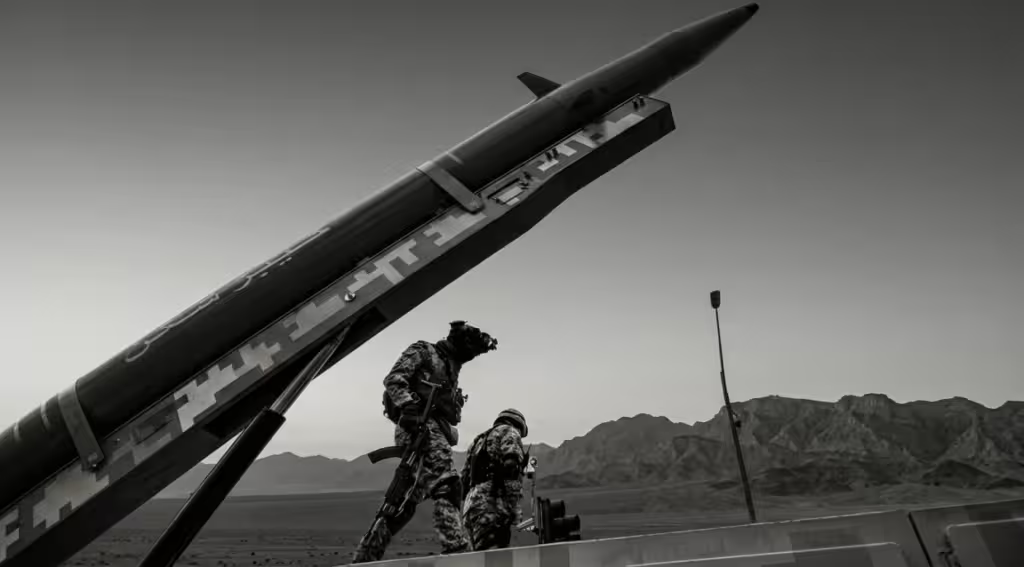
Iran’s Quds Force secretly coordinated with Hezbollah, Yemen’s Houthis and Iraqi Shiite militias on expanding regional attacks if the United States intensified its campaign, two senior Iranian officials told The New York Times. The planning occurred during a brief ceasefire in the spring and sought to raise the political, economic and military costs for President Donald Trump. Recent violence has reached a Saudi oil facility, tankers near the Suez Canal and a Jordanian base housing American personnel.
Details
Secret coordination: Senior Quds Force commanders held virtual meetings with leaders from the three militia networks, according to the officials, both Revolutionary Guards members who requested anonymity. Iranian commanders and advisers subsequently worked alongside allied groups on the ground, including at Shiite militia bases in Iraq.
Iraqi presence: U.S.-Saudi airstrikes hit militia facilities in Iraq early Wednesday. Iranian media published photographs of four men killed in the strikes wearing Quds Force uniforms, with their coffins covered by Iranian flags. The report did not independently establish their assignments at the targeted bases.
Houthi campaign: The Houthis announced a blockade of Saudi shipping on July 20 and began missile and drone attacks intended to enforce it. The campaign threatens Riyadh’s alternative export route through the Red Sea and Bab al-Mandab after oil shipments through the Strait of Hormuz were largely obstructed.
Different command margins: Analysts cautioned that the armed groups are not simply Iranian puppets. The Houthis are considered the most autonomous, Hezbollah coordinates most closely with Tehran, and Iraqi factions fall between them. Their local objectives differ, but they share opposition to the United States and Israel.
Economic pressure: Analysts said attacks on oil facilities and maritime routes were calibrated to restrict regional exports, increase American fuel prices before the midterm elections and reduce revenue for Washington’s Arab partners. Roughly 20 percent of global oil supplies crossed the Strait of Hormuz before the war.
Rebuilding influence: The mobilization follows heavy losses across Iran’s alliance since 2023, including the weakening of Hamas and Hezbollah and the fall of Bashar al-Assad’s government in Syria. Lebanese officials and analysts said Revolutionary Guards commanders had joined Hezbollah’s leadership council as the group rebuilt its depleted command structure.
Between the lines
Iran is using the militias’ geographic reach to compensate for their battlefield losses while limiting direct exposure to retaliation. That model also carries uncertainty because each faction pursues local interests, including Houthi leverage in negotiations with Saudi Arabia.
What’s next
The next concrete indicators are whether the Houthis enforce their declared blockade and whether Egypt identifies the drones that struck tankers near Suez. Further strikes on Iraqi militia bases will also test continued Quds Force involvement.